

New study tests Einstein’s theory of gravity to probe dark energy
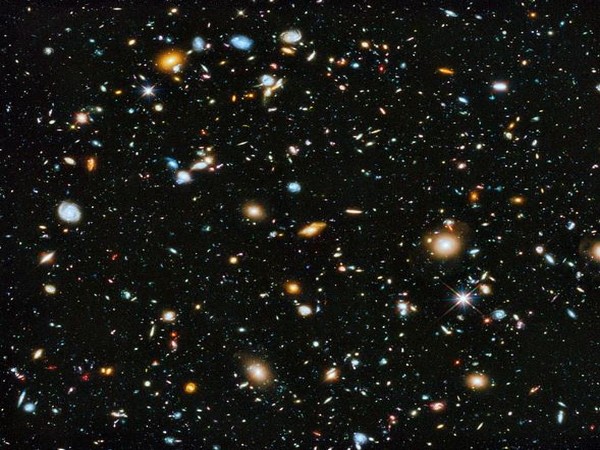
The universe is expanding at an accelerating rate and dark energy, the reason for the accelerated expansion, remains a mystery. A new study co-authored by NASA scientists has found that Einstein's theory of gravity still works, hence there is no explanation for the mysterious form of energy, which is thought to comprise 70% of the universe's contents, yet.
Einstein developed "Theory of General Relativity" to describe gravity, and so far it has accurately predicted everything from the orbit of Mercury to the existence of black holes. But if this theory can't explain dark energy, some scientists have argued, then maybe they need to modify some of its equations or add new components, NASA said in a statement.
The new study from the international Dark Energy Survey marks the latest effort to determine whether this is all simply a misunderstanding: that expectations for how gravity works at the scale of the entire universe are flawed or incomplete - that expectations for how gravity works at the scale of the entire universe are flawed or incomplete.
NASA says this study is one of the most precise tests yet of Albert Einstein's theory of gravity at cosmic scales and it finds that the current understanding still appears to be correct.
"There is still room to challenge Einstein's theory of gravity, as measurements gets more and more precise," said study co-author Agnès Ferté, who conducted the research as a postdoctoral researcher at JPL.
The universe is expanding at an accelerating rate, and scientists don't know why. 🤔 A new study looked into this mystery to determine whether our expectations for how gravity works at cosmic scales are flawed or incomplete.Learn more ➡️ https://t.co/hSo34chnS9 pic.twitter.com/QDb0BV57sO
— NASA JPL (@NASAJPL) August 25, 2022
The new research will feed into two upcoming missions: the European Space Agency's Euclid mission, slated for launch no earlier than 2023, and NASA's Nancy Grace Roman Space Telescope, targeted for launch no later than May 2027. Both telescopes will look for changes in the strength of gravity over time or distance.


 Google News