

Jezero Crater's floor is made up of volcanic rocks, finds NASA's Perseverance Mars rover
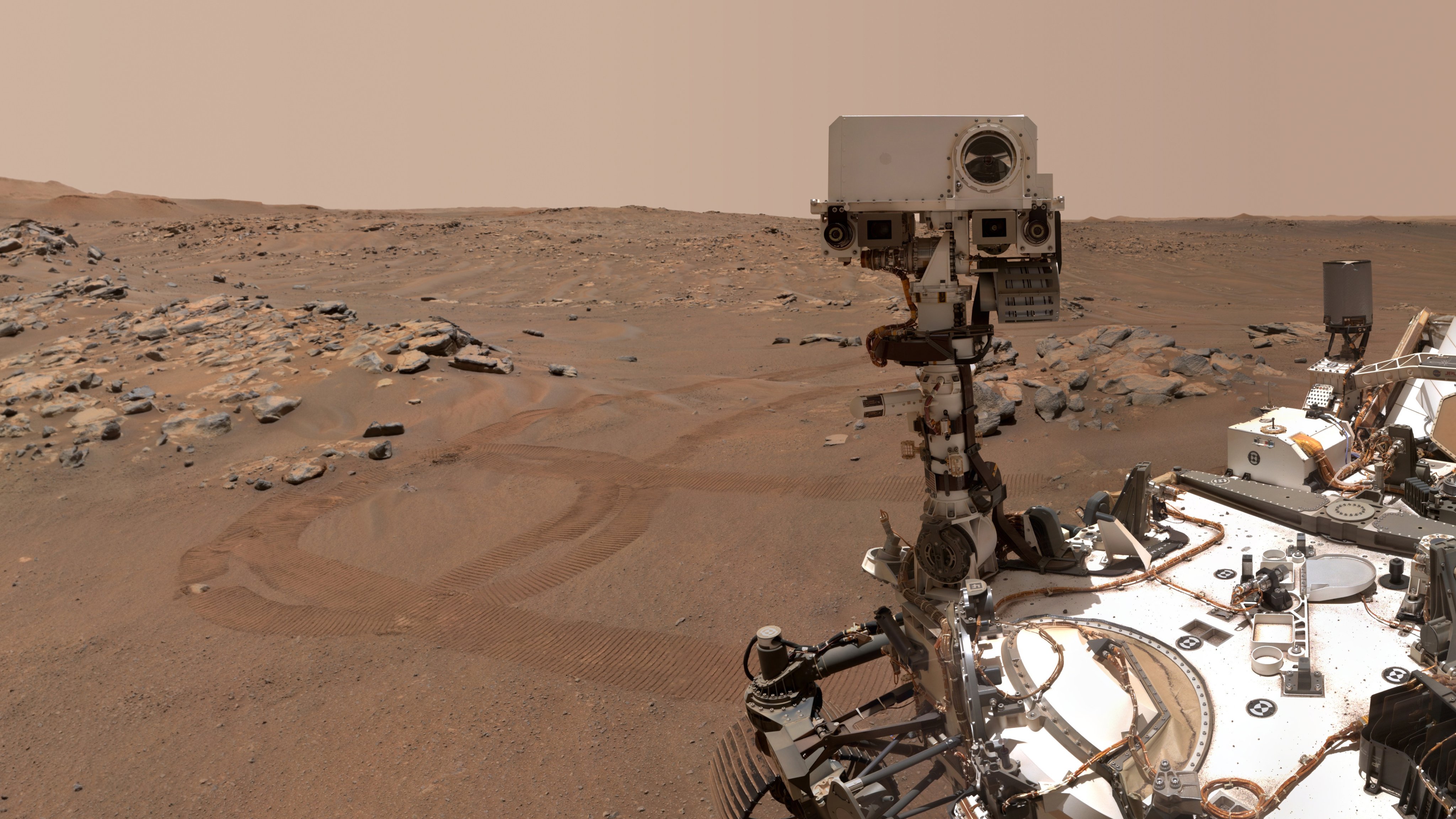
NASA's Perseverance Mars rover has found that Jezero Crater's floor is made of volcanic rocks rather than the sedimentary rock that the mission team expected. They found that the floor was made up of two types of igneous rock – one that formed deep underground from magma, the other from volcanic activity at the surface.
The findings are described in four new papers published Thursday, August 25. The two papers published in Science detail Perseverance's exploration of the crater floor before it arrived at the river delta in April 2022 and the mysterious magma-formed rocks. The two Science Advances papers detail the findings of science instruments that helped establish that igneous rocks cover the crater floor.
"One great value of the igneous rocks we collected is that they will tell us about when the lake was present in Jezero. We know it was there more recently than the igneous crater floor rocks formed," said Ken Farley of Caltech, Perseverance's project scientist and the lead author of the first of the new Science papers.
I came to the ancient lakebed of Jezero Crater expecting lots of sedimentary rocks. I see them now at the old river delta, but the crater floor was a surprise: lots of volcanic rocks. 🪨Now my science team's sharing some of what they've pieced together: https://t.co/HO0zRMue4h pic.twitter.com/z8ZOwqRPGG
— NASA's Perseverance Mars Rover (@NASAPersevere) August 25, 2022
According to the researchers, igneous rock isn't ideal for preserving the potential signs of ancient microscopic life Perseverance is searching for. In contrast, sedimentary rock often forms in watery environments suitable for life and is better at preserving ancient signs of life. That is why the rover has been drilling and collecting core samples of sedimentary rocks from the sediment-rich river delta.
Another paper published in Science solves a longstanding mystery of distinctive rocks that appear to have formed from a thick body of magma. Years ago, Mars orbiters spotted a rock formation filled with the mineral olivine. Scientists have offered various theories why the mineral is so plentiful over such a large area of the surface, including meteorite impacts, volcanic eruptions, and sedimentary processes. Another theory is that the olivine formed deep underground from slowly cooling magma - molten rock - before being exposed over time by erosion. The NASA team have determined that the last explanation is the most likely.


 Google News