

Check out this stunning Hubble image of an S-shaped planetary nebula
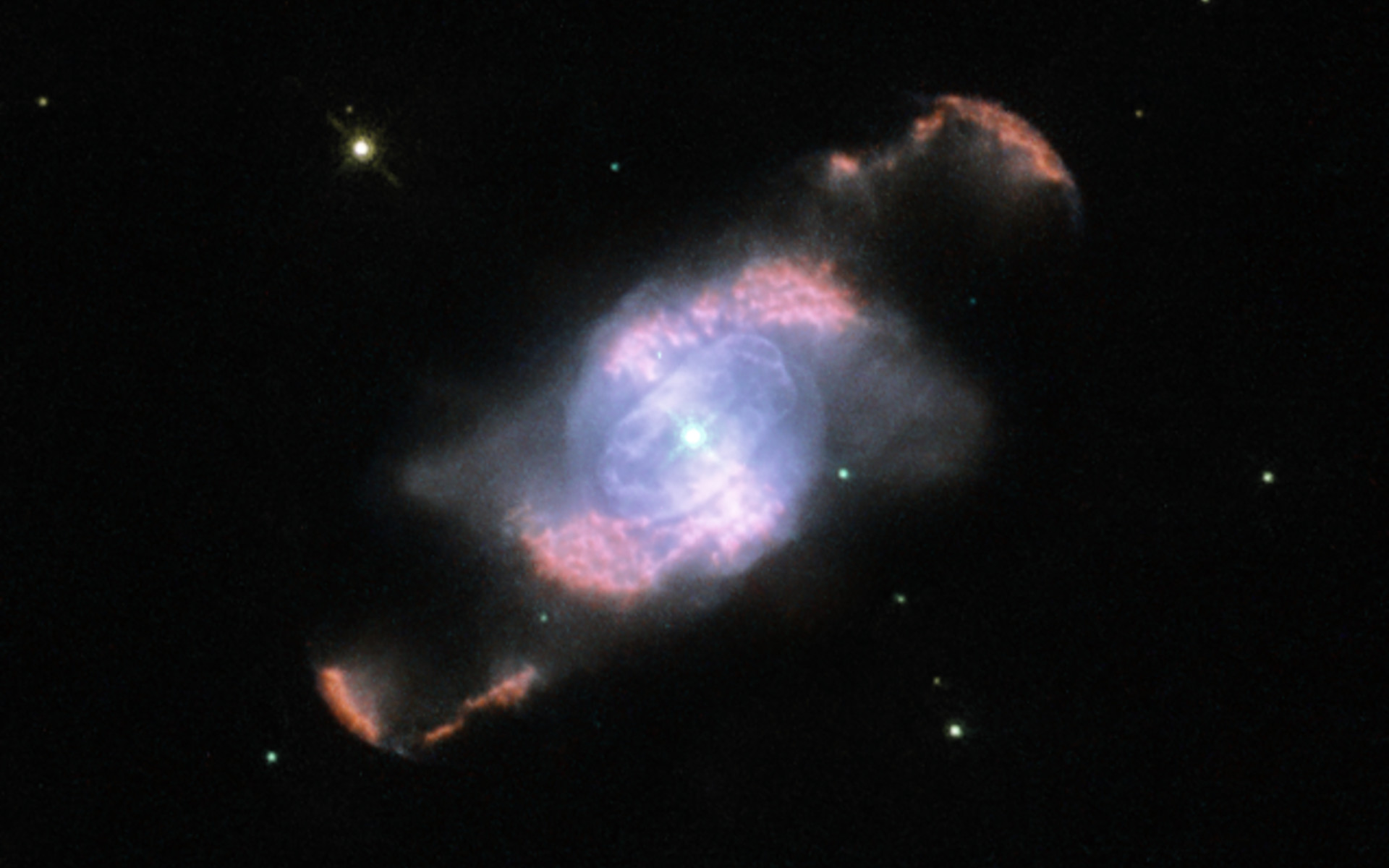
The NASA/ESA Hubble Space Telescope's Wide Field Planetary Camera 2 (WFPC2) captured this image of IC 4634, a planetary nebula that lies more than about 7500 light-years away in the constellation of Ophiuchus (the Serpent Holder).
The image shows two shining, S-shaped ejections from a dying star awash in glowing material at the centre of the picture.
This star, according to the European Space Agency (ESA), bloated as it aged and launched its outer layers off into space. Its very hot, exposed core has since beamed intense ultraviolet radiation at these lost shells of gas, making them glow in rich colours.
"This process has been far from orderly or calm, however, as revealed by the distinct, separate waves of thrown-off gases. One is more distant and therefore was spewed first, followed by a more recently ejected tide of matter that formed the tighter S-shape. The result is remarkably symmetric on each side of the central star," ESA wrote in a post.
The nebula IC 4634 is a beauty *and* a beast!In this #HubbleClassic image, a dying star surrounded by glowing material has ejected its outer layers. The star's hot, exposed core then beamed ultraviolet radiation at these gas shells, making them glow: https://t.co/NgGCaTBnwD pic.twitter.com/ZQO0PM4oov
— Hubble (@NASAHubble) November 7, 2022
Cosmic objects like IC 4634 are known as planetary nebulae due to their appearance through early telescopes as rounded, faintly luminous discs similar to the distant planets Uranus and Neptune.
According to NASA, planetary nebulae form during the death of low-mass to medium-mass stars. When such stars die, they expel their outer layers into space. These expanding shells of gas form a huge variety of unique shapes such as rings, hourglasses, rectangles, and more that show the complexity of stellar death. Our life-giving star is expected to form a planetary nebula at the end of its life.


 Google News