

NASA tests new technology that will help land humans on Mars
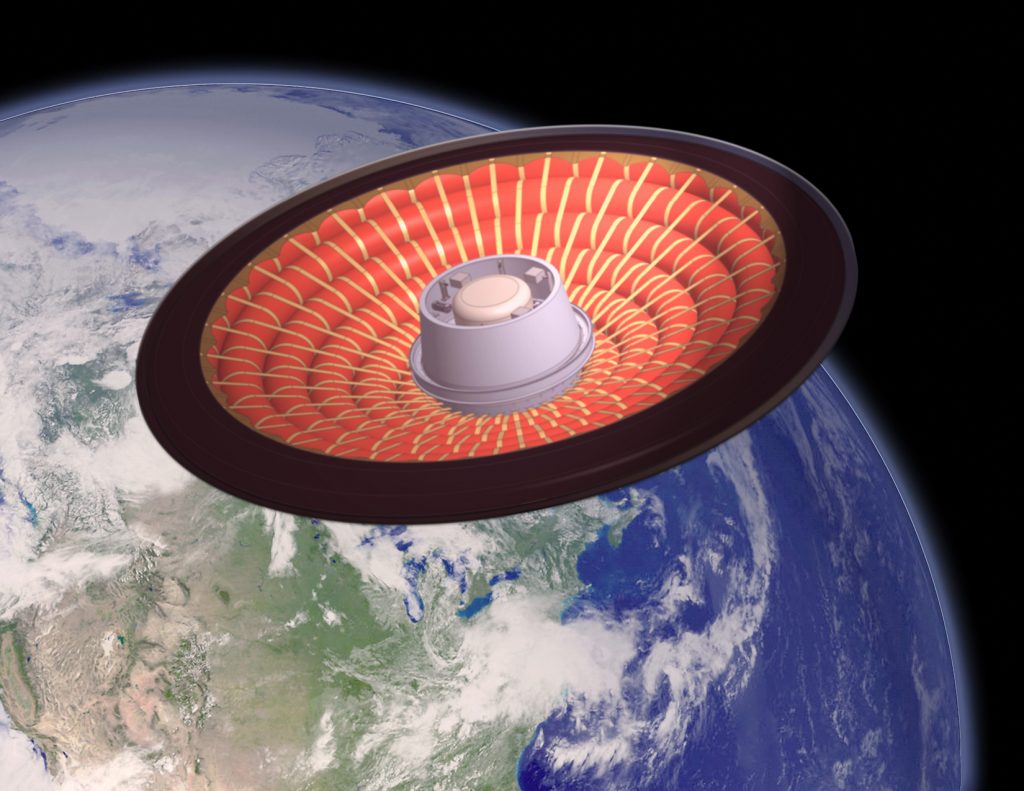
NASA on Thursday launched a new tech demonstration, the Low-Earth Orbit Flight Test of an Inflatable Decelerator (LOFTID), that it says could one day help us land on Mars. The tech demo was launched aboard a ULA Atlas V rocket from Vandenberg Space Force Base along with the National Oceanic and Atmospheric Administration's (NOAA) Joint Polar Satellite System-2 (JPSS-2) satellite.
The LOFTID heat shield splashed down in the Pacific Ocean hundreds of miles off the coast of Hawaii and was successfully retrieved from the Pacific Ocean on Thursday morning.
Moments years in the making for the team at @NASA_Langley: See the #LOFTID @NASA_Technology demonstration splash down in the Pacific Ocean near Hawaii. The data from this inflatable heat shield test will help us land more massive missions, and explore farther. pic.twitter.com/PzARsfhC9P
— NASA (@NASA) November 10, 2022
NASA says this inflatable aerodynamic decelerator, or aeroshell, technology is poised to revolutionize the way the agency and industry deliver payloads to planetary destinations with atmospheres.
The aeroshell is made of an inflatable structure and a flexible thermal protection system, constructed from advanced materials with high-temperature limits.
According to the agency, the Martian atmosphere is much less dense compared to Earth and provides an extreme challenge for aerodynamic deceleration. While the atmosphere is thick enough to provide some drag but too thin to decelerate the spacecraft as quickly as it would in Earth's atmosphere.
LOFTID's large deployable aeroshell acts as a giant brake as it traverses the atmosphere of Mars. The aeroshell creates more drag than a traditional, smaller rigid aeroshell. It begins slowing down in the upper reaches of the atmosphere, allowing the spacecraft to decelerate sooner, at higher altitudes, while experiencing less intense heating.
This inflatable aeroshell technology enables a variety of proposed NASA missions to destinations such as Mars, Venus, Titan as well as return to Earth, according to NASA.


 Google News