

Watch Venus and Jupiter parting ways, dwarf planet Ceres at its brightest this month
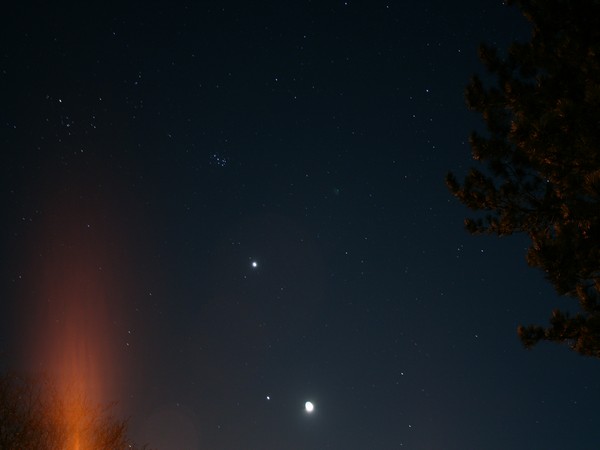
After getting super close on March 1, Venus and Jupiter will appear to separate from each other in the evening sky. The two planets are visible in the west after sunset.
According to NASA, Venus will continue to climb higher in the sky each night for the next few months, while Jupiter will appear lower in the sky each night as it moves closer to the Sun. Eventually, the gas giant will no longer be visible as an evening object by the end of March.
However, Jupiter will reappear in May in the pre-dawn sky, along with Saturn.
This month, dwarf planet Ceres, the largest object in the main asteroid belt between Mars and Jupiter, is at opposition - meaning it is directly on the opposite side of Earth from the Sun and is around its shortest distance from Earth. This is the best time to have a go at observing the planet when it's at its brightest.
Despite being close to Earth, Ceres is not visible to the naked eye due to its small size, only about 600 miles wide. To locate it in the March sky, you'll need binoculars or a small telescope. Start by finding the lion constellation 'Leo' in the southeast after around 9 pm. Look for the bright, bluish-white star Regulus (the lion's heart) and then look eastward about 25 degrees to find Denebola, the lion's tail. Ceres should be 8 or 9 degrees farther east from Denebola.
The dwarf planet is named for a mythical goddess of agriculture, grains, and fertile lands.
Keep your eyes to the skies this month! Look for Jupiter and Venus to go their separate ways, and spot dwarf planet Ceres at its brightest. Get details on this and the phases of the Moon for March: https://t.co/ksQE6dKV5e pic.twitter.com/DT14X8ACyA
— NASA (@NASA) March 2, 2023


 Google News