



Astronomers discover scorching planet covered by reflective metal clouds
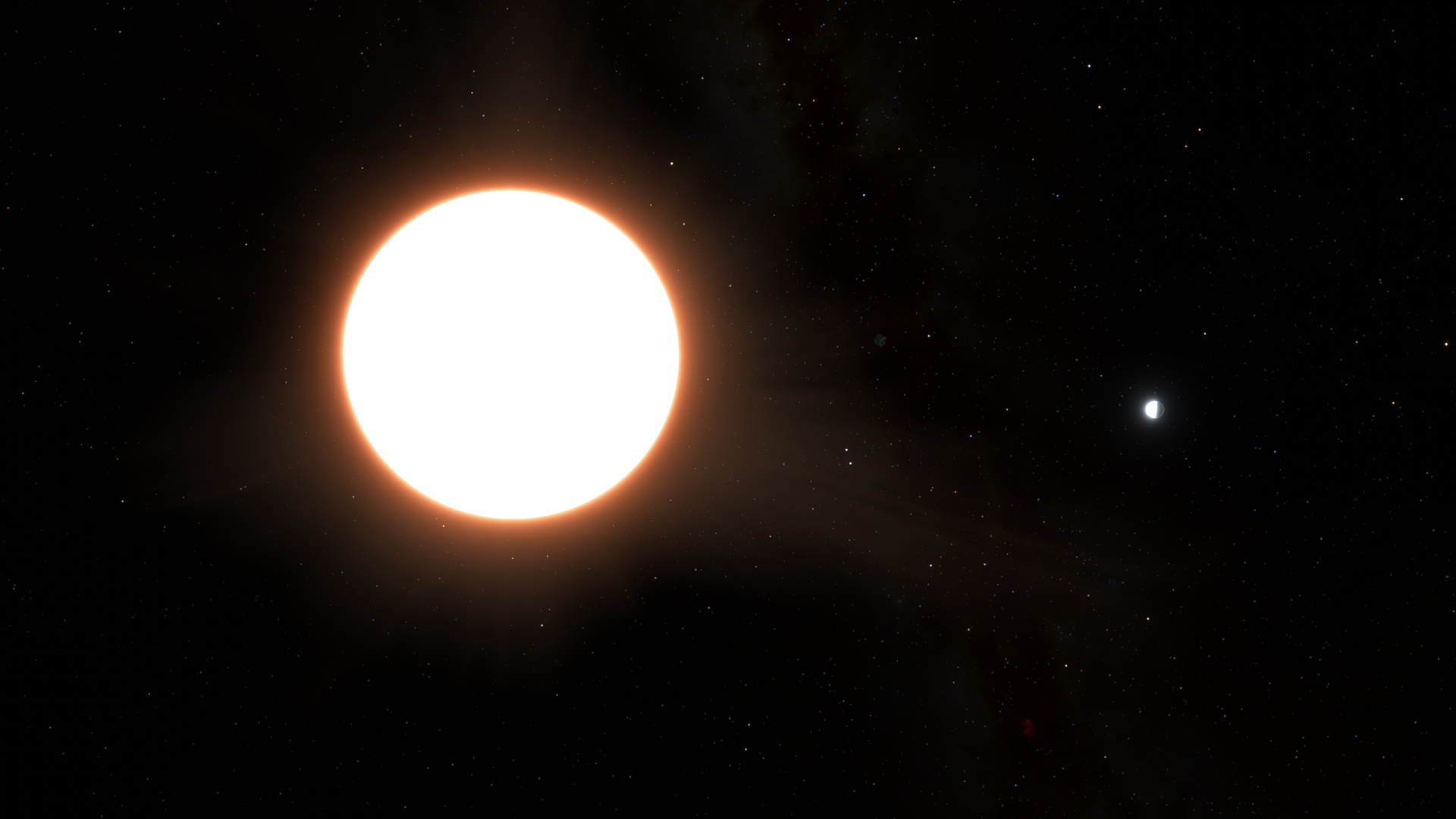
Using data from the European Space Agency's Cheops mission, astronomers have discovered an ultra-hot exoplanet that reflects a whopping 80% of the light shone on it by its host star, making it the largest known "mirror" in the Universe.
The planet LTT9779 b is around the size of Neptune and was initially discovered and characterized by NASA's TESS mission and ground-based instruments such as the ESO HARPS instrument in 2020.
According to the researchers, the reason for the planet's high reflectivity is that it is covered by metallic clouds that are mostly made of silicate - the same stuff that sand and glass are made of - mixed with metals like titanium.
LTT9779 b has scientists scratching their heads due to its unusually high albedo, or reflectivity, considering its scorching surface temperatures. With an estimated temperature of around 2000 degrees Celsius on its star-facing side, the planet should be far too hot for any water clouds to form, let alone clouds made of metal or glass.
The exoplanet stands out not only for its reflective properties but also for its size and proximity to its star. No other planets of similar size and mass have been found to orbit their star at such a close distance, placing LTT9779 b in what astronomers refer to as the "hot Neptune desert."
Can you spot your reflection in this exoplanet?🪩Our @ESA_CHEOPS mission has spotted an ultra-hot planet outside of our Solar System which is covered by reflective clouds of metal, making it the shiniest exoplanet ever found. 👉 https://t.co/nr72NkzwLk pic.twitter.com/lu7fVxuOP4
— ESA (@esa) July 10, 2023
LTT9779 b boasts a radius approximately 4.7 times that of Earth, and completes a full orbit around its star in a mere 19 hours, indicating its incredibly short year. It is worth noting that all previously discovered planets with orbits shorter than a day fall into either the category of "hot Jupiters" (gas giants with a radius at least ten times that of Earth) or rocky planets smaller than two Earth radii.
Scientists eagerly await further investigations and observations using Hubble Space Telescope and the James Webb Space Telescope (JWST) to unravel the mysteries surrounding LTT9779 b.
"LTT9779 b is an ideal target for follow-up with the exceptional capabilities of both the Hubble and James Webb space telescopes. They will allow us to explore this exoplanet with a wider wavelength range including infrared and UV light to better understand the composition of its atmosphere," says ESA science operations scientist Emily Rickman.


 Google News