



Does lightning strike on Earth's twin planet Venus?
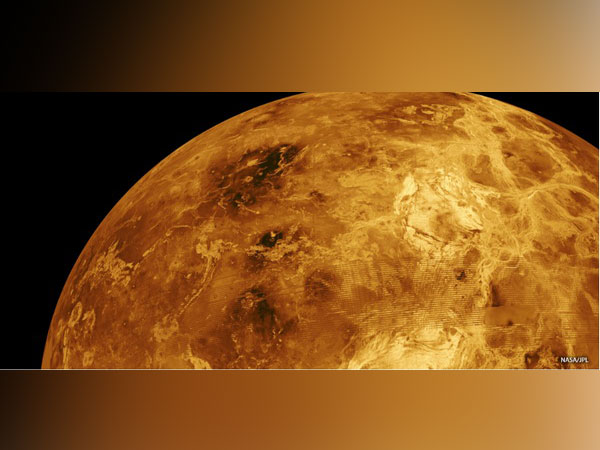
Venus, often called Earth's twin, is one of the most mysterious and inhospitable bodies in our solar system. To explore our closest planetary neighbour, researchers at CU Boulder turned to NASA's Parker Solar Probe which is currently on a mission to study the Sun up close.
The study offers an opportunity to reconcile a long-running debate about lightning on Venus - Does lightning strike on the second planet from the sun?
In February 2021, during its fourth close flyby of Venus, the spacecraft's instruments picked up dozens of what scientists call "whistler waves" - pulses of energy that, on Earth at least, can be kicked off by bolts of lightning. The data suggested that Venus’ whistler waves may not actually originate from lightning, but rather from disturbances in the weak magnetic fields that envelop the planet.
"On Earth, whistler waves are often but not always created by lightning. Lightning strikes, she said, can jostle electrons in the planet’s atmosphere, which then launch waves that spiral out into space. These waves create whistling tones that early radio operators on Earth could hear using headphones, hence the name whistlers," Harriet George, lead author of the new study and a postdoctoral researcher at the Laboratory for Atmospheric and Space Physics (LASP) explained.
David Malaspina, a co-author of the new study, said the findings show just how little humans know about one of our nearest neighbours.
George, Malaspina and their colleagues used Parker Solar Probe's FIELDS Experiment - a set of electric and magnetic field sensors that stick out from the spacecraft - to track these signals.
The researchers also witnessed a strange behaviour - Venus' whistler waves seemed to be moving down toward the planet, not out into space like it is expected from a lightning storm. The reason behind this wrong movement is still unclear. The researchers suspect magnetic reconnection - a phenomenon in which the twisting magnetic field lines that surround Venus come apart then snap back together with explosive results - to be the culprit behind backward whistlers.
More details about this research can be found here.
- READ MORE ON:
- Venus lightning mystery
- Earth's twin planet Venus


 Google News