



Solar flares from distant star could help search for faraway planets that support life
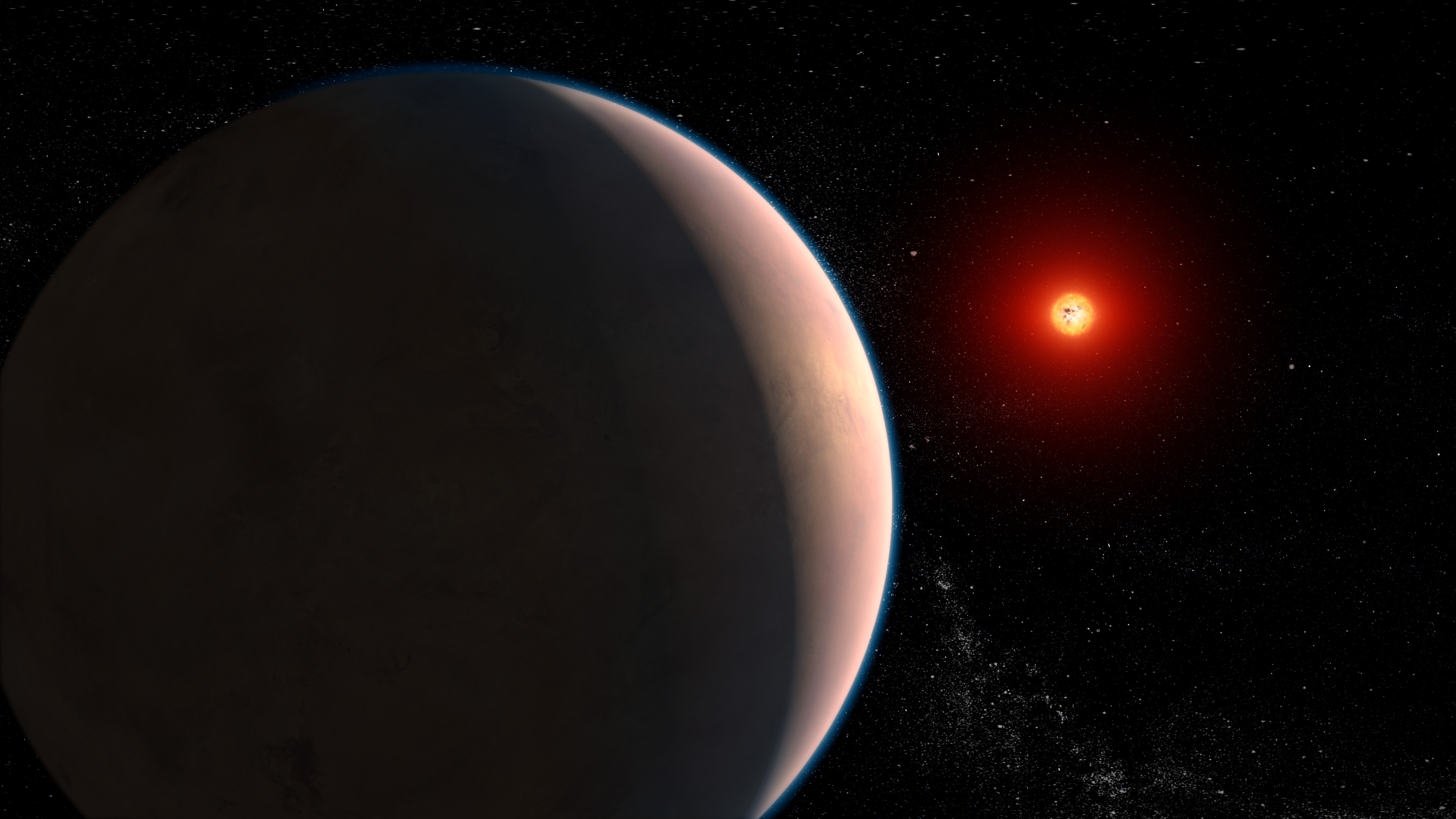
Using the powerful James Webb Space Telescope (JWST), researchers closely observed four solar flares exploding from around a volatile star, named TRAPPIST-1. The findings could further help scientists search for exoplanets - planets beyond our solar system - that resemble Earth and may even support life.
Located about 40 light-years away from Earth, TRAPPIST-1 hosts seven known planets, three of which rest in the habitable zone. While the star is barely bigger than the gas giant Jupiter, it shoots out large flares several times a day, spreading radiation far into space.
Led by Ward Howard, a NASA Sagan Fellow in the Department of Astrophysical and Planetary Sciences at CU Boulder, the researchers recorded a series of solar flares bursting from TRAPPIST-1 over roughly 27 hours. Using a novel mathematical method, the team separated the light coming from those flares from the star's normal radiation and the outcome was potentially clearer images of planets and their atmospheres.
Exoplanets like TRAPPIST-1's seven worlds are so far away, that astrophysicists can only observe them as they pass in front of their bright stars. But when a star is as chaotic as TRAPPIST-1, that becomes difficult, Howard noted.
Using Webb, the team observed flares from TRAPPIST-1 for the first time ever in certain wavelengths of infrared light. They were able to capture the evolution of those four flares in exquisite detail as they evolved over several hours, growing brighter and brighter, then peaking and becoming dim again.
The researchers were also able to remove about 80% of the light from the flares from their observations.
"Because of JWST, it is the first time in history that we've been able to look for planets around other stars that have the sorts of secondary atmospheres you could find around, say, Earth, Venus or Mars," said Howard.
The findings should help astrophysicists collect clearer and more accurate data on the star's seven planets. This approach could also be applied to other similar nearby star systems, according to the researchers.


 Google News