

Science News Roundup: 'We're releasing life': Heat wave speeds turtle hatching in Peru; White House proposes transportation, commerce agencies handle new space regulations and more
A draft plan presented by Vladimir Solovyov of RKK Energia said that Russia was planning manned missions to the moon, including the first Russian human moon landing, along with a moon base, TASS said on Wednesday. Gamma-ray burst in faraway galaxy disturbed Earth's upper atmosphere About two billion years ago in a galaxy far beyond our Milky Way, a big star met its demise in a massive explosion called a supernova that unleashed a huge burst of gamma rays, which pack the most energy of any wave in the electromagnetic spectrum.
Following is a summary of current science news briefs.
'We're releasing life': Heat wave speeds turtle hatching in Peru
In the Peruvian Amazon, an extended heat wave and drought have shortened the incubation period for thousands of turtle hatchlings released into the river by biologists as part of a local environmental program. Around 3,200 yellow-spotted Amazon river turtles, known locally as taricayas, were freed as part of a plan to repopulate the species, which is threatened by hunting.
White House proposes transportation, commerce agencies handle new space regulations
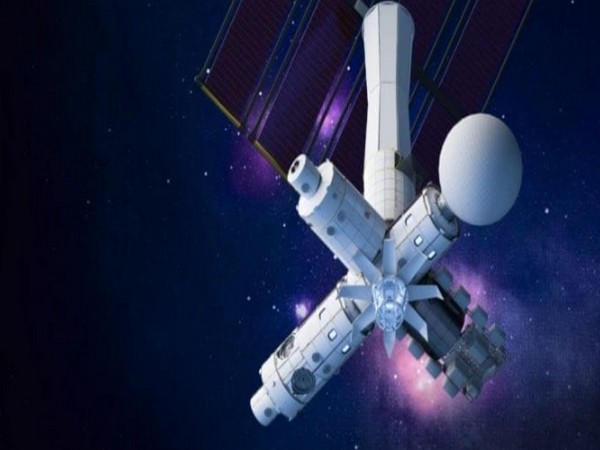
The Biden administration on Wednesday released a long-awaited proposal to split regulatory powers over emerging private-sector space activities between the U.S. transportation and commerce departments, according to a draft legislative proposal. The plan would expand the Federal Aviation Administration's oversight of rocket launch sites on Earth to include various crewed and uncrewed activities in space, from regulating private astronaut missions to licensing commercial space stations and trips to the moon.
The promise and risks of deep-sea mining
The International Seabed Authority is working to set regulations for deep-sea mining as companies engaged in the clean energy transition clamor for more minerals. That transition will be a central focus at the United Nations' COP28 climate summit in Dubai from Nov. 30 to Dec. 12. The seafloor, especially in parts of the Pacific Ocean, is covered by potato-shaped rocks known as polymetallic nodules that are filled with metals used to make lithium-ion batteries for electric vehicles.
US FAA okays SpaceX license for second launch of Starship Super Heavy
The U.S. Federal Aviation Administration on Wednesday granted Elon Musk's SpaceX a license to launch the company's second test flight of its next-generation Starship and heavy-lift rocket from Texas, the agency said. SpaceX said it was targeting Friday for a launch, saying a two-hour launch window opens at 7 a.m. Central Time (1300 GMT) and that local residents "may hear a loud noise" during the rocket's ascent toward space.
Russia says it plans to send cosmonauts to the Moon next decade - TASS
Russia plans to send cosmonauts to land on the Moon next decade for the first time in its history and intends to build a moon base from 2031, according to the Russian corporation responsible for manned space flights, state news agency TASS reported. A draft plan presented by Vladimir Solovyov of RKK Energia said that Russia was planning manned missions to the moon, including the first Russian human moon landing, along with a moon base, TASS said on Wednesday.
Gamma-ray burst in faraway galaxy disturbed Earth's upper atmosphere
About two billion years ago in a galaxy far beyond our Milky Way, a big star met its demise in a massive explosion called a supernova that unleashed a huge burst of gamma rays, which pack the most energy of any wave in the electromagnetic spectrum. Those waves traversed the cosmos and finally reached Earth last year. This gamma-ray burst, researchers said on Tuesday, caused a significant disturbance in Earth's ionosphere, a layer of the planet's upper atmosphere that contains electrically charged gases called plasma.
Scientists discern internal structure of mysterious dwarf planet Eris
Dwarf planet Eris, similar in size to its better-known cosmic cousin Pluto, has remained an enigma since being discovered in 2005 lurking in the solar system's far reaches. While Pluto was explored by NASA's New Horizons spacecraft during a 2015 flyby, Eris - about 40% further from the sun - has never been visited. But scientists are gaining a fuller understanding of Eris and its differences with Pluto thanks to research that discerns details about this frigid remote world's internal structure and composition based on its orbital relationship with its moon Dysnomia.


 Google News