

A Red Sea on Mars? Europe's Mars Express reveals a surprise
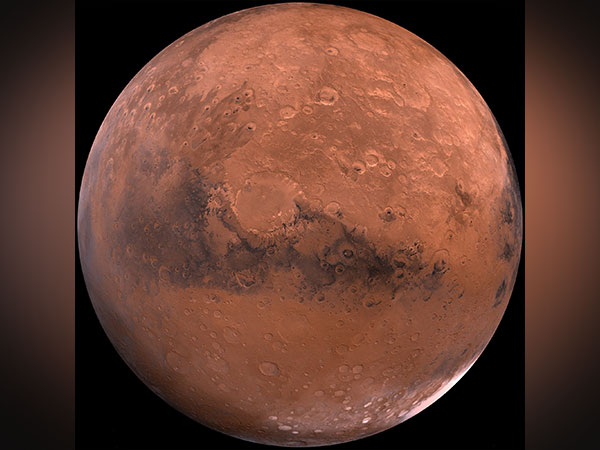
The European Space Agency's Mars Express revisited the Medusae Fossae Formation (MFF), one of the most mysterious features on the Red Planet, and found what seems to be layers of water ice stretching several kilometres below ground – the most water ever found in this part of the planet and enough to fill the Red Sea on Earth.
The ice deposit is thousands of metres high and hundreds of kilometres wide. The researchers estimate that the layer of dry material (likely dust or volcanic ash) covering the ice is 300-600 m thick. If the suspected water ice melted, it would be enough to cover Mars in an ocean of water 2.7 m deep.
"This latest analysis challenges our understanding of the Medusae Fossae Formation, and raises as many questions as answers. How long ago did these ice deposits form, and what was Mars like at that time? If confirmed to be water ice, these massive deposits would change our understanding of Mars climate history. Any reservoir of ancient water would be a fascinating target for human or robotic exploration," says Colin Wilson, ESA project scientist for Mars Express and the ESA ExoMars Trace Gas Orbiter (TGO).
Mars exhibits several signs that water was once abundant on the planet - such as dried-up river channels, ancient ocean and lake beds, and water-carved valleys. The massive deposits of ice near the Martian equator including those suspected to lurk below the dry surface of the MFF couldn't have formed in present climatic conditions. They must have formed in the past when the climate was favourable.
Water, as we know here on Earth, is a critical resource for life. As space agencies are planning to send humans to Mars for the first time, the icy deposits within MFF would also make them potentially very valuable for human missions.
A Red Sea on the Red Planet? 🔴🌊#MarsExpress has revisited one of #Mars's most intriguing features, revealing what seems to be layers of water ice below the dusty surface. If melted, this potential water would be enough to fill Earth's Red Sea, or cover Mars in a layer of… pic.twitter.com/o6mBQgwJk8
— ESA Science (@esascience) January 18, 2024


 Google News