

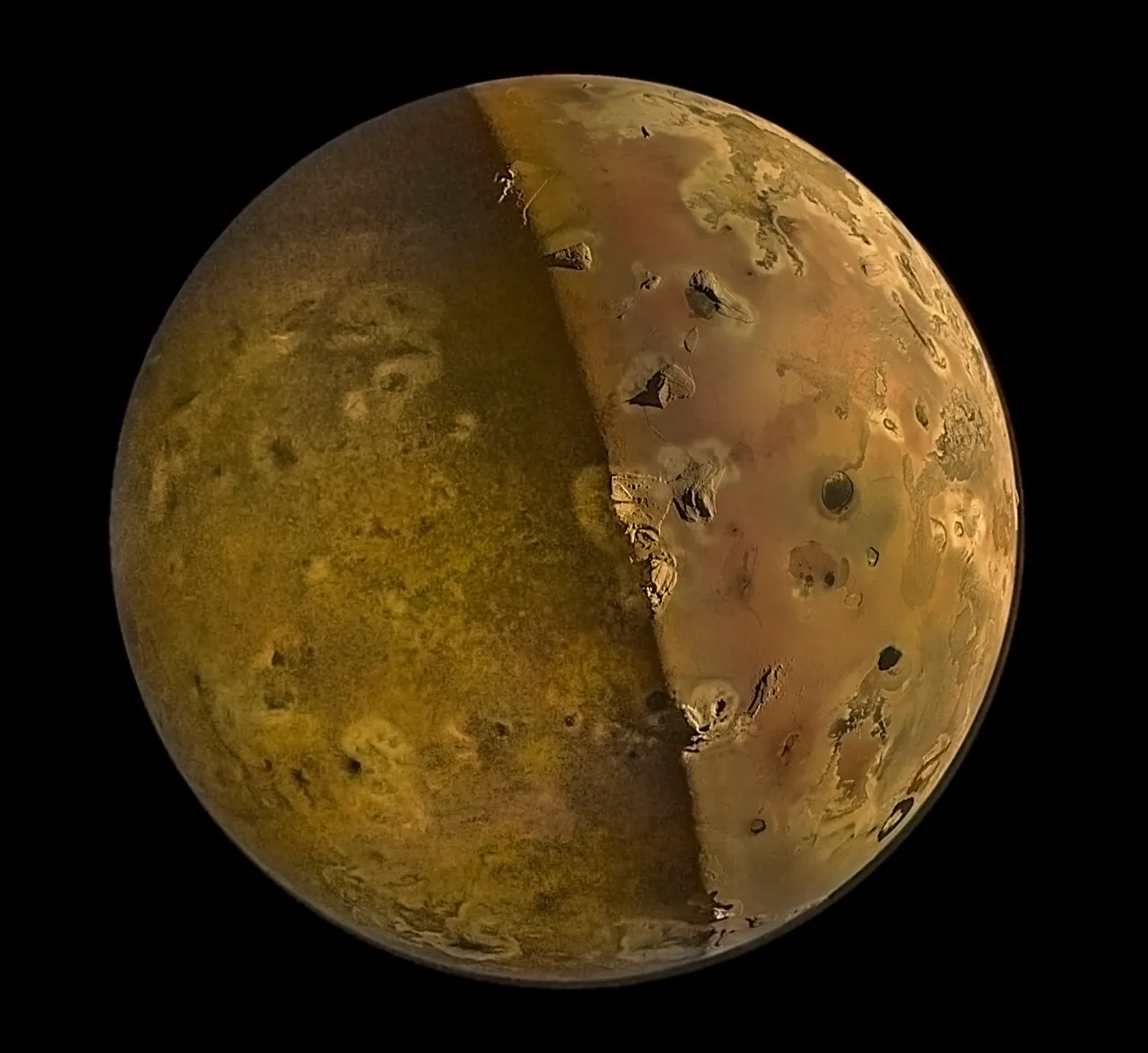
NASA spacecraft captures sharpest pictures of Jupiter’s volcanic moon Io
- Country:
- United States
On February 3, NASA's Juno spacecraft made a second super-close flyby of Jupiter's volcanic moon Io that any spacecraft has carried out in more than 20 years. The JunoCam camera onboard the spacecraft returned spectacular, high-resolution images and raw data gathered during this encounter.
During the recent flyby, Juno came within about 930 miles (1,500 kilometers) of the surface of the Jovian moon which is known for its intense volcanic activity. The pass went predominantly over the southern hemisphere of Io, while prior flybys have been over the north. There's evidence of an active plume, tall mountain peaks with well-defined shadows, and lava lakes - some with apparent islands, the agency said on Wednesday.
🌋 On Feb. 3, the #JunoMission captured two volcanic plumes rising above Jupiter's moon Io – either two vents from one giant volcano, or two volcanoes near each other. The team will be analyzing this against additional data from Juno and other missions to get a better… pic.twitter.com/CEgZMG2rSQ
— NASA Solar System (@NASASolarSystem) February 6, 2024
NASA's Juno mission has been monitoring Io's volcanic activity from distances ranging from about 6,830 miles (11,000 kilometers) to over 62,100 miles (100,000 kilometers). The mission has provided the first views of the moon's north and south poles.
Apart from observing Io, Juno has previously performed close flybys of the icy Jovian moons Ganymede and Europa.
What's next?
Starting in April 2024, the spacecraft is set to carry out a series of occultation experiments utilizing Juno's Gravity Science experiment to probe Jupiter's upper atmospheric makeup, which provides crucial insights into the planet's shape and its internal makeup.


 Google News