

Delhi Takes Measures to Prevent Flooding Amidst Rising Yamuna Levels
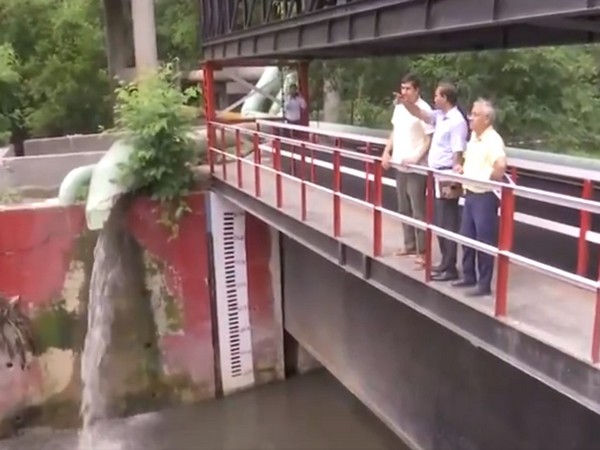
Delhi's Irrigation and Flood Control Minister, Saurabh Bharadwaj, announced the renovation of 14 regulators on drains to prevent flooding. Key measures include pilot cuts, restoration of breached regulators, and plans for a stepped ramp at Monastery market. The department is also preparing for potential heavy water discharge from Haryana's Hathnikund Barrage.
- Country:
- India
Delhi's Irrigation and Flood Control Minister, Saurabh Bharadwaj, announced on Thursday that his department has renovated regulators on 14 drains to mitigate flooding risks in the national capital.
The department has created pilot cuts in areas like the ITO bridge and Old Railway bridge to facilitate water movement. These cuts are temporary measures to manage extra discharge during floods.
Additionally, the regulator of drain number 12 near the WHO Building has been restored. It had broken during a flood last year, submerging areas like ITO.
The Indraprastha water regulator was breached on July 17 last year due to a strong Yamuna current, peaking at 208.66 meters, much above the danger mark. All 14 regulators have been restored, and gate heights at Tanga Stand and Metcalf House regulators have been increased.
Plans are also in place to construct a stepped ramp at the Monastery market, subject to consultation with market associations, to address last year’s heavy flooding.
Bharadwaj highlighted that heavy discharge into the Yamuna from Haryana's Hathnikund barrage, worsened by rain, is a primary cause of flooding in Delhi. Direct drainage discharge is halted when river levels rise, and warnings are issued at 204.5 meters, with evacuations starting at 205.33 meters.
Warnings escalate with discharge levels, and people living on river embankments are alerted and relocated as needed. The first warning triggers at 1 lakh cusecs, public announcements follow, and evacuations occur at higher thresholds.
Unlike Mumbai, Delhi's drainage water must be discharged into the Yamuna, necessitating the use of pumps when river levels rise. Bharadwaj emphasized that the city is prepared with operational pumps this year.
The Central Water Commission now provides real-time data, replacing last year's manual arrangements. Large tower constructions near Haryana's Najafgarh Lake pose additional flood risks, and Delhi has requested Haryana to halt these constructions.
Desilting operations have removed 12.97 lakh metric tons of silt, and a flood control room in Shastri Nagar now offers real-time updates.


 Google News