

India Declares August 23rd as "National Space Day" to Celebrate Chandrayaan-3 Success
Union Minister for Fisheries, Animal Husbandry & Dairying and Panchayati Raj, Shri Rajiv Ranjan Singh, will lead the “Celebration of National Space Day” at Krishi Bhawan, New Delhi, on August 23, 2024.
- Country:
- India
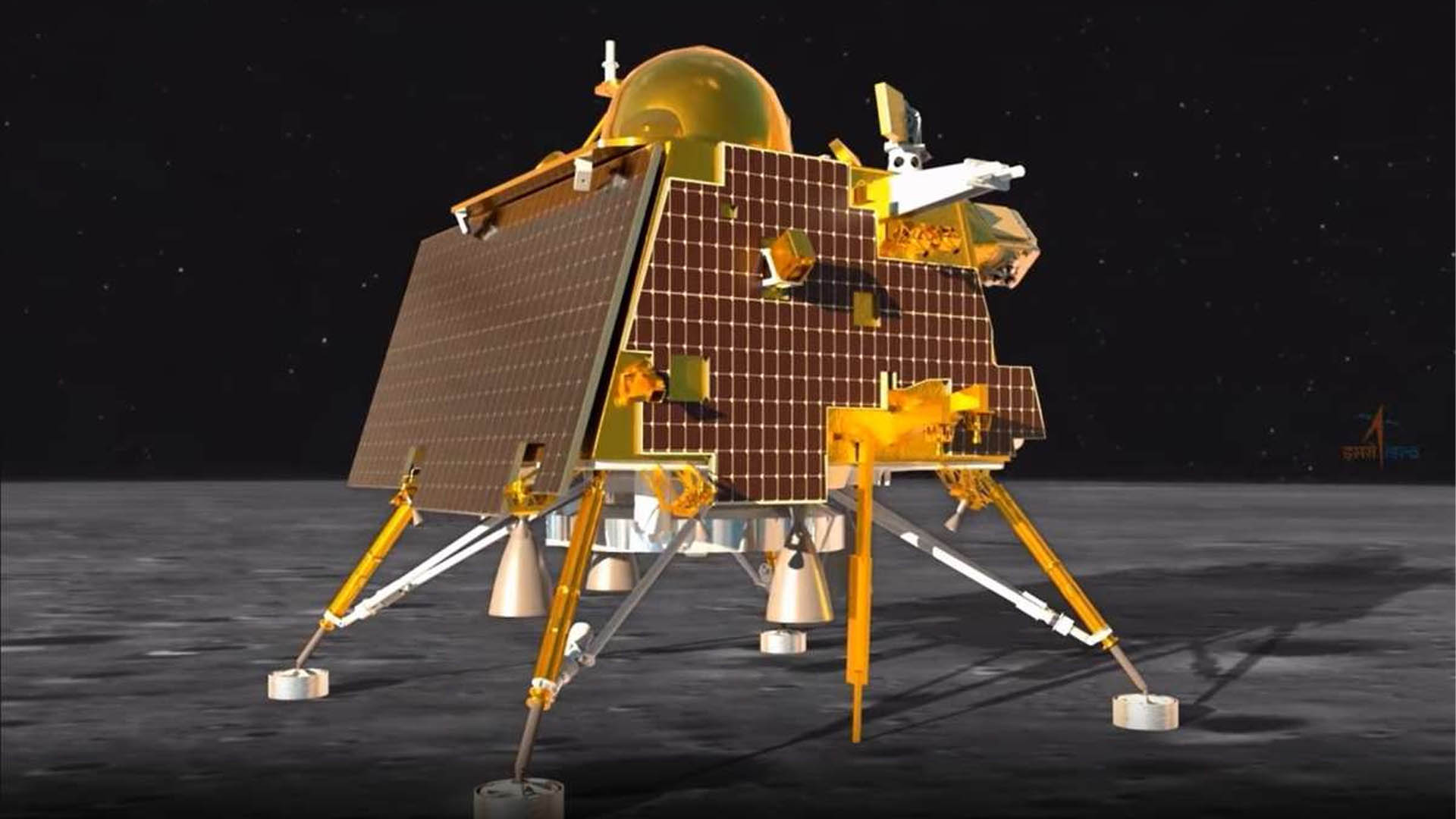
The Government of India has designated August 23rd as "National Space Day" to celebrate the historic success of the Chandrayaan-3 Mission, which achieved a safe and soft landing of the Vikram Lander and deployed the Pragyaan rover on the Moon's south pole. This monumental achievement has placed India among an elite group of space-faring nations, marking it as the fourth country to land on the Moon and the first to do so at the lunar south pole. Celebrations are taking place across the country throughout July and August 2024, aiming to inspire and engage the younger generation in space science and technology.
Union Minister for Fisheries, Animal Husbandry & Dairying and Panchayati Raj, Shri Rajiv Ranjan Singh, will lead the "Celebration of National Space Day" at Krishi Bhawan, New Delhi, on August 23, 2024. The event will be attended by Ministers of State Prof. S. P Singh Baghel and Shri George Kurian, along with Secretary of the Department of Fisheries Dr. Abhilaskh Likhi and other dignitaries.
To honor the Chandrayaan-3 mission, the Department of Fisheries is organizing a series of seminars and demonstrations on the "Application of Space Technologies in the Fisheries Sector" in coastal states and union territories. These events, guided by Dr. Abhilaskh Likhi, will cover topics such as space technology's role in fisheries, communication and navigation systems for the marine domain, and space-based observations' impact on fisheries.
Key participants in these events will include representatives from the Department of Space, INCOIS, New Space India Ltd., fishermen, Sagar Mitras, FFPOs, fisheries cooperatives, ICAR Fisheries Research Institutes, State/UT Fisheries Departments, and students from fisheries universities and colleges.
India's fisheries sector is vital for the nation's economy, providing sustenance, employment, and economic opportunities, particularly in rural areas. With an extensive coastline of 8,118 km and a vast Exclusive Economic Zone (EEZ) of 2.02 million square km, the country boasts a rich and flourishing fisheries ecosystem.
Space technologies have the potential to significantly enhance Indian marine fisheries management. Innovations such as Satellite Remote Sensing, Earth Observations, Satellite-based Navigation Systems, GIS, and Data Analytics are transforming the sector. Satellite Remote Sensing, using satellites like Ocean-sat and INSAT, monitors ocean color, chlorophyll content, and sea surface temperature to identify potential fishing grounds and detect environmental changes. Earth Observations track ocean currents, waves, and weather hazards, optimizing fishing operations and safety. Satellite-based Navigation and GIS help with vessel tracking, marine habitat mapping, and protected area recognition. Satellite communication networks enable real-time data exchange between vessels and shore-based stations, enhancing maritime safety and fishermen's livelihoods. Data Analytics and AI predict fish distributions and optimize management practices, while image sensing and aqua zoning offer precise fisheries management tools.
The introduction of Potential Fishing Zones (PFZ) advisories has notably improved the marine fisheries sector. By utilizing ocean color monitor data from Ocean-sat, fish aggregation areas are identified and communicated to fishermen. This has increased India's estimated marine fisheries potential from 3.49 lakh tonnes in 2014 to 5.31 lakh tonnes in 2023, allowing for more efficient fishing practices and sustainable resource management.
The Department of Fisheries supports these advancements through the Pradhan Mantri Matsya Sampada Yojana (PMMSY), providing communication and tracking devices such as VHF radios, Distress Alert Transmitters (DATs), and transponders. Additionally, the National Rollout Plan under PMMSY includes the installation of 100,000 transponders on marine fishing vessels, with an outlay of Rs. 364 crores, to enhance monitoring, control, and surveillance across 9 coastal states and 4 union territories.
The celebration of National Space Day and the focus on space technologies in fisheries highlight the transformative impact of these innovations on India's maritime sector and its continued commitment to advancing space and technology applications for national development.


 Google News