

New WHO Report Sets Diagnostic Standards for Trachoma Elimination
A new WHO report, Diagnostic Target Product Profiles for Trachoma Surveillance, outlines essential diagnostic benchmarks to enhance global trachoma surveillance and elimination efforts. With millions still at risk, the report highlights the need for affordable, accurate, and field-ready diagnostic tools to detect and monitor infections. By setting clear target product profiles, WHO is driving innovation in diagnostics to support its goal of eliminating trachoma as a public health problem by 2030.
 CoE-EDP, VisionRI
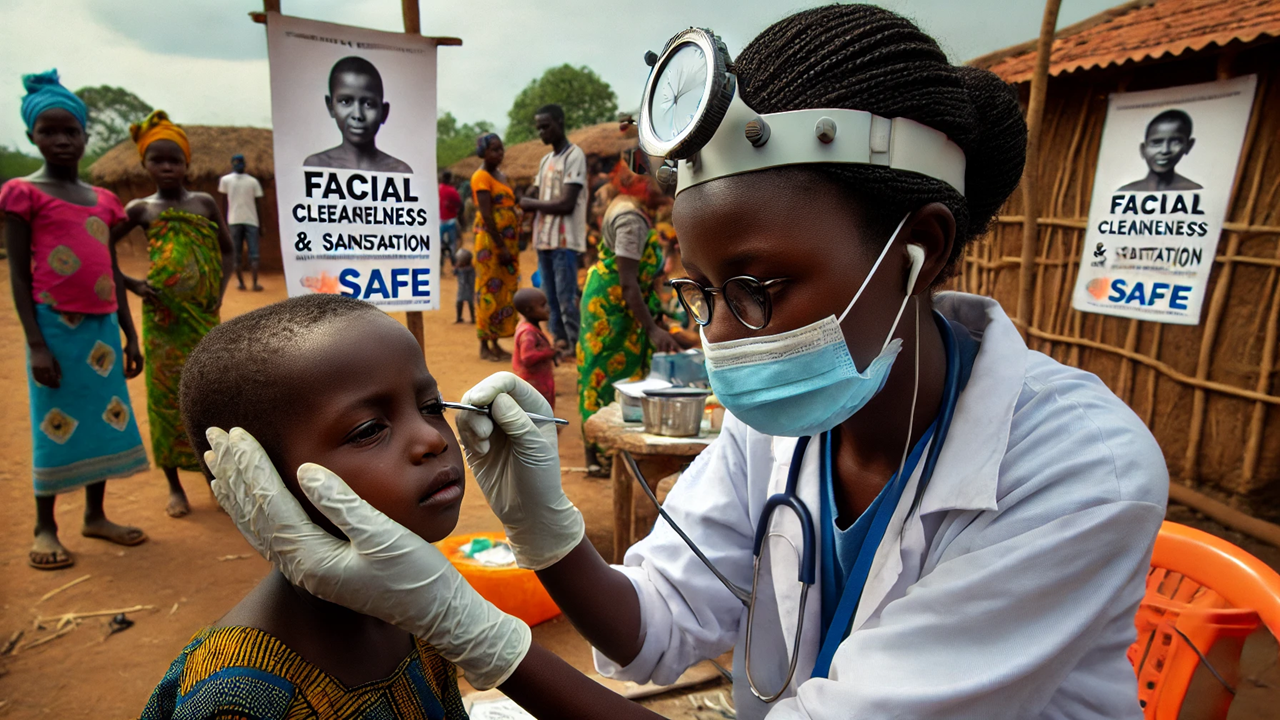
A new report published by the World Health Organization (WHO), Diagnostic Target Product Profiles for Trachoma Surveillance, lays out critical diagnostic benchmarks aimed at accelerating the elimination of trachoma, the world's leading infectious cause of blindness. With 116 million people still at risk, primarily in Africa, the report establishes clear guidelines for innovative diagnostic tools that will enhance global efforts in disease monitoring, treatment, and prevention.
Trachoma, caused by the bacterium Chlamydia trachomatis, progresses from a minor eye infection to severe scarring, leading to trichiasis—an advanced stage where eyelashes turn inward, scraping the cornea and eventually causing blindness. The disease is highly contagious, spreading through direct contact, shared items, and flies that transfer infected eye secretions. While significant progress has been made in combating trachoma, with a 92% reduction in cases from 2002 to 2022, certain regions still experience persistent and recurring infections. WHO has set a 2030 target for trachoma elimination, and robust diagnostic tools are a crucial component of achieving this goal.
WHO's trachoma elimination strategy follows the SAFE model, which consists of Surgery to correct trichiasis, Antibiotics to clear the infection, Facial cleanliness to reduce transmission, and Environmental improvements such as sanitation and access to clean water to prevent reinfection. While these interventions have drastically reduced trachoma prevalence, continuous surveillance is necessary to detect persistent or resurgent cases. The WHO report provides a structured approach for developing and deploying new diagnostic tools to ensure that once transmission is interrupted, it does not return.
Traditional trachoma diagnosis relies on WHO's simplified grading system, which assesses inflammation and trichiasis. However, this method has notable limitations, including subjectivity, difficulty in training personnel, and poor sensitivity in detecting Chlamydia trachomatis infections. The report highlights two advanced diagnostic approaches: Nucleic Acid Amplification Testing (NAAT), a highly sensitive laboratory method that detects C. trachomatis DNA but requires specialized equipment and trained personnel, and Serological Testing, a tool that detects antibodies indicating past exposure but cannot confirm active infections. Neither of these methods is universally suitable, necessitating the development of affordable, scalable, and field-ready alternatives.
The WHO report introduces Target Product Profiles (TPPs), which define the necessary characteristics of diagnostic tests in three key epidemiological contexts: newly suspected endemic areas where testing is required to confirm disease presence and track progress post-intervention, post-MDA surveillance to monitor infection recurrence after mass drug administration (MDA) ends, and unusual epidemiological settings where infection patterns do not align with typical transmission models. The TPPs serve as blueprints for test developers, outlining minimum and ideal diagnostic characteristics to improve efficiency, affordability, and accessibility.
To support the global trachoma elimination agenda, diagnostic tools must meet specific criteria to ensure widespread adoption and efficacy. The WHO report details essential characteristics such as high sensitivity and specificity to minimize misdiagnoses and prevent unnecessary MDA, ease of use requiring minimal training for field deployment, affordability with a cost target of less than $10 per test to ensure broad accessibility, durability to function in varied environmental conditions, and scalability for procurement in all endemic regions without supply restrictions. By adhering to these guidelines, diagnostic developers can create tools that integrate seamlessly into trachoma surveillance programs, strengthening early detection and intervention efforts.
The Diagnostic Target Product Profiles for Trachoma Surveillance report marks a significant advancement in the fight against trachoma. By setting precise benchmarks for diagnostics, WHO is paving the way for more effective surveillance, improved treatment strategies, and ultimately, the global elimination of this preventable disease. With continued innovation and commitment from governments, researchers, and public health organizations, the world edges closer to eradicating trachoma. The next decade will be crucial in ensuring these diagnostic tools are developed, deployed, and used effectively to safeguard the vision of millions.
- FIRST PUBLISHED IN:
- Devdiscourse


 Google News