

IAEA Warns Ukraine War Remains World’s Gravest Nuclear Safety Risk
IAEA experts continue to closely monitor the plant’s resilience during winter conditions, including efforts to prevent freezing of cooling and sprinkler ponds.
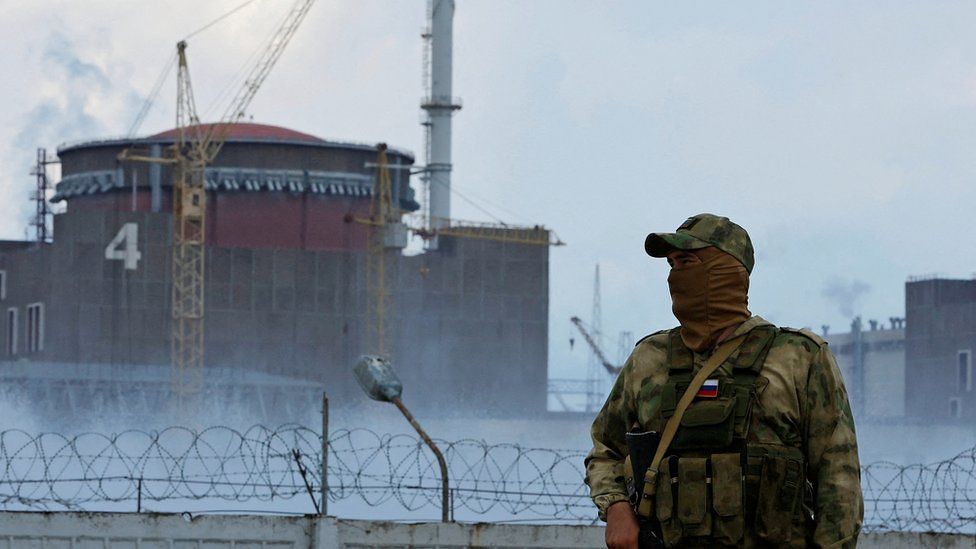
As the conflict in Ukraine approaches its fifth year, the International Atomic Energy Agency (IAEA) has issued a renewed warning that the war continues to pose the most serious threat to global nuclear safety, underscoring the urgent need to protect critical power infrastructure linked to nuclear facilities.
IAEA teams remain deployed at all nuclear power plants affected by the conflict, providing continuous, on-the-ground monitoring and publishing regular public updates on nuclear safety and security conditions. Central to these efforts are the IAEA's Seven Pillars for Nuclear Safety and Security during Armed Conflict and the Five Principles for Protecting the Zaporizhzhya Nuclear Power Plant (ZNPP)—both of which enjoy broad international support, including from the parties directly involved in the war.
A core requirement under these frameworks is the availability of reliable off-site power. Without it, nuclear power plants cannot operate safely.
Fragile power lifelines under fire
At the Zaporizhzhya Nuclear Power Plant, Europe's largest, off-site power remains dangerously vulnerable. In recent months, the IAEA facilitated four separate, time-bound ceasefire arrangements between Ukrainian and Russian counterparts to enable five emergency repairs to power lines supplying the site.
Most recently, on 19 January, ZNPP was reconnected to its last remaining backup 330-kilovolt power line after repairs were completed. The line had been out of service since 2 January due to reported military activity, leaving the plant reliant on a single 750-kV main line to power essential safety systems for its six shutdown reactors and spent fuel pools.
IAEA experts continue to closely monitor the plant's resilience during winter conditions, including efforts to prevent freezing of cooling and sprinkler ponds.
"Any further damage to these lines could have catastrophic consequences," the Agency reiterated, stressing once again the need for strict adherence to the Five Principles to prevent a nuclear accident.
Substations emerge as critical weak points
Beyond the plants themselves, the IAEA has identified electrical substations as a growing nuclear safety concern. Damage to these facilities directly undermines the secure off-site power supply required under internationally agreed nuclear safety standards.
In response, IAEA teams have expanded their field missions. An expert mission currently underway is assessing ten key substations vital to nuclear safety, following up on earlier inspections conducted in December 2025 and examining additional sites amid ongoing strikes on Ukraine's power infrastructure.
At the Chornobyl site, recent military activity damaged a critical substation, disconnecting multiple high-voltage power lines. Although alternative lines remained available, emergency diesel generators had to be used to maintain safety systems at both the New Safe Confinement and the Interim Spent Fuel Storage Facility-2. All affected lines have since been restored.
Further technical details are documented in IAEA Update 338 and will be included in the Agency's forthcoming report to the Board of Governors.
A call for responsibility—and support
"The best way to ensure nuclear safety and security is to bring this conflict to an end," the IAEA emphasized, while noting that international institutions can still play a vital stabilizing role even amid active warfare.
Through continuous presence, negotiation, and technical assessment, the IAEA has demonstrated how focused, neutral engagement can reduce risks and prevent escalation around nuclear facilities.
Call to action: safeguard nuclear safety now
The IAEA is urging governments, energy authorities and international partners to actively support the protection of nuclear-related power infrastructure, uphold agreed safety principles, and back the Agency's on-the-ground work. Early and sustained engagement remains critical to preventing a nuclear accident with consequences far beyond Ukraine.


 Google News