

Change in moisture, temp have increased risk of fungal disease in banana crop
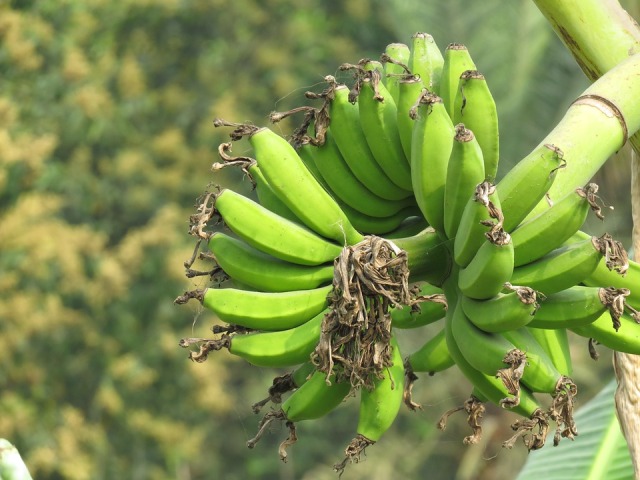
Research has shown that climate change increased the risk of a fungal disease, called Black Sigatoka, which ruins the banana crop. Black Sigatoka disease emerged from Asia in the late 20th century and has recently completed its invasion of banana-growing areas in Latin America and the Caribbean.
The study, published in the journal Philosophical Transactions of the Royal Society B, stated that changes to moisture and temperature conditions have increased the risk of Black Sigatoka by more than 44 per cent in these areas since the 1960s. International trade and increased banana production have also aided the spread of Black Sigatoka, which can reduce fruit production by infected plants by up to 80 per cent.
"Black Sigatoka is caused by a fungus (Pseudocercospora fijiensis) whose lifecycle is strongly determined by weather and microclimate," said Dr Daniel Bebber, one of the researchers. "This research shows that climate change has made temperatures better for spore germination and growth, and made crop canopies wetter, raising the risk of Black Sigatoka infection in many banana-growing areas of Latin America," said Dr Bebber.
"Despite the overall rise in the risk of Black Sigatoka in the areas we examined, drier conditions in some parts of Mexico and Central America have reduced infection risk," Dr Bebber added. The study combined experimental data on Black Sigatoka infections with detailed climate information over the past 60 years.
Black Sigatoka, which is virulent against a wide range of banana plants, was first reported in Honduras in 1972. It spread throughout the region to reach Brazil in 1998 and the Caribbean islands of Martinique, St Lucia and St Vincent and the Grenadines in the late 2000s.
The disease now occurs as far north as Florida. "While the fungus is likely to have been introduced to Honduras on plants imported from Asia for breeding research, our models indicate that climate change over the past 60 years has exacerbated its impact," said Dr Bebber.
The Pseudocercospora fijiensis fungus spreads via aerial spores, infecting banana leaves and causing streaked lesions and cell death when fungal toxins are exposed to light. The study did not attempt to predict the potential effects of future climate on the spread and impact of Black Sigatoka. Other research suggests drying trends could reduce disease risk, but this would also reduce the availability of water for the banana plants themselves.
ALSO READ
-
Rural Investment Can Unlock Growth Across Latin America and the Caribbean, Says IFAD
-
IFC and SMBC Launch $500m Facility to Help Small Suppliers Get Paid Faster
-
IDB Sets Out Education Roadmap to Close LAC Learning Gaps
-
IDB Forum Puts Latin America and Caribbean’s $1.4 Trillion Housing Needs in Focus
-
IAEA and IDB Join Forces to Expand Nuclear Energy in Latin America and Caribbean


 Google News