

Stardust in Antarctic snow provides information on the solar system environment
Each year cosmic dust trickles down to earth which ranges between several thousand and ten thousand tons. These tine particles usually come from asteroids or comets which are located in our solar system and some percentage comes from distant stars.
There are no natural terrestrial sources for the iron-60 isotope contained therein; it originates exclusively as a result of supernova explosions or through the reactions of cosmic radiation with cosmic dust.
20 years ago the TUM research team found first evidence of the occurrence of iron-60 on Earth in a deep-sea deposit. Among the scientists on the team was Dr. Gunther Korschinek, who hypothesized that traces of stellar explosions could also be found in the pure, untouched Antarctic snow.
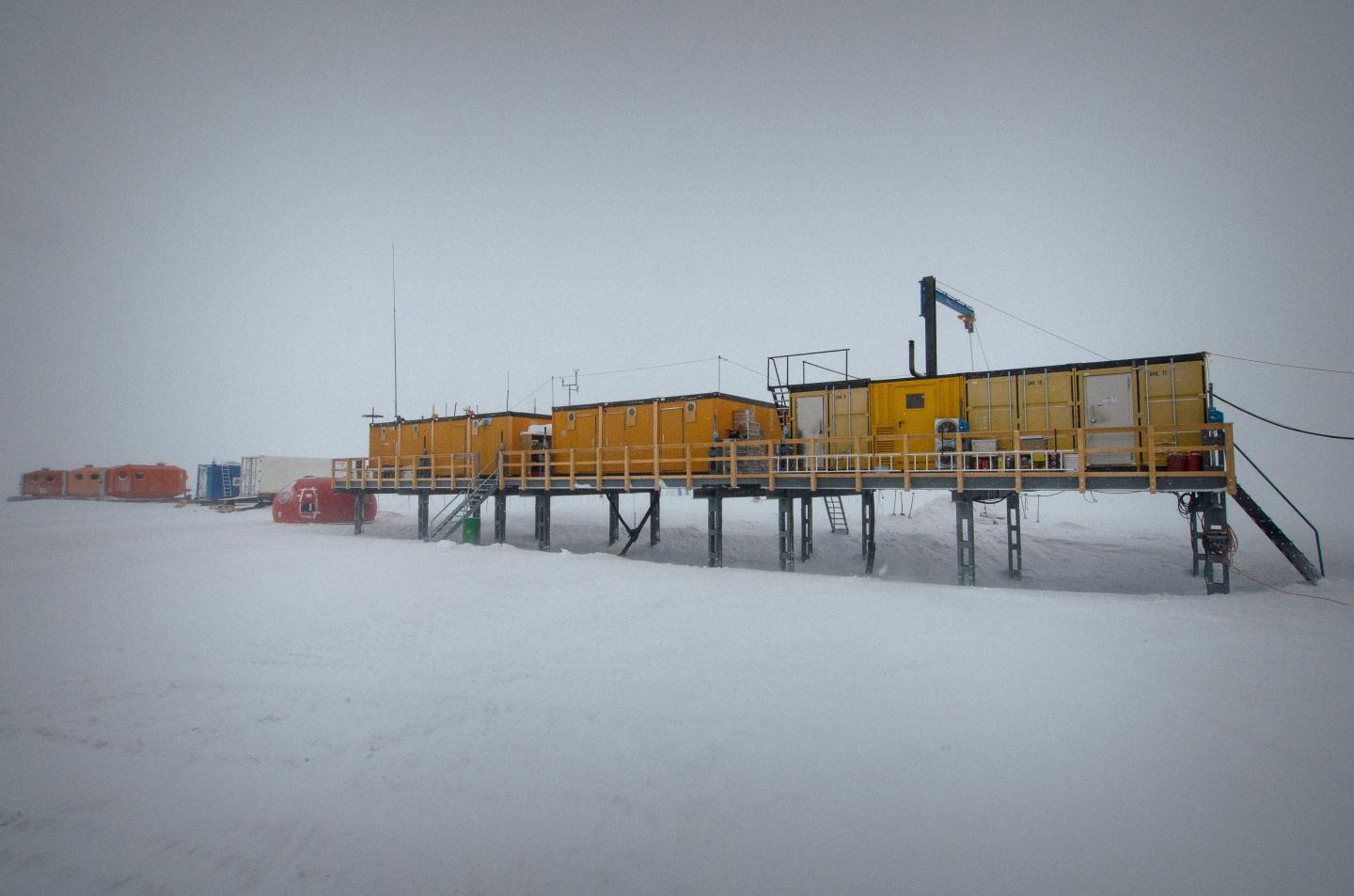
In order to verify this assumption, Dr. Sepp Kipfstuhl from the Alfred Wegener Institute collected 500 kg of snow at the Kohnen Station, a container settlement in the Antarctic.
"Our analyses allowed us to rule out cosmic radiation, nuclear weapons tests or reactor accidents as sources of the iron-60," states Koll. "As there are no natural sources for this radioactive isotope on Earth, we knew that the iron-60 must have come from a supernova."
Iron-60, any atoms originating from the formation of the Earth would have completely decayed by now. Koll, therefore, assumes that the iron-60 in the Antarctic snow originates from the interstellar neighborhood, for example from an accumulation of gas clouds in which our solar system is currently located.


 Google News