

AI's human core: Challenging the myth of autonomous intelligence
AI systems are often described using terms like "autonomous" or "self-learning," obscuring the vast amount of human labor required to train and maintain them. This labor includes tasks like data annotation, cleaning, and interpretation—activities dismissed as unskilled and low-value. Yet, the study highlights how these tasks demand a high degree of judgment, interpretation, and expertise, particularly when faced with ambiguous or culturally specific data.
 COE-EDP
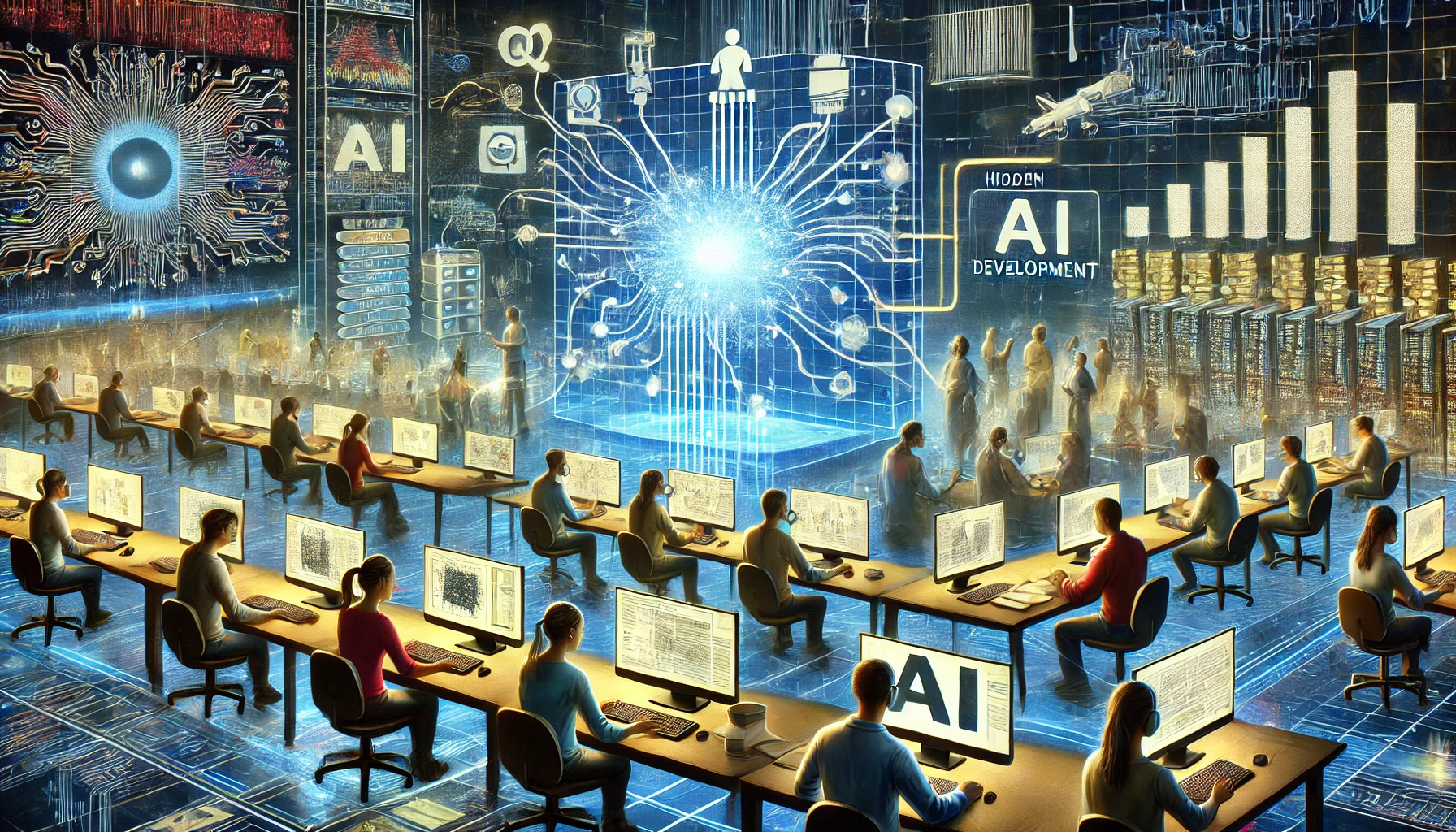
Artificial Intelligence (AI) is often portrayed as an autonomous, almost magical process driven by algorithms that mimic human intelligence. Yet, behind every sophisticated AI model lies a complex web of human labor, from data annotation to model refinement. This intricate interplay of human effort and machine capability is the subject of the study titled "Everybody Knows What a Pothole Is': Representations of Work and Intelligence in AI Practice and Governance", authored by S. J. Bennett, Benedetta Catanzariti, and Fabio Tollon, and published in AI & Society.
The study explores how distributed networks of human and machine labor form the foundation of AI systems, challenging the traditional framing of AI as merely an autonomous system replicating human intelligence. By examining the overlooked contributions of data workers and the socio-political dynamics underpinning AI development, the authors reveal how inequities in labor and intelligence are perpetuated within AI practice and governance.
The invisible workforce of AI
AI systems are often described using terms like "autonomous" or "self-learning," obscuring the vast amount of human labor required to train and maintain them. This labor includes tasks like data annotation, cleaning, and interpretation—activities dismissed as unskilled and low-value. Yet, the study highlights how these tasks demand a high degree of judgment, interpretation, and expertise, particularly when faced with ambiguous or culturally specific data.
For example, one data lead described how annotating seemingly simple objects, like potholes, revealed unforeseen complexities. What constitutes a pothole in Japan differs significantly from Canada due to variations in road design and cultural interpretations. Such examples illustrate the depth of human reasoning required in tasks often framed as mundane and mechanical.
These misrepresentations extend beyond task design to the structural inequities that stratify the AI supply chain. Data workers, often outsourced from low-income regions, face limited agency and recognition, while high-level practitioners in the Global North are seen as the primary contributors to AI innovation. This power imbalance marginalizes the contributions of data workers, shaping how intelligence is valued and reinforcing socio-economic divides.
A new framework for understanding AI work
The authors introduce the concept of "representation coils" to describe how assumptions about skill, intelligence, and task complexity are iteratively reinforced in AI development. These feedback loops solidify power dynamics and inequities, shaping how tasks are designed and how labor is valued.
For instance, annotators are often treated as interchangeable, their work framed as requiring little judgment. This framing overlooks the complex decision-making involved in annotation tasks and reduces opportunities for their insights to influence system design. The authors argue that these representation coils perpetuate epistemic injustices - where certain knowledge contributions are systematically undervalued due to the identity or context of the contributors.
Implications for responsible AI
The findings have significant implications for the governance and development of Responsible AI (R-AI). Traditional R-AI frameworks focus on principles like fairness, privacy, and accountability but often fail to account for the socio-material conditions of AI development. By ignoring the role of human labor and the inequities embedded in the AI supply chain, these frameworks risk reinforcing existing disparities rather than addressing them.
The study calls for a shift in how AI is governed and studied. It advocates for greater transparency in the AI development process, highlighting the contributions of data workers and fostering collaboration across the AI supply chain. Recognizing data workers as integral to the innovation process, rather than peripheral contributors, could lead to more equitable and inclusive AI systems.
The path forward
To address these challenges, the authors propose several actionable steps. First, reframing data work as skilled and creative labor is essential to challenge existing power dynamics and foster equitable participation. Providing data workers with opportunities to influence system design and evaluation would ensure their expertise is recognized and leveraged effectively.
Second, adopting a network-based approach to AI development, rather than the linear "pipeline" model, could better capture the iterative and collaborative nature of AI practice. This shift would allow for a more nuanced understanding of how tasks, roles, and responsibilities intersect within the AI supply chain.
Lastly, embedding principles of Responsible Research and Innovation (RRI) into AI governance could help bridge the gap between high-level ethical guidelines and the material realities of AI development. By focusing on the relationships and practices that underpin AI systems, RRI could promote a more inclusive and reflexive approach to innovation.
- FIRST PUBLISHED IN:
- Devdiscourse


 Google News