

Smart "intellectual rooms" use IoT and AI to revolutionize patient monitoring
The concept of “Intellectual Rooms” is based on integrating common IoT devices, such as smartphones, wearables, smartwatches, and smart lighting, into a unified Ambient Intelligence system. Rather than relying on specialized, hospital-grade equipment, the system utilizes widely available devices to collect and analyze data in real time.
 COE-EDP
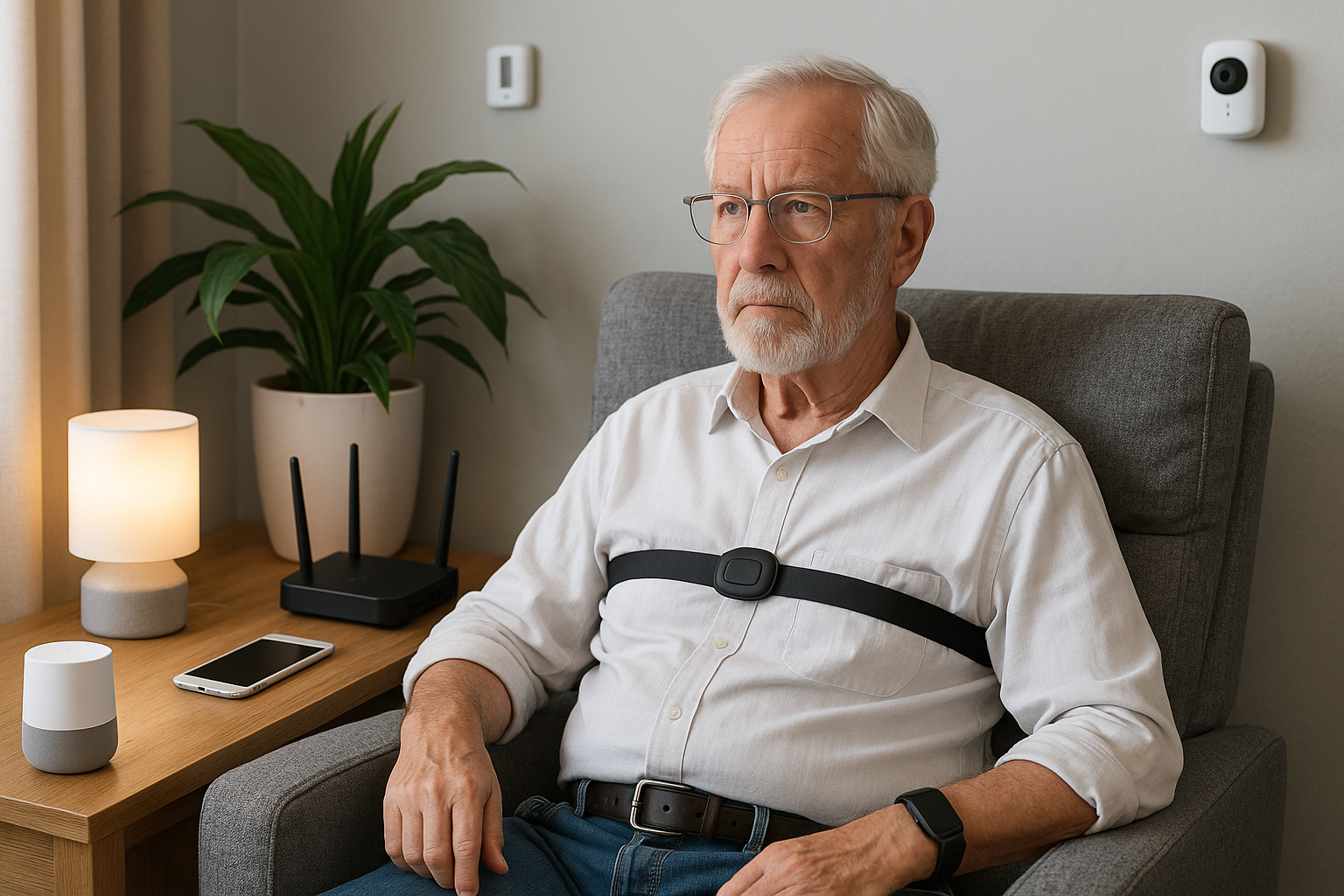
Researchers have unveiled a low-cost, intelligent room system capable of monitoring patients remotely using existing consumer hardware - a breakthrough that could reshape the way personalized healthcare is delivered. The novel system combines Internet of Things (IoT) and Ambient Intelligence (AmI) technologies to deliver smart healthcare monitoring without the high costs and specialized hardware typically required by hospital-grade systems.
The study, titled "Intellectual Rooms Based on AmI and IoT Technologies" and published in Frontiers in Computer Science, introduces a practical framework that leverages machine learning and sensor fusion to provide real-time health monitoring for elderly and vulnerable individuals in both home and hospital settings.
What are intellectual rooms and how do they work?
The concept of "Intellectual Rooms" is based on integrating common IoT devices, such as smartphones, wearables, smartwatches, and smart lighting, into a unified Ambient Intelligence system. Rather than relying on specialized, hospital-grade equipment, the system utilizes widely available devices to collect and analyze data in real time.
The architecture includes motion sensors, smart lamps, temperature controllers, and physiological monitors, all connected via a Wi-Fi-enabled microcontroller. These devices send data to a backend server powered by machine learning algorithms, which analyze behavior, physiological trends, and environmental conditions to detect potential anomalies or emergencies.
The system merges data from multiple sources, including body temperature, motion patterns, and environmental sensors, to produce a context-aware profile of the user's health and behavior. It can detect whether a patient is sitting, sleeping, or has fallen, and trigger automated alerts to caregivers or emergency services.
All operations are coordinated through a cloud platform that enables caregivers and medical staff to remotely access and manage patient data using mobile apps. The entire system is designed to be non-invasive, scalable, and operable in real-time with minimal infrastructure upgrades.
How does the system address cost and accessibility challenges?
Intellectual Rooms are aimed at bridging the affordability gap in patient care monitoring, especially for populations in developing regions or remote locations. Traditional remote health monitoring systems are often prohibitively expensive and dependent on proprietary medical-grade devices, which limits their widespread deployment.
In contrast, the system presented in this study operates using common off-the-shelf devices such as Xiaomi smart bands, ESP8266 microcontrollers, and DHT11 temperature sensors, components that are readily accessible and low-cost. This approach reduces infrastructure dependency and extends the reach of health monitoring to non-clinical environments like rural homes and small eldercare facilities.
The system also supports automated adjustments of the room environment, such as lighting and temperature, to enhance user comfort and safety. Smart lamps can be turned on or off automatically based on occupancy and light conditions, and fans can be triggered by rising room temperatures, functions that not only improve user experience but also support energy efficiency.
Another core benefit lies in the use of open-source technologies, which fosters customization and avoids vendor lock-in. This makes the system adaptable to varying cultural, technological, and budgetary conditions across different regions.
What are the future implications for healthcare and smart living?
The deployment of smart environments like Intellectual Rooms has implications far beyond individual health monitoring. It signals a broader shift toward intelligent infrastructure in homes, hospitals, and assisted living facilities, spaces that can interpret behavior, adjust conditions, and respond autonomously to human needs.
For healthcare providers, the system offers a way to offload routine monitoring tasks while retaining visibility into patients' conditions. This could alleviate pressure on healthcare systems, particularly during times of crisis or staff shortages. It also empowers families and caregivers to provide better support for elderly or chronically ill individuals without requiring constant physical supervision.
The study also points to further opportunities for expansion. Future iterations may integrate more advanced biometric sensors, speech interfaces, or AI-driven predictive analytics capable of identifying long-term health trends. Researchers propose extending the model to include medication reminders, mental health monitoring, and integration with electronic health records.
Additionally, the system sets a precedent for cross-domain applications of Ambient Intelligence. Its architecture could be adapted to educational settings, smart offices, and energy-efficient buildings, anywhere human behavior and environment intersect meaningfully with technology.
While the current prototype is a significant achievement, the authors acknowledge that widespread adoption will require attention to data privacy, interoperability standards, and user training. Nonetheless, the research marks a milestone in scalable, personalized, AI-assisted living environments.
- FIRST PUBLISHED IN:
- Devdiscourse


 Google News