

AI can improve, not erode, critical rhinking in higher education
Contrary to fears that AI diminishes students’ reasoning skills, the study found that its impact depends on how it is used. Simply increasing the frequency of AI tool usage does not lead to better critical thinking. Instead, meaningful improvement occurs when students use AI for reflective thinking, activities that involve analyzing, questioning, and evaluating the content generated by AI.
 COE-EDP
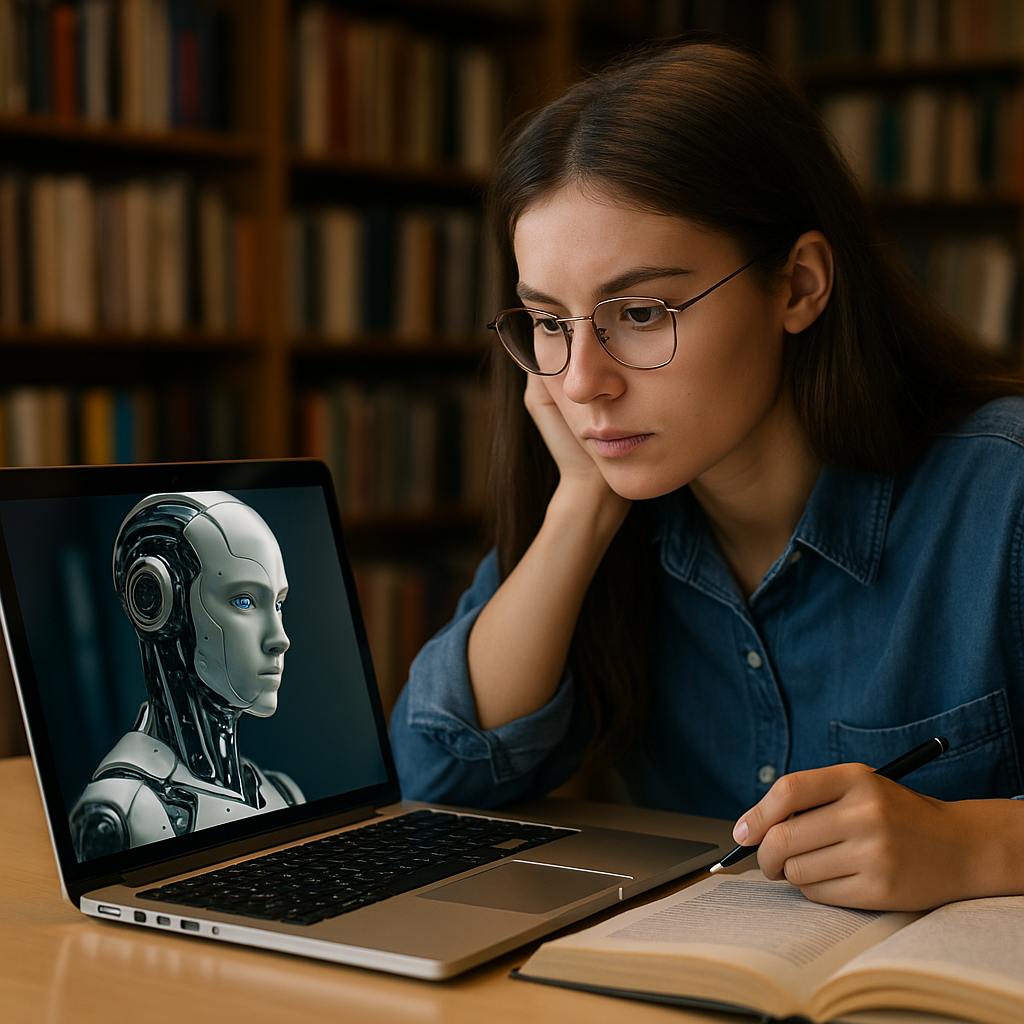
Artificial intelligence (AI) is often blamed for eroding the cognitive abilities of students, fostering dependency and shallow thinking. However, a new study published in Education Sciences challenges this narrative of cognitive decline, showing that AI tools, when used strategically, can actually empower students to think more deeply and analytically.
Titled "Artificial Intelligence-Generated Content Empowers College Students' Critical Thinking Skills: What, How, and Why", the study sheds light on how AI-driven learning, far from undermining intellectual growth, can enhance it under the right conditions.
Does AI really improve students' critical thinking?
Contrary to fears that AI diminishes students' reasoning skills, the study found that its impact depends on how it is used. Simply increasing the frequency of AI tool usage does not lead to better critical thinking. Instead, meaningful improvement occurs when students use AI for reflective thinking, activities that involve analyzing, questioning, and evaluating the content generated by AI.
Through surveys of 566 students and follow-up interviews, the researchers discovered that students who engage critically with AI outputs, comparing different viewpoints, detecting flaws, and drawing independent conclusions, report significant growth in their analytical abilities. On the other hand, those who rely passively on AI for quick answers experience little to no cognitive benefit, reinforcing the idea that active engagement is key to leveraging technology for intellectual development.
How do self-regulated learning and motivation influence AI use?
The study also explored the mechanisms driving AI's influence on critical thinking, highlighting the roles of self-regulated learning (SRL) and intrinsic motivation. Students with strong SRL skills, who actively plan, monitor, and adjust their learning, tend to use AI in ways that promote deep analysis. These learners use AI to break down complex problems, organize knowledge frameworks, and test different perspectives, resulting in more robust critical thinking development.
Intrinsic motivation further strengthens this relationship. Students motivated by curiosity and a genuine desire to improve their skills use AI to explore topics more deeply, analyze cutting-edge ideas, and internalize knowledge through independent inquiry. For these students, AI becomes not just a tool, but a catalyst for intellectual growth. In contrast, learners with low motivation tend to use AI superficially, missing opportunities for cognitive advancement.
The research demonstrates that SRL and intrinsic motivation act as mediators, factors that determine whether AI use leads to intellectual gains or merely reinforces passive learning habits.
Why does eeflective use of AI matter for higher education?
The findings carry important implications for universities and educators seeking to integrate AI responsibly into learning environments. The study confirms that AI can enhance higher-order thinking, but only when students use it to reflect rather than simply consume answers. This supports theories of self-regulated learning, which emphasize active monitoring and adaptation, and learning motivation theory, which links curiosity-driven exploration to cognitive development.
To capitalize on AI's benefits, the authors suggest that universities should create learning environments that encourage reflective AI use. This includes designing courses that prompt students to question AI outputs, engage in debates, and verify ideas against evidence. Teachers can integrate AI into collaborative and inquiry-based tasks, ensuring students practice analytical evaluation rather than passive acceptance.
For students, the message is clear: AI should be used as a thought partner, not an answer machine. Reflective engagement, asking why, testing logic, and comparing perspectives, turns AI into a powerful ally for intellectual growth.
A new path forward for AI in education
Rather than eroding cognitive skills, AI has the potential to enhance them, if used thoughtfully. Students who combine reflective AI use with self-regulated learning strategies and intrinsic motivation achieve measurable improvements in critical thinking, demonstrating that technology can be a driver of deeper learning rather than its detractor.
For higher education institutions navigating the digital age, the findings offer a roadmap: integrate AI tools not as substitutes for thinking, but as catalysts for it. Structured guidance, targeted teaching strategies, and student awareness of reflective practices are essential to harness AI's full educational potential.
- FIRST PUBLISHED IN:
- Devdiscourse


 Google News