

How to Generate Leads Through Social Media Marketing
Turn social media marketing into qualified leads. Explore practical ways for social media lead generation and attract prospects, build trust, and convert engagement into enquiries.

A thousand likes won't pay your rent. A hundred new followers mean nothing if none of them become a customer. Still, many businesses measure social media success by these metrics.
Effective social media lead generation is about attracting people who really need what a business offers and giving them a reason to enquire. With the right approach, social platforms can become a reliable source of enquiries, consultations and sales opportunities.
Here's how businesses can make it happen.
1. Start With People Who Are Likely to Buy
Know your audience before you create content. Who is the customer for the product or service? What problems are they facing? What's stopping them from buying?
For example, a software firm that is trying to sell to small retailers should be discussing inventory issues, billing problems and operating costs, not some generic technology update.
So how do you generate leads on social media successfully? It starts with understanding purchase intent, not just demographics.
An experienced social media management agency can help businesses to find the relevant audience segments and create campaigns based on their real needs. This helps to prevent marketing resources from being wasted on people unlikely to convert.
2. Choose Platforms Based on Your Business, Not Popularity
You don't have to be on every social platform. What's important is reaching potential customers where they are already engaging.
LinkedIn works well for B2B companies, consultants and professional services. Instagram is well suited to visual brands, and Facebook can work well for small businesses and community-driven campaigns.
And YouTube is especially useful when customers need a lot of explanation before buying.
For example, an interior design company can get enquiries through project showcases on Instagram, and a business software company can receive more qualified leads from case studies on LinkedIn.
Select platforms according to audience behaviour and conversion potential.
3. Make Your Profile Ready to Convert Visitors
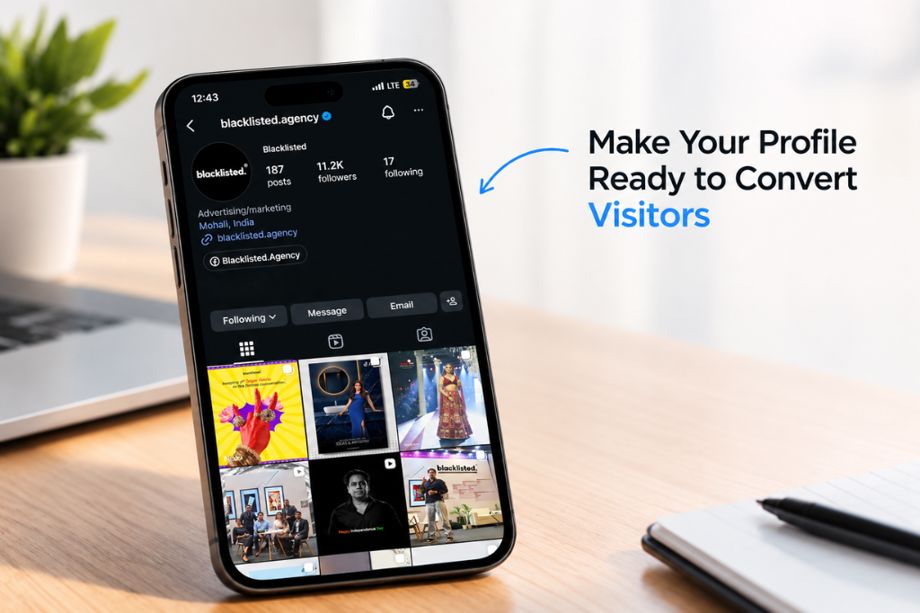
A potential client sees an interesting post and checks out the business's profile. What comes next?
If the description is vague, if there is no contact information or the link to the website goes nowhere useful, that opportunity may be lost.
All business profiles must clearly state:
- What the business does: Explain the product or service using no jargon.
- Who it helps: Make the intended audience obvious right away.
- Why people should trust it: Include relevant experience, reviews or examples of work.
- What to do next: Provide a direct link to enquire, book or ask for information.
A clear profile helps convert curiosity into action.
4. Create Content That Answers Real Customer Questions
A content strategy isn't always about selling products. People follow brands because they are useful, interesting or relevant.
The secret to successful social media marketing is to solve problems customers want solved.
The format varies depending on what the content needs to explain:
- Short videos: Quickly show products or solve problems.
- Carousels: Break down processes, compare options and share practical tips.
- Case studies: Demonstrate how a business solved a customer problem.
- Live sessions: Answer audience questions and address common concerns.
The idea is to build enough trust for someone to take the next step.
5. Use Calls to Action That Actually Mean Something
"Contact us" is easy to ignore when customers don't know what happens after clicking.
A stronger call to action explains what the benefit or next step is.
Compare these examples:
- Instead of "Get in touch", use "Request a personalised project estimate".
- Change "Learn more" to "Download the free buying guide".
- Replace "Contact us" with "Enquire about available consultation slots".
Align the CTA with the content. A person reading an introductory guide may prefer a checklist, but someone comparing service packages may be ready for a consultation.
This makes social media lead generation feel like a natural extension of the customer's research.
6. Use Paid Campaigns to Reach High-Intent Audiences
Organic content generates familiarity, while paid ads can deliver relevant offers to targeted audiences.
Facebook, Instagram and LinkedIn have lead generation ad formats that can collect enquiries directly on the platforms.
However, targeting alone will not generate qualified leads.
For a campaign to be successful, it needs a compelling offer, relevant creative and a clear follow-up process. Businesses should also be testing different messages instead of relying on a single ad.
Track the cost of each qualified lead, not just the total number of forms submitted.
A campaign that produces fewer leads can still be better if the leads it does produce are more likely to turn into customers.
7. Turn Comments and Messages Into Sales Conversations
A simple question is the start of some of the best opportunities.
Someone asks under an Instagram post about pricing. Another asks for product info in a direct message. These interactions require immediate, useful answers.
Companies should have a procedure for handling enquiries that includes:
- Replying promptly to relevant comments and messages
- Asking useful questions to understand customer needs
- Providing relevant product or service information
- Forwarding qualified enquiries to the sales team
- Following up without repeatedly pressuring prospects
This is where social media marketing shifts from simply publishing content to actually supporting relationships with customers.
Social Media vs Traditional Media: Which Generates Better Leads?
The debate between social media vs traditional media is not as simple as which channel reaches more people.
Traditional media such as print, radio and outdoor advertising can help build broad awareness and local recognition. However, linking an enquiry to a particular advertisement may require dedicated phone numbers, QR codes or other tracking methods.
Social media enables businesses to target audiences, receive direct enquiries and monitor many interactions more closely.
Neither approach guarantees better leads.
For businesses that rely on measurable online enquiries, social platforms have very useful targeting and tracking options. These efforts can still benefit from traditional channels in terms of reaching a broader local audience.
Measure Leads That Become Customers
A campaign that produces 200 leads can look impressive. But if only two become customers, something may need to change.
To be successful at social media lead generation, you need to measure what happens after someone submits their details.
Track:
- Qualified leads: Leads that fit the desired customer profile.
- Cost per qualified lead: Marketing spend divided by the number of qualified leads.
- Lead-to-customer conversion rate: The percentage of leads that become paying customers.
- Response time: The speed with which the team contacts interested prospects.
- Revenue earned: Sales from social media campaigns.
Link marketing activity to sales results using campaign tracking links and CRM tools.
A social media management agency can help coordinate reporting across campaigns and identify where prospects fall out of the process.
Stop Chasing Attention. Start Creating Opportunities
Posting regularly alone won't help you generate leads through social media. Businesses need relevant content, clear offers and an easy path from interest to enquiry.
For brands that are struggling to connect engagement with business results, working with an agency can bring greater direction to content, advertising and lead tracking. Blacklisted, a Mohali-based agency, helps businesses connect their online presence with meaningful growth opportunities through social media strategy, creative content and performance marketing.


 Google News