

Wall Street falls for third day on tracking global stocks over effects of the Sino-US trade war
- Country:
- United States
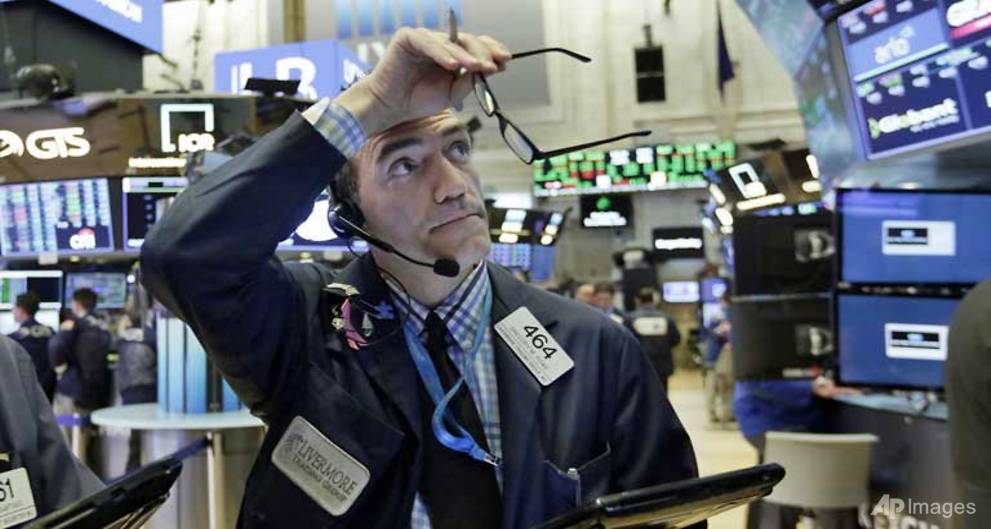
Wall Street fell for a third straight day on Monday, tracking global stocks, in the backdrop of growing unease over effects of the Sino-U.S. trade war on global growth and with Treasury yields at multi-year highs.
Beijing announced a steep cut in the level of cash that banks must hold as reserves, aimed at lowering financing costs and spurring growth amid the trade spat. Still, China stocks slid and weighed on global markets as well.
"There are concerns about the Chinese economy and the impact of trade," said Scott Brown, chief economist at Raymond James in St. Petersburg, Florida.
"As we head into earnings season, investors will be looking at the rest of the world to gauge the real impact of tariffs."
On Wall Street, fears of slowing growth manifested in a drop in high-flying stocks that have led the market rally, with concerns about valuations in the pricier names coming to the fore, especially with the corporate earnings season on tap.
The biggest casualties were technology stocks, which tumbled 2.18 per cent. Apple fell 1.4 per cent, Microsoft slid 2.3 per cent and Nvidia was down 3.3 per cent.
The communication services sector dropped 1.23 per cent, with heavyweight Netflix down 3.5 per cent. Facebook dropped 1.2 per cent and Alphabet fell 2.4 per cent.
Alphabet's Google exposed the data of hundreds of thousands of users of its Google+ social network and opted not to disclose the information, due to fears of regulatory scrutiny, the Wall Street Journal reported.
Trade-sensitive industrials shed 0.59 per cent, with Boeing down 1.4 per cent.
The U.S. Treasury said it was concerned about China's currency depreciation and that it was monitoring developments related to the yuan, according to CNBC.
While the U.S. bond market was closed for the Columbus Day holiday, yields on the 10-year note at seven-year highs kept investors on edge.
"There is anxiety about how the bond market will reopen and when you get a little bit of a downturn, the sentiment just builds over it," said Randy Frederick, vice president of trading and derivatives for Charles Schwab in Austin, Texas.
At 1:00 p.m. ET the Dow Jones Industrial Average was down 168.65 points, or 0.64 per cent, at 26,278.40, the S&P 500 was down 15.37 points, or 0.53 per cent, at 2,870.20 and the Nasdaq Composite was down 129.20 points, or 1.66 per cent, at 7,659.25.
The three defensive sectors were the only gainers among the 11 major S&P sectors. Utilities and consumer staples gained 1.21 per cent, while real estate companies rose 1.58 per cent.
Among the few bright spots was General Electric, which climbed for the sixth day in a row. The latest 2.4 per cent gain was after Barclays echoed investor optimism about new Chief Executive Officer Larry Culp and the conglomerate's plans to sell a portfolio of $1 billion in energy investments.
Declining issues outnumbered advancers for a 1.54-to-1 ratio on the NYSE and for a 2.01-to-1 ratio on the Nasdaq.
The S&P index recorded seven new 52-week highs and 23 new lows, while the Nasdaq recorded 12 new highs and 120 new lows.


 Google News