

The Bitcoin Misery Index (BMI) Is Not At An All-Time High

How miserable are people about the price of stocks? It's not very easy to find out. Yes, there are some private institutions and hedge funds conducting "sentiment analysis" but there's no figure that Jim Cramer can point to, measuring exactly how woeful everyone feels.
But in the cryptocurrency market, things are a little different. Fundstrat Global Advisors' Thomas Lee has developed the Bitcoin Misery Index (BMI), a hilarious, yet surprisingly helpful metric for anyone currently invested in the market. The idea of the figure is to encapsulate how BTC holders (or HODlers) feel at current prices.
Why go to the bother of formulating such a metric? On the face of it, it seems a little silly. After all, who cares about how investors feel? It's what they do that count.
But when you understand the idiosyncrasies of the Bitcoin market in more detail, you understand why Lee went to all this effort. Cryptocurrencies are highly volatile. Prices can change overnight, based on how investors feel. Bitcoin can drop 5 percent in a day. It's happened before.
Therefore, knowing how people in the market feel while holding onto their currency at particular prices has predictive power. If people feel dreadful, then the optimal policy is to sell. If they feel good, then the best approach is to buy. It's a useful tool that serious investors can use if they want to get a head start on the market.
How The Bitcoin Misery Index (BMI) Works
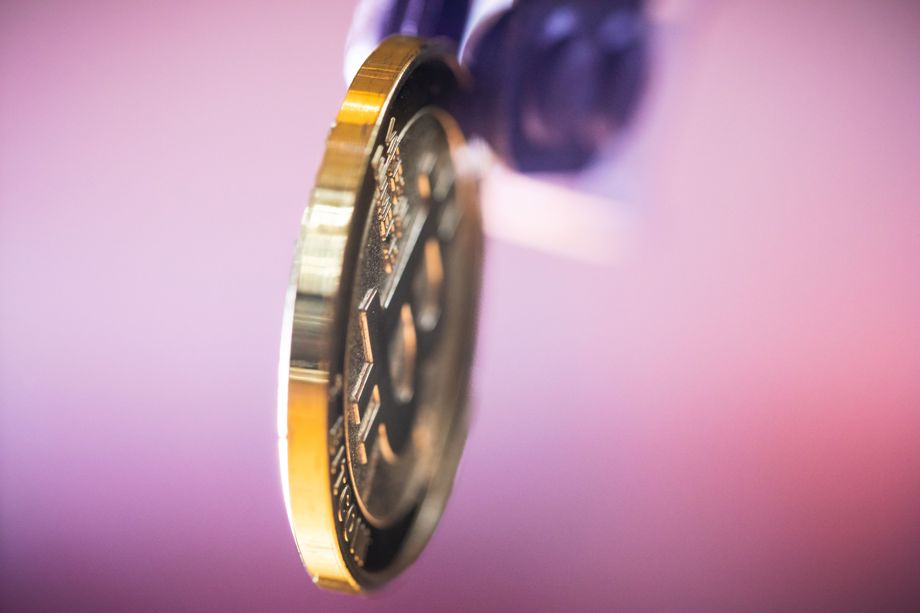
Image Credit: Raphael Wild on Unsplash
The BMI works on a scale of 0 to 100, like other sentiment analyses. Lee and its creators normalise figures based on feedback that they get from players in the market.
The index is rigged to indicate when people should buy, and when they shouldn't. If the BMI is below 27, Lee says, then future returns are likely good. Players are so miserable that anyone entering the market can be sure that it is close to the bottom. Things have to turn around soon. They can't remain bearish forever, so investors should buy. On the flip side, when the number is above 66, it means that the market is too bullish and investors are getting over-excited, meaning that investors should sell.
According to Lee, when the misery index is under 27, the 12-month performance of Bitcoin is excellent. Everyone wants to pile into the market and double their money. However, he bases his calculations on past performance. Preceding bear markets were followed by enormous bull markets, but that is no guarantee that it will continue to happen. Crypto prices might be cyclical, or they might not be, depending on the underlying value of the asset.
Where Is The Bitcoin Market Right Now?
Currently, Bitcoin is in the midst of one of the most miserable episodes in its history. But, surprisingly, the BMI remains strong.
At the start of 2022, the BMI estimated that the price of Bitcoin would fall to $30,000 as the "absolute bottom," but the unwinding proved to be significantly worse than that. BTC ultimately dropped to nearly half the estimated figure, underscoring a truly terrible start to the year.
Things are improving, though. The most recent BMI is 48 which puts it squarely in no-man's land. Investors have no idea whether they should buy or sell. Based on the data coming from sentiment analyses.
How Will New Regulations Impact Bitcoin?
Despite the tumultuous performance of cryptocurrencies at the start of the year, there are reasons to believe that this crash may be coming to an end soon. One of those is the federal government's decision to regulate Bitcoin and other cryptocurrencies similarly to commodities. Because of this, traders will get the same protections as they do when they buy other assets, such as stock and bonds. A new formality to the sector could encourage institutional investors to enter and stabilise prices long-term for their clients.
Until 2022, the Securities and Exchange Commission (SEC) regulated Bitcoin as an asset. However, recent bipartisan legislation will transfer responsibility to the Commodities Futures Trading Commission (CFTC). The authority will bring Bitcoin under its wing, defining it in a similar way to gold.
New regulations could be one of the reasons why the BMI isn't as low as it could be right now. Investors may expect prices to rise soon because of the regulatory backing of the CFTC and the new protections available to BTC owners.
Buy Signals Are Rare
Buy signals from Lee's scheme, though, are surprisingly rare. Even in the depths of the current bear market, the average market participant is feeling bullish about Bitcoin. Most expect the price to rise in the near future.
Before 2018, the BMI only dropped below 27 five times in its history. And on most of those occasions, it only brushed that marker. It didn't go spectacularly below it, as it did in September 2011.
According to prolific Bitcoin watchers, major selloffs don't really mean anything. While they result in large reductions in the numerical price of the currency, the effects on the log plot are minimal. And Bitcoin's price appears to follow a logarithmic model, not a linear one.
For this reason, now might still be a good time to get into the market. Despite all the bashing the currency has received over the years, it is still worth around $22,000 per coin, which is significantly more than $0.01 in 2010.
Long-term prospects for Bitcoin still look good, barring any concerted efforts by the government to shut the currency down. Price drops like the current one have happened many times before and are often short-term concerns. Mostly, they reflect fund managers liquidating their holdings because of threatened interest rate increases rather than anything fundamental to do with the currency itself.
For this reason, the 2022 Bitcoin crash is different from the ones that preceded it. This is the first time that large numbers of institutional traders have owned the stock. And they treat it similarly to stocks – as a risky asset. Therefore, if there is a risk-off situation in the market, they will sell, pushing down the price. And it's unclear when the current general bear market will end.
(Devdiscourse's journalists were not involved in the production of this article. The facts and opinions appearing in the article do not reflect the views of Devdiscourse and Devdiscourse does not claim any responsibility for the same.)


 Google News