

AfDB President Calls for Major Investments to Reverse Nigeria’s Youth Brain Drain
“The rate at which Nigerians are leaving the country, the so-called ‘Japa’ syndrome, risks undermining Nigeria’s drive for economic rejuvenation and positioning for global dominance,” Adesina stated.
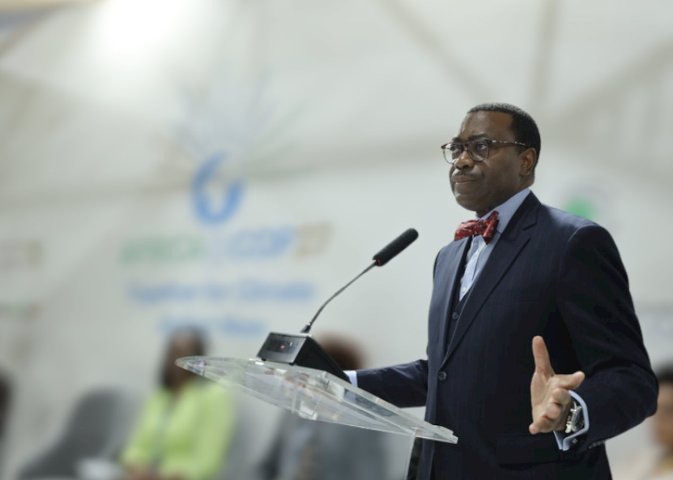
African Development Bank Group President, Dr. Akinwumi Adesina, has urged Nigeria to make substantial investments in its youth to counter the increasing exodus of young Nigerians, known as the "Japa" syndrome, which threatens the country's economic revitalization. Speaking at a special lecture marking the 90th birthday of former President General Yakubu Gowon in Abuja, Adesina stressed that Nigeria's economic growth and global leadership could be undermined if the accelerating youth brain drain is not addressed.
"The rate at which Nigerians are leaving the country, the so-called 'Japa' syndrome, risks undermining Nigeria's drive for economic rejuvenation and positioning for global dominance," Adesina stated. He advocated for a reversal of this trend, envisioning a future where "Japa" (we are leaving) becomes "Ja Pada" (we are going back), by investing in Nigeria's youth.
In his lecture, titled Building a Global Nigeria, Adesina outlined a comprehensive strategy for transforming Nigeria into a globally competitive economy. Key among his proposals was the recent approval of $100 million for a Youth Entrepreneurship Investment Bank, designed to support young Nigerian entrepreneurs through business incubation, technical assistance, and financial investments.
Adesina also highlighted the African Development Bank's $614 million investment in Nigeria's digital and creative sectors through the i-DICE program, which is expected to add $6 billion to Nigeria's GDP and create over 6 million jobs. He emphasized that for Africa to advance, Nigeria must take the lead in development, urging a rapid response to the country's poverty crisis, as over 133 million Nigerians live in multidimensional poverty.
Citing the link between poverty and rising crime rates, Adesina said, "The criminal economy is upending the real economy of Nigeria." He called for a return to successful agricultural initiatives from his tenure as Minister of Agriculture, such as the Growth Enhancement Scheme and the electronic-wallet system, which had significantly boosted food production by providing high-quality seeds and fertilizers to millions of farmers.
Adesina also advocated for heavy investments in higher education, noting that only 7% of Nigerians have access to it, as well as infrastructural improvements. The African Development Bank is mobilizing $15 billion for the Lagos to Abidjan corridor, and supporting the development of Nigeria's energy sector with the $20 billion Desert to Power initiative, which aims to provide electricity to 250 million people in the Sahel region.
Looking forward, Adesina emphasized the importance of industrialization, citing Nigeria's early efforts in the 1970s to establish automobile assembly plants, and expressed support for Nigerian companies like Innoson Motors.
General Gowon, in his response, lauded Adesina's vision for Nigeria, describing his insights as timely and vital for current and future governments. Other prominent attendees included former President Olusegun Obasanjo and representatives of President Bola Tinubu.
Adesina's address was a call to action for Nigeria to invest in its youth, infrastructure, and industrial potential to build a truly global and prosperous nation.


 Google News