

World Bank Approves $100M Agroforestry Financing Push to Transform Paraguay’s Rural Economy
At the core of the programme is a dedicated line of credit aimed at smallholder farmers and medium-scale producers.
- Country:
- Paraguay
Paraguay is set to accelerate its transition toward a greener and more inclusive rural economy following the World Bank's approval of a landmark US$100 million financing project aimed at scaling up sustainable agroforestry and unlocking long-term investment across the sector.
The initiative, titled "Scaling up Finance for Sustainable Agroforestry in Paraguay," introduces an innovative financing model designed to generate jobs, strengthen rural value chains, and promote climate-resilient land use — all while mobilising private capital at scale.
The project will be implemented by Paraguay's national development bank, Agencia Financiera de Desarrollo (AFD), and is structured around a three-pronged approach that combines credit access, investment mobilisation, and institutional strengthening.
A Multi-Layered Financing Model to Drive Growth
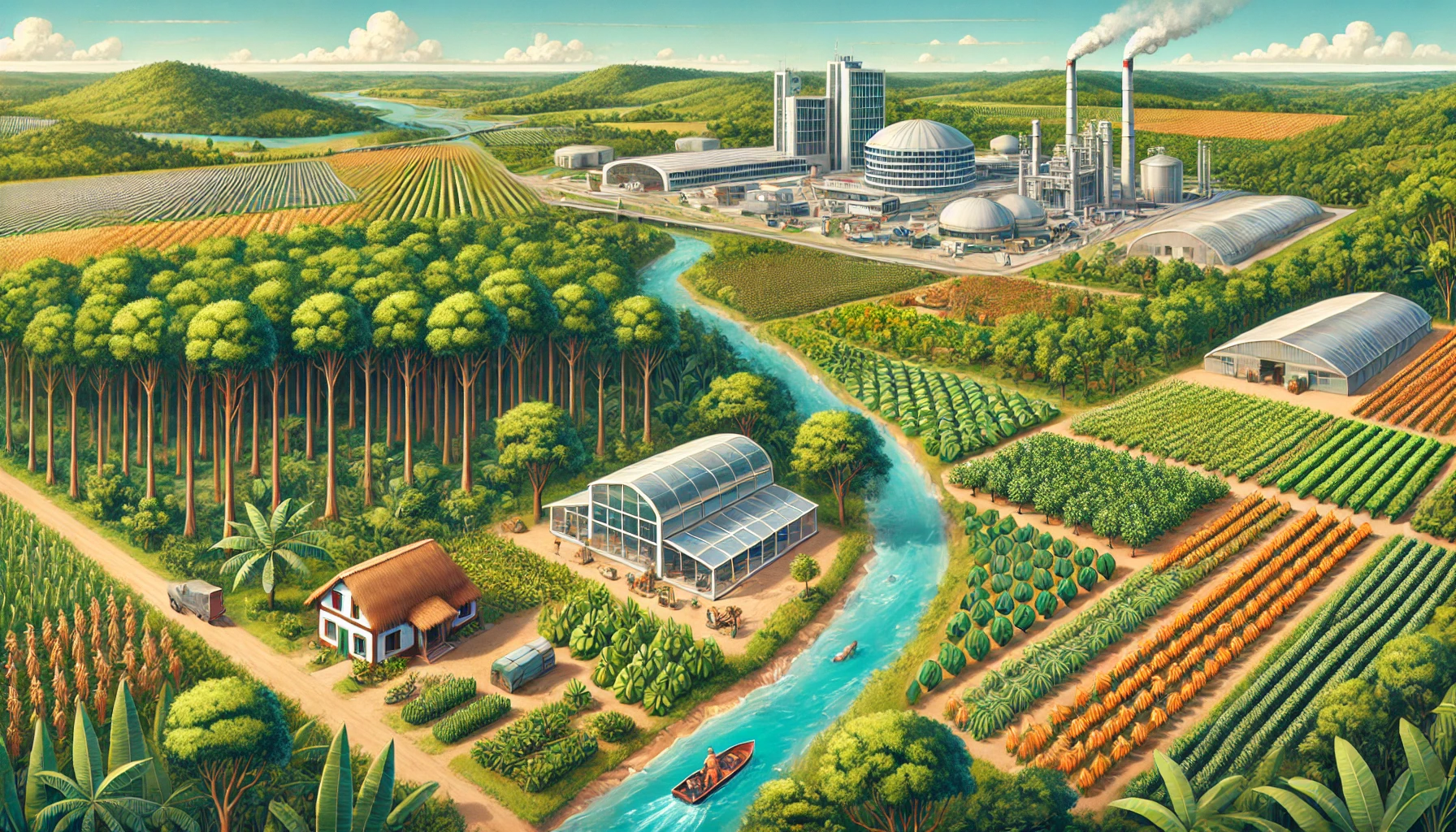
At the core of the programme is a dedicated line of credit aimed at smallholder farmers and medium-scale producers. This mechanism will incentivise investments in sustainable agroforestry practices, including:
-
Commercial and mixed tree plantations
-
Restoration of natural forests
-
Silvopastoral systems that integrate livestock and forestry
-
Value-added processing across agroforestry supply chains
By improving access to affordable, long-term financing, the project seeks to address one of the sector's biggest barriers — the high upfront costs and long maturation periods associated with forestry investments.
Complementing this is the creation of a Forestry Investment Fund, designed to attract institutional and private investors into larger-scale plantation projects. The fund aims to bridge critical financing gaps and crowd in capital that has traditionally been hesitant to enter the sector due to perceived risks.
The third component focuses on strengthening AFD's Environmental and Social Management System, ensuring that all investments meet rigorous international standards while enhancing project oversight and long-term sustainability.
Linking Finance to Environmental Performance
A standout feature of the project is its sustainability-linked financing model, which directly ties borrowing conditions to environmental and social outcomes.
Under this approach, borrowers who meet specific sustainability benchmarks will benefit from improved loan terms, including reduced interest rates. Certification under the Forest Stewardship Council (FSC) will serve as a baseline requirement, ensuring responsible forest management practices.
Additional incentives will be offered to developers who:
-
Aggregate smallholder producers into larger, more efficient value chains
-
Conserve natural habitats beyond legal requirements
-
Adopt land-use practices that enhance biodiversity and ecosystem resilience
The project also prioritises the conversion of degraded pasturelands into diversified agroforestry systems — a shift expected to increase carbon storage, improve soil fertility, enhance water retention, and reduce pressure on native forests.
Driving Jobs and Inclusive Rural Development
World Bank officials say the initiative is designed not only to promote environmental sustainability but also to deliver tangible economic benefits for rural communities.
"This project represents a significant step forward in Paraguay's efforts to build a more sustainable and inclusive rural economy," said Peter Siegenthaler, World Bank Division Director for Argentina, Paraguay, and Uruguay. "By unlocking long-term financing for agroforestry, we are enabling companies, cooperatives, and smallholders to work together — creating jobs and managing natural resources responsibly."
AFD President Stella Guillén подчеркed the project's strategic importance for Paraguay's development agenda, noting that agroforestry plays a central role in strengthening climate resilience and expanding market opportunities.
"This financing will allow us to reach more producers with better conditions, helping scale the sector toward more sophisticated and competitive markets," she said.
A Strategic Investment in Climate and Growth
Paraguay's agroforestry sector has long been identified as a key driver of sustainable growth, given its potential to balance economic productivity with environmental conservation. However, limited access to long-term capital has constrained its expansion.
By combining public financing with mechanisms to attract private investment, the new project aims to unlock this potential at scale — aligning economic development with climate goals and international sustainability standards.
The World Bank Group emphasised that the initiative is part of its broader commitment to supporting Paraguay's development priorities, particularly in creating jobs and ensuring that growth benefits are widely shared across society.
Financing Structure and Long-Term Outlook
The project will be financed through a variable spread loan with a 17.5-year maturity, including a three-year grace period, providing the long-term horizon necessary for forestry investments to mature and deliver returns.
As implementation begins, the project is expected to serve as a model for integrating climate finance, rural development, and private sector participation — offering a blueprint for other countries seeking to scale sustainable land-use solutions.
With global demand for sustainable commodities rising and climate pressures intensifying, Paraguay's bold move into agroforestry finance could position it as a regional leader in green economic transformation.
ALSO READ
-
Tanzania’s Growth Gains Need Better Jobs to Bring Lasting Prosperity to More Families
-
Better Schools, Stronger Economy: Saudi Arabia Eyes a Major Growth Dividend From Education
-
World Bank’s Billion-Person Digital Push Puts Affordable Internet and AI at Center Stage
-
Tanzania’s Economy Gains Momentum, but Better Jobs Hold the Key to Broader National Prosperity
-
Tanzania’s Growing Economy Puts Better Jobs at the Heart of Its Next Growth Chapter


 Google News