

AI cracks the code for better grades in early schooling
Beyond numbers, the study’s meta-thematic analysis uncovered qualitative insights into AI’s classroom impact. Drawing from four key qualitative studies, researchers identified recurring themes: AI enhances learning environments by supporting challenging subjects, visualizing concepts, and fostering skills like critical thinking and collaboration.
 COE-EDP
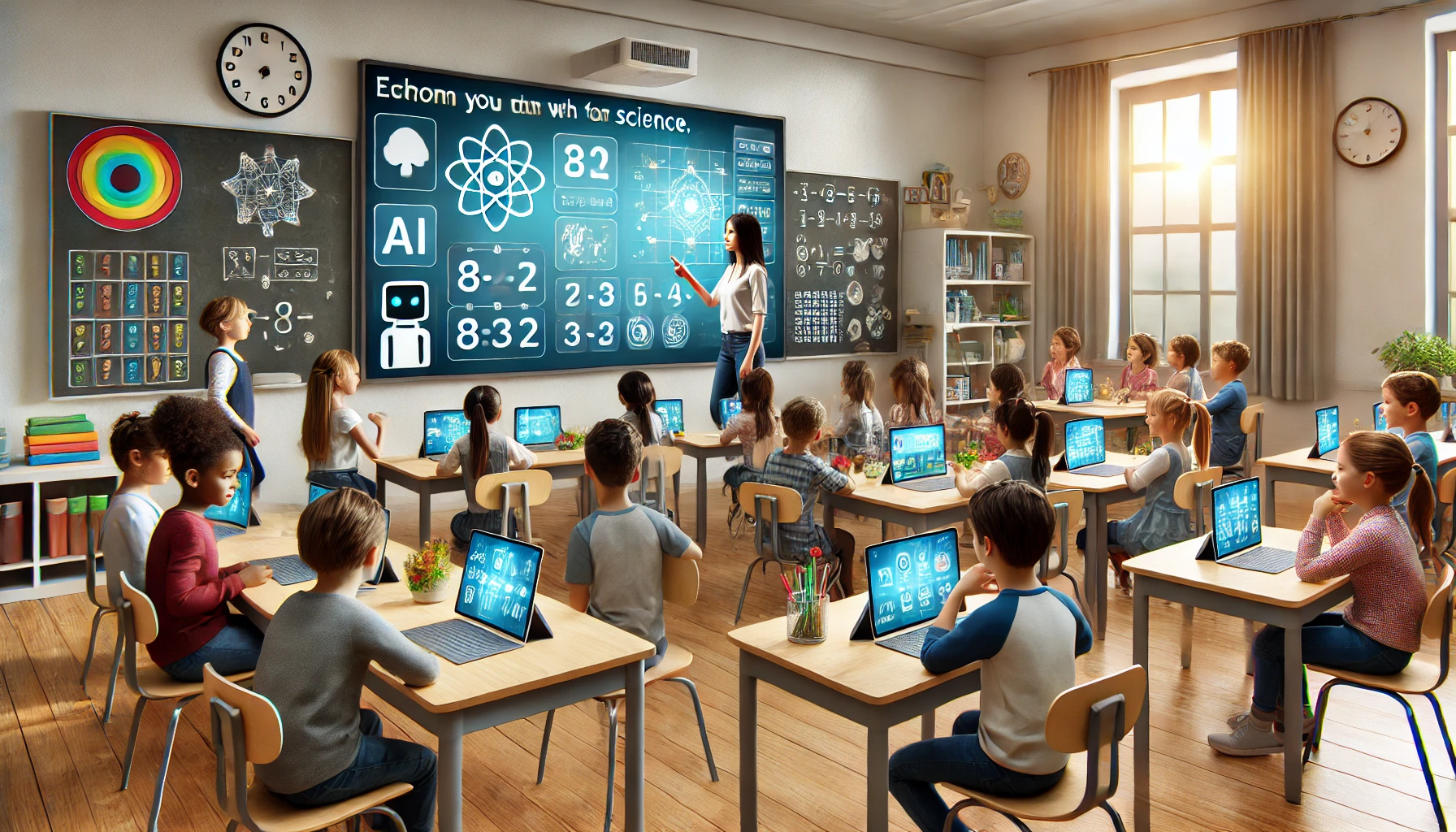
A new research has found that artificial intelligence (AI) applications in primary education have a measurable, positive impact on student learning, particularly in mathematics and science. Conducted by researchers from Hatay Mustafa Kemal University, Fırat University, and Gaziantep University, the study "Artificial Intelligence Applications in Primary Education: A Quantitatively Complemented Mixed-Meta-Method Study" employed a sophisticated mixed-meta-method approach, blending quantitative and qualitative analyses to assess AI's role in elementary classrooms.
The findings, detailed in the latest issue of Sustainability, underscore AI's growing influence in reshaping education and supporting the United Nations' Sustainable Development Goals (SDGs).
The research analyzed data from studies spanning 2005 to 2025, focusing on AI's effect on academic achievement at the elementary level. Using the CMA program, the team calculated a medium effect size of 0.51, indicating a significant, though moderate, boost in student performance when AI tools are integrated into teaching. This effect was most pronounced in mathematics, where 19 of the 24 studies reviewed showed consistent gains. Science followed closely, with teachers reporting frequent use of AI in these subjects, according to additional data analyzed via the Rasch measurement model.
The meta-analysis drew from 12 experimental studies, selected from an initial pool of 1,475, after rigorous screening for relevance and statistical rigor. The results were bolstered by a funnel plot analysis, which confirmed no publication bias, and a high Rosenthal's fail-safe N value of 841, signaling robust reliability.
Beyond numbers, the study's meta-thematic analysis uncovered qualitative insights into AI's classroom impact. Drawing from four key qualitative studies, researchers identified recurring themes: AI enhances learning environments by supporting challenging subjects, visualizing concepts, and fostering skills like critical thinking and collaboration. Students, for instance, praised AI tools for making English practice engaging, with one quoted in the study saying, "I like to learn English with it as it helps improve my competence." Another noted virtual rewards like "flowers and awards" boosted motivation.
However, the research also highlighted challenges. Teachers and students reported issues such as insufficient AI capabilities, difficulty understanding AI-generated questions, and concerns over data privacy. One participant remarked, "Not always the computer was right, so we tried to give it more pictures and teach it things," reflecting the technology's limitations. Proposed solutions included better training for educators and improved AI design to address emotional support gaps - an area where human teachers still hold an edge.
To deepen the analysis, the team surveyed 21 primary school teachers using an 18-item evaluation form, processed through the FACETS program. The results aligned with earlier findings: AI use was most prevalent in science and math curricula, with teachers finding it easiest to incorporate into classroom activities. Yet, tasks like preparing AI-assisted presentations proved daunting, with the item "I can help students prepare a presentation describing their surroundings using AI tools" rated as the most challenging. This suggests a need for targeted training, a point echoed in the study's recommendations.
The integrative approach, combining meta-analysis, thematic reviews, and teacher feedback, sets this study apart. The study found that while teachers grasp AI's basics, integrating it into pedagogy remains a hurdle, reinforcing the call for in-service training programs.
Aligned with the SDGs, particularly those tied to quality education and innovation, the research positions AI as a tool for sustainable development. It builds on UNESCO's 2019 push for standardized AI curricula in K-12 education, highlighting early exposure as key to preparing students for a tech-driven world. Yet, the study isn't without limits. Its focus on academic achievement left attitudes and retention unexplored, and its scope excluded subjects like art and physical education, areas ripe for future research.
The study urges policymakers to address ethical concerns, including data security and equitable access. It also recommends curriculum tweaks to bolster students' digital literacy and critical thinking - skills essential for thriving in AI-supported classrooms. Educational institutions, the authors argue, should expand AI-driven assessment tools to lighten teachers' loads and track progress more precisely.
- FIRST PUBLISHED IN:
- Devdiscourse


 Google News