

Unwrapping Secrets of Egypt's Crocodile Mummies
Ancient Egyptians not only mummified humans but also animals like crocodiles for religious purposes. Recent studies using CT scans reveal intricate details about these mummified crocodiles, including their final moments and embalming methods. The findings shed light on their religious significance and the advanced techniques used by Egyptian embalmers.
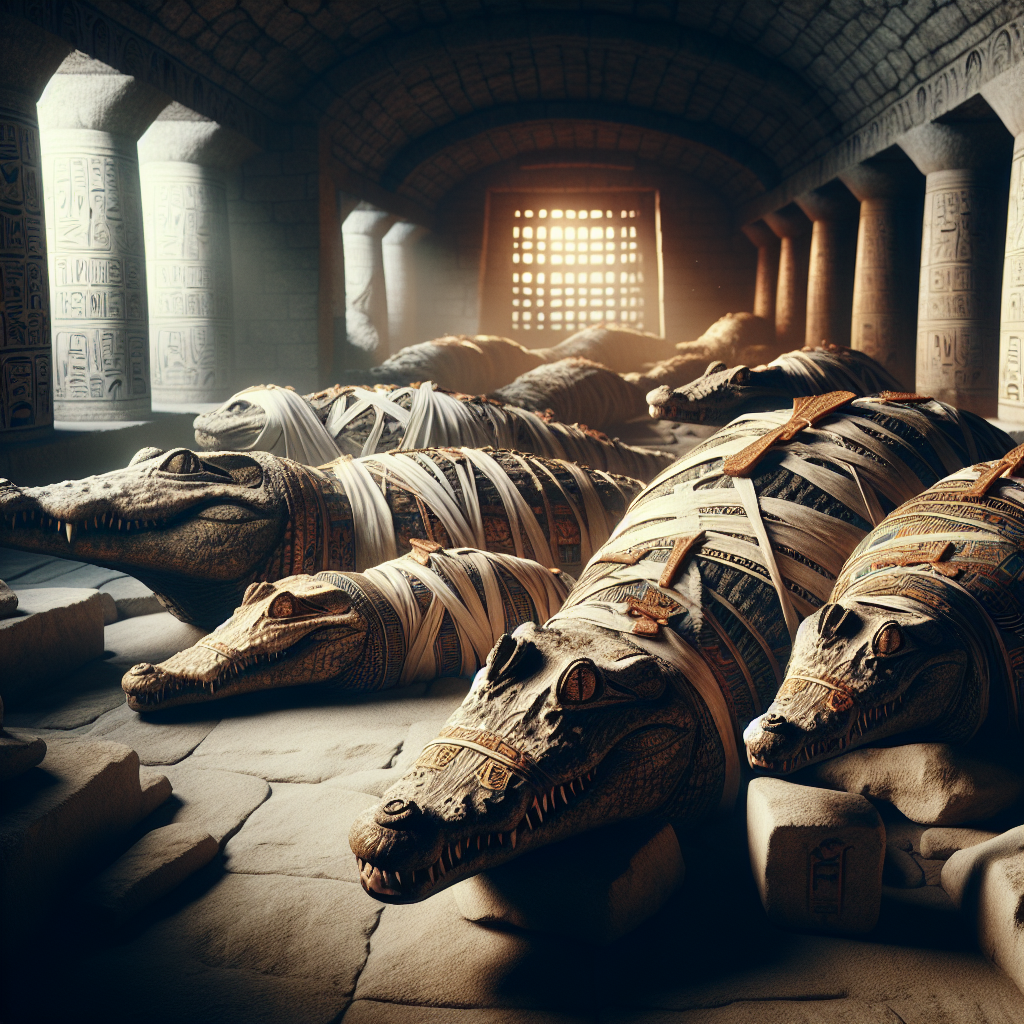
Manchester, Aug 5 (The Conversation) - When people think about Egyptian mummies, images of human figures wrapped in linen often come to mind. However, it's lesser-known that millions of animals, such as crocodiles, were also preserved by ancient Egyptians for religious purposes.
A recent study has revealed extraordinary details about a mummified crocodile found in Birmingham Museum and Art Gallery, UK, using advanced CT scanning technology. Researchers discovered that the animal's digestive tract contained stones and a metal fish hook, suggesting it was caught in the wild.
These findings offer new insights into ancient Egyptian practices and the significant role animals played in their religious life. The research highlights the fusion of modern technology and historical study, opening doors to more discoveries about our ancient past.


 Google News