

Nathi Mthethwa pays tribute to struggle stalwart Charlotte Maxeke
“Some have even tended to refer to her as a woman of many firsts. Until her remarkable feat at Wilberforce University in Ohio, the United States, no black woman had obtained a degree on our shores,” Mthethwa said on Friday.
- Country:
- South Africa
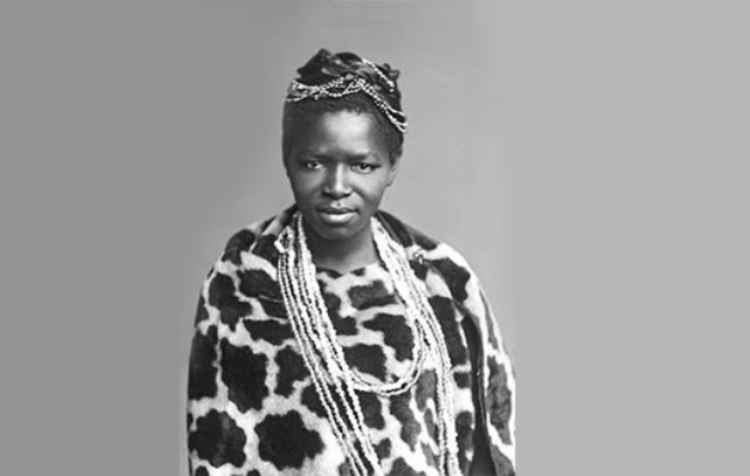
With South Africa commemorating The Year of Charlotte Maxeke, the Minister of Sport, Arts and Culture, Nathi Mthethwa, has paid tribute to the struggle stalwart, describing her as a trailblazer who chose to walk in many uncharted territories.
"Some have even tended to refer to her as a woman of many firsts. Until her remarkable feat at Wilberforce University in Ohio, the United States, no black woman had obtained a degree on our shores," Mthethwa said on Friday.
He was addressing the media launch of The Year of Charlotte Mannya Maxeke, in Tshwane, which was also attended by the Minister in the Presidency for Women, Youth and Persons with Disabilities, Maite Nkoana-Mashabane and Minister of Social Development, Lindiwe Zulu.
Maxeke will become the second woman to be memorialised and honoured in this way since 2018 when struggle icon Albertina Sisulu was honoured. This year marks 150 years since the birth of the struggle icon.
Maxeke made an indelible impact in many areas, including education, faith and politics.
"When the African intelligentsia, faith and traditional leaders met to form what was later to be known as the African National Congress (ANC) way back in 1912, uMama Maxeke was the lone brave female voice in that conference.
"She held her head high and made a contribution, undeterred by perceptions and societal norms that sought to relegate women to subservient roles in society," Mthethwa said.
The Minister said she is counted as one of the first women to ever establish a school – which later became a formidable educational institution, offering the highest standards of education, much to the chagrin of the racist colonial rulers of the time.
"Since the declaration by Cabinet that 2021 be dedicated to Mama Maxeke, we have been engaging each other as various role players in government, with very specific mandates," he said.
The Minister announced the following interventions and activations as part of the annual Programme of Action by the government:
The Department of Women will erect a bust in honour of Maxeke and plans are underway to have this bust unveiled at the local AME Church in Botlokwa, Limpopo. The Department of Sport, Arts and Culture, as the custodian of the nation's heritage estate, will remain available to offer technical assistance, as may be required from time to time.
The Department of Sport, Arts and Culture, through its Heritage Promotion and Preservation branch, has already started exploratory work that would culminate in the mounting of the giant statue of this phenomenal woman. The actual location of the giant statue would be part of the consultation with the Institute, the family and heritage authorities.
The national day's programme is one of the strategic interventions that promote social cohesion and nation-building. To that end, Cabinet has decided that the entire national day's programme will be anchored around uMama Charlotte Mannya-Maxeke.
There is ongoing work on the promotion of African filmmaking through the National Film and Video Foundation (the NFVF). For this year, in particular, the project will be dedicated to uMama Maxeke, as part of preserving her legacy, and in highlighting the role of women in this industry, which remains male-dominated. This work is envisaged to extend well beyond 2021 since work on Maxeke's legacy need not be confined to one calendar year if it is to make the much-needed impact. Zulu said her department will work together with the Charlotte Mannya-Maxeke Institute on some of the planned activities, with a specific focus on raising awareness on gender-based violence and femicide in the 30 hotspot areas.
"The liberation of our country cannot be complete when the majority of our national population, which is women, is still confined to the margins of mainstream society because of disempowerment, violence, poverty, and lack of access to indispensable resources.
"We cannot claim to be free from oppression when we read daily in the media harrowing accounts about the killing of women and children in our communities," the Minister said.
(With Inputs from South African Government Press Release)


 Google News