

Several supply-side measures taken in last 4 months to cool inflation: FM
- Country:
- India
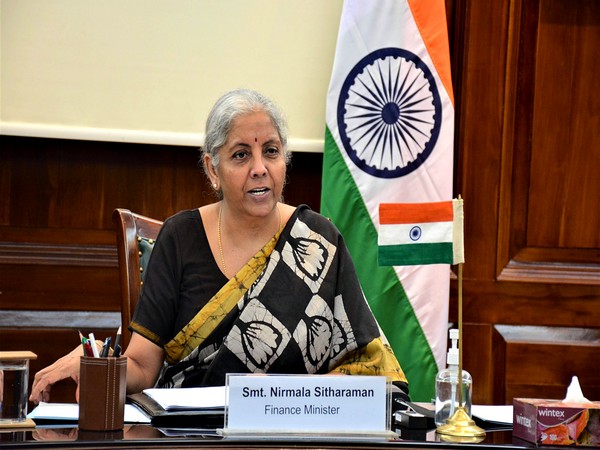
Finance Minister Nirmala Sitharaman on Tuesday informed the Rajya Sabha that the government has taken several supply-side measures in the last four months to cool inflation.
Prices of major essential commodities are monitored by the government regularly and corrective action is taken from time to time, she said in a written reply to the House.
Measures included a reduction in import duties and cess on pulses, rationalization of tariffs and imposition of stock limits on edible oils and oil seeds.
Besides, maintenance of buffer stock for onion and pulses, the inclusion of soya meal as an essential commodity in the schedule of the Essential Commodities Act, 1955 up to June 30, 2022, and imposition of a stock limit on soya meal up to June 30, 2022, were some other measures taken to check inflation.
Earlier this month, the government asked producers to implement a reduction in retail prices and ensure price uniformity across geographies amid a decline in global prices of edible oils.
The central government has directed leading edible oil associations to ensure a reduction of Rs 15 in MRP of edible oils with immediate effect, she said sharing various measures to tame inflation.
In addition, the government reduced excise duty by Rs 8 per liter on petrol and Rs 6 per liter on diesel on May 21, 2022, to check the prices of petrol and diesel.
A buffer stock of onion and pulses has been maintained for price stabilization, she said.
In reply to another question, Sitharaman said 15 companies including Indian Renewable Energy Development Agency and Tata Cleantech Capital have together raised Rs 4,539 crore from the green bonds in the last five years.
These companies raised funds at an interest rate of 6.49-8.74 percent, she said.
In keeping with the ambition to significantly reduce the carbon intensity of the economy, she said, the Union Budget 2022-23 announced the issue of Sovereign Green Bonds for mobilizing resources for green infrastructure.
The issuance of Sovereign Green Bonds will help the government in tapping the requisite finance from potential investors for deployment in public sector projects aimed at reducing the carbon intensity of the economy.
This involves the preparation of a framework for Sovereign Green Bonds issuance in line with international best practices while keeping in mind the domestic priorities of India, selecting appropriate public sector projects, setting up an institutional mechanism, and lastly floating the bonds, she said.
As of date, no sovereign green bond has been issued by the Government of India, she added.


 Google News