

Workshop convened on participation of women in electoral process in Great Lakes
During the two-day brainstorming, participants of the regional workshop highlighted the importance of the workshop in light of forthcoming elections in the Great Lakes region and stressed the need to ensure women’s full, equal and meaningful participation.
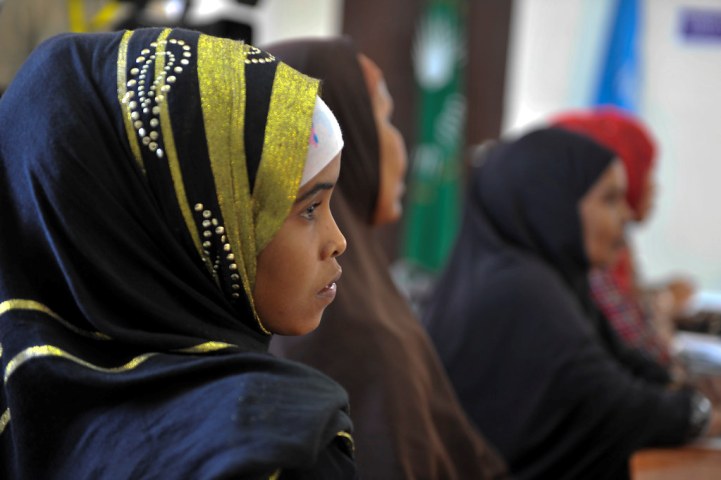
- Country:
- Ethiopia
The African Union (AU) Department of Political Affairs (DPA), in partnership with the Office of the United Nations (UN) Special Envoy for the Great Lakes Region, the International Conference for the Great Lakes Region (ICGLR), and the Southern African Development Community (SADC), convened a regional workshop on the "Participation, Representation and Protection of Women in Electoral Processes in the Great Lakes Region" at the AU Headquarters in Addis Ababa, Ethiopia, from 12 to 13 November 2019.
The aim of the regional workshop was to provide a platform to discuss the low participation of women in electoral processes and its root causes; protection of women's rights throughout the electoral cycle; preventive and capacity-strengthening measures to achieve the full, equal and meaningful participation of women in electoral processes.
The workshop addressed the following thematic areas:
Global frameworks and barriers to women's Representation and Participation;
Observation of elections within the Great Lakes Region;
Securing electoral processes;
Gender-sensitive elections;
Women in Electoral Management Bodies; and
Role of women in election dispute resolution.
During the two-day brainstorming, participants of the regional workshop highlighted the importance of the workshop in light of forthcoming elections in the Great Lakes region and stressed the need to ensure women's full, equal and meaningful participation.
Three AU member states from the Great Lakes region will have elections in 2020, namely: Burundi, Central African Republic (CAR) and Tanzania. Participants called on the Member States to guarantee the protection and participation of women in the forthcoming elections. Participants also called on the AU, UN, ICGLR, and SADC to pursue joint initiatives to promote an inclusive electoral process that guarantees the rights of women in these countries.
Following the review of global, continental and regional frameworks, participants noted that progress on women's representation in elective and appointed positions has been slow, with their share in lower houses' of parliament being 24.3 percent on average. This situation falls short of the gender balance requirements highlighted in the Beijing Declaration and Platform for Action. As of 1 January 2019, only 6.6 percent of Heads of State and 5.2 percent of Heads of Government were women. Compared to the global figures, in the Great Lakes Region, the situation of women representation in parliaments is encouraging, with an average of 27 percent.
Participants highlighted the need for concerted efforts to address the barriers that hinder women's representation, participation, access to equal opportunities and equal participation in electoral and other political processes.
The main recommendations were as follows:
Encourage the Member States to undertake a gender-responsive audit of electoral laws for more gender-sensitive legal reforms;
Undertake advocacy through the different ICGLR fora for all Member States to ratify with no reservation and expedite the implementation of the Protocol to the African Charter on Human and Peoples' Rights on the Rights of Women in Africa (Maputo Protocol);
Encourage the Member States to undertake multi-sectoral interventions to improve electoral security throughout the electoral process;
Political parties should be supported to develop and implement gender policies to tackle patriarchy, socio-economic challenges, violence against women in politics and other obstacles to free and fair elections;
Encourage Member States to develop training programs for security agencies on gender-sensitive electoral security with support from UN Women offices and other partners;
International observer groups to advocate for electoral management bodies to collect and publish gender-disaggregated data for improved planning of elections;
Member States to work for the establishment of a seed fund or special fund to support women candidates in the region;
The AU, UN and other stakeholders to jointly formulate programs to support the Member States in promoting a conducive environment for women's participation in elections;
Member States to work with the media regulation agencies and CSOs to sensitize the media on gender-sensitive election reporting and media monitoring;
The AU, ICGLR, UN and other international partners to encourage the Member States to adopt gender policies and undertake legal reforms to ensure a minimum of 30% representation in EMBs.
(With Inputs from APO)
ALSO READ
-
UNESCO Brings Data to New UN Platform Connecting People With Trusted Information
-
UN Expert Urges Malaysia to Halt Myanmar Returns as Refugees Face War and Violence
-
Longer Lives, Unequal Care: UN Report Exposes Gaps in Support for Older People Globally
-
Century After Slavery Convention, Millions Still Wait for Freedom and Justice
-
Netherlands Pledges Over €309 Million to Strengthen Justice and Prevent Conflict


 Google News