

Extension of implementation of e-office to be discussed at national workshop
There are several success stories emanating from States – Rajasthan with RajKaaj, Odisha with OSWAS, Andhra Pradesh with e-Office.
- Country:
- India
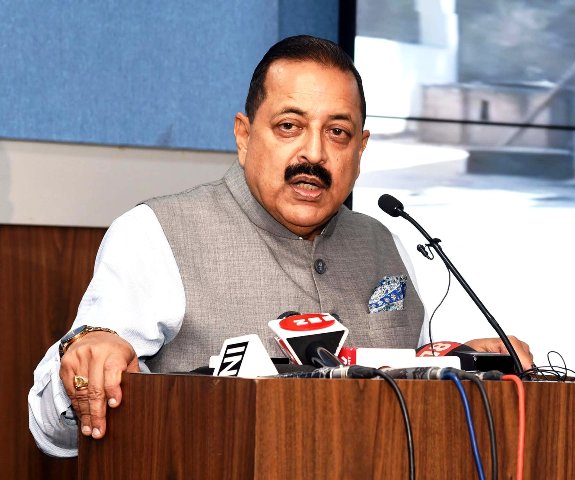
Dr. Jitendra Singh, Minister of State for Development of North Eastern Region (I/C), Prime Minister's Office, Personnel, Public Grievances & Pensions, Atomic Energy and Space to deliver the Key Note Address at the National Workshop on e-office on 12.02.2020 in Parvasi Bhartiya Kendra, Chankyapuri, New Delhi. He will also launch the CPGRAMS Reforms at the event. In this Workshop extension of implementation of e-office in Subordinate/Attached offices, Central Ministries/Departments will be discussed. The representatives from the State Government have also been called for in the Workshop.
The many States have pursued the digitalization of files and the creation of Digital State Secretariats. There are several success stories emanating from States – Rajasthan with RajKaaj, Odisha with OSWAS, Andhra Pradesh with e-Office. Several Districts have adopted e-Offices too. While there has been progressing witnessed in some States, there exist several States where digital Secretariats need to be created. The objective of this National Workshop is to create a nation-wide momentum for the creation of e-Office across the State Secretariats. The Department of Administrative Reforms and Public Grievances has tried to adopt innovative approaches to take governance forward, three major initiatives in this direction are a) Publication of the National e-Services Delivery Assessment 2020, b) Publishing the Good Governance Index 2019 and c) replication of best governance practices in Governance in the States.
The efficient, effective and transparent functioning of the Government is a pre-requisite for evolving a responsive governance system. Towards this end, the Central Government in India is implementing e-Governance as part of a series of Governance reforms, aimed at improving the internal functioning of individual / Ministries / Departments, with the ultimate objective of improving the delivery of services to the public at large. This is also a part of the 'Digital India' programme of the Government of India. One of the key initiatives in the area of e-Governance is the 'e-Office'. The e-Office solution enables core operations of the Government at all levels to be performed in a virtual 'paperless' environment. This application is, thus, a major step in realizing the objective of an open and responsive Government. The Government intends to make all its Departments near paper-free in the near future. Department of Administrative Reforms and Public Grievances (DARPG) is the nodal Department for the implementation of the e-Office project. National Informatics Centre (NIC) is the technical partner in this project. DARPG is committed to implementing e-Office across all Central Ministries / Departments.
The e-Office Mission Mode Project (MMP) was launched in 2011-12 in a phased manner and the current phase-III is under implementation. So far a total of 79 Ministries / Departments have been covered under this programme. Out of these 79, a total of 57 have achieved the target of 80%. At present, there are 1485584 active e-files in all Ministries/Departments.
It has been the endeavor of the Modi Government over the past five years and nine months to establish that governance can be transformed through digital initiatives, enabling infrastructure and responsive institutions. The DARP&G has endeavored to take this message forward by pioneering a number of administrative reforms in e-Governance including the historical Shillong Declaration in the National Conference on e-Governance in August 2019 and the Mumbai Resolution adopted in the 23rd National Conference on e-Governance in January 2020 laying down the road map for e-Governance in India. The key feature in both the declarations is the widespread adoption of e-Office in the Central and State Secretariats. This has been a view endorsed by the Council of Ministers also in the recent presentations made by the Sectoral Group of Secretaries on Governance.
The continuum of administrative reforms can only be completed with significant improvements in decision making through the widespread adoption of the e-Office resulting in the creation of Digital Secretariats at State and Central level resulting in faster decision making, improved record management and significant improvement in the empowerment of the citizens, which has been the endeavor of the Hon'ble Prime Minister. The e-Office implemented as a Mission Mode Project under the Digital India Program has gained considerable momentum. 57 Ministries / Departments have already achieved 80 percent of files in digital mode. 15 lac files have been digitalized and nearly 15000 digital files are being created every week. 13 more Ministries have reached the target of 80 percent files in digital mode taking the total number of Ministries/ Departments achieving the desired targets under e-Office to 67 in the coming months.
Extension of e-Office to Attached/ Subordinate/ Autonomous Offices
One of the major objectives of the National Workshop on e-Office is the extension of e-Office to Attached/ Subordinate/ Autonomous offices of the Government of India. The Attached Offices of the Government of India function as an extension of Ministries. The Archaeological Survey of India, the National Archives of India, the Offices of DGFT, Development Commissioners of Handlooms, Handicrafts represent large entities with significant file volumes which can be taken up for an extension of e-Office. At the same time, there exist a number of subordinate offices of the Government of India not only in Delhi but also across the length and breadth of India which can be taken up for an extension of e-Office. The autonomous bodies of the Government of India like the All India Institute of Medical Sciences, the Indian Institute of Public Administration also need to pursue and adopt e-Office on a priority basis.
This National Workshop brings together Central Ministries/ States/ Attached/ Subordinate/ Autonomous bodies of Government of India with the objective of creating Digital Secretariats.
(With Inputs from PIB)


 Google News