

Intensifying Calls for Justice: 1971 Bangladesh Genocide in Focus
An international event organized by 'Genocide 71' has brought renewed focus on the 1971 Bangladesh genocide. The event featured eyewitness accounts and advocacy efforts emphasizing global acknowledgment and education. The calls for international recognition and justice for the victims of the genocide, which claimed approximately 3 million lives, are intensifying.
- Country:
- United Kingdom
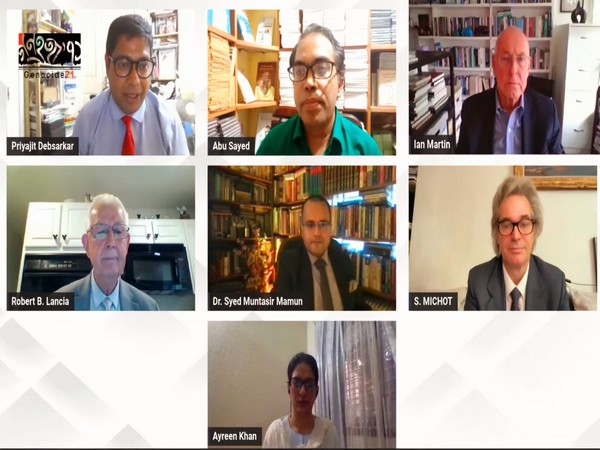
Recent international calls for justice and recognition of the 1971 Bangladesh genocide have reached new heights, notably during an event organized by 'Genocide 71,' an initiative by Mukto Ashor and Bangladesh History Olympiad. The event assembled diverse voices advocating for global acknowledgment and education about the atrocities committed by the West Pakistani army and their collaborators. Witness accounts and advocacy from human rights activists, researchers, and former legislators bolstered the push for international recognition and justice for the genocide victims, which resulted in an estimated 3 million deaths.
A webinar titled 'International Webinar on Bangladesh Genocide, Justice for the victims 53 years and counting!' was held on Saturday. Hosted by Priyajit Debsarkar, an independent geopolitical analyst, the event included speakers from various backgrounds. 'On March 25th, 1971, 53 years ago, the West Pakistani army, along with local collaborators, committed horrific atrocities in Bangladesh. We pay our respects to those who fell that day. Their targets were civilians eagerly anticipating democracy's restoration post the 1970 General Election,' said Priyajit.
Ian Martin, an English human rights activist who witnessed the conflict's early days in Dhaka, emphasized the importance of remembering these events despite their relative obscurity in the West. 'An enduring memory of mine is standing on the roof of Gulshan on March 25-26, 1971, hearing the shells and watching the attacks on Iqbal Hall and Dhaka University. Why is 1971 so underrepresented in the Western public domain, especially regarding genocide?' Martin questioned.
Syed Muntasir Mamun, Chief Innovation Officer and Director General of MoFA Dhaka, stressed the need to preserve eyewitness accounts and tangible evidence to educate future generations about this dark period. 'Eyewitness accounts and tactical evidence are now available. These must be made public for global scrutiny. Bangladesh is open to investigation and willing to host external agencies and experts for independent assessments,' said Mamun. Ayreen Khan, a visual artist and researcher, highlighted often-overlooked experiences of women and minority communities during the genocide, underscoring the necessity of acknowledging their stories.
Bob Lancia, a former American legislator, underscored the importance of international recognition through resolutions like the one pending in the U.S. Congress. His advocacy for educational initiatives and memorial efforts aligns with the broader goal of ensuring the 1971 victims are not forgotten. Abu Sayed, General Secretary of BD History Olympiad and an author, reiterated the organizers' commitment to elevating awareness of the Bangladesh Genocide on the international stage through educational workshops, exhibitions, and publications.
The 1971 Bangladesh Genocide saw systematic atrocities committed by the Pakistani military and collaborators following Bengali nationalists' declaration of independence on March 26, 1971. 'Operation Searchlight' targeted civilians, intellectuals, political activists, and minorities through mass killings, rapes, torture, and forced displacement, resulting in about three million deaths and widespread human rights abuses.


 Google News