

UPDATE 4-US pushes Middle East economic plan, Palestinians reject it
- Country:
- West Bank and Gaza
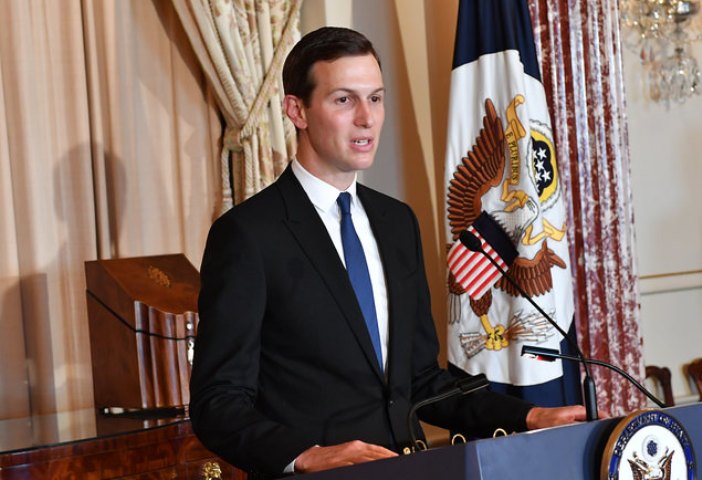
Palestinians poured scorn on a $50 billion economic formula launched by the Trump administration for Israeli-Palestinian peace as the United States sought on Wednesday to win support for the plan as a foundation to ending the decades-old conflict. Neither the Israeli nor Palestinian governments are attending the international meeting in Bahrain, orchestrated by U.S. President Donald Trump's senior adviser and son-in-law Jared Kushner.
The Palestinians and many other Arabs dismiss Kushner's plan as pointless without a political solution based on the creation of a Palestinian state alongside Israel. Kushner told reporters on Wednesday his team would release the political details of the plan, which remain secret, "when we're ready", adding: "We'll see what happens".
He said a peace deal would happen when both sides are ready to say yes and acknowledged that they may never get there. Senior Palestine Liberation Organisation official Hanan Ashrawi said on Wednesday the Manama conference was " quite disingenuous".
"It is totally divorced from reality. The elephant in the room is the (Israeli) occupation itself," she told a news conference in the West Bank city of Ramallah. Several thousand Palestinians demonstrated in the Gaza Strip and burned posters of Trump and Netanyahu. "No to the conference of treason, no to the conference of shame" read one banner.
The chief of Islamist group Hamas, Ismail Haniyeh, criticised the plan as a ruse against the Palestinian people. "This money must not come at the expense of our enduring rights, or at the expense of Jerusalem or the right of return or at the expense of sovereignty and resistance," he said.
Saudi Arabia and the UAE discreetly support the plan, but many Arab states, including Lebanon, stayed away from the event while others including Jordan and Egypt, the two Arab nations that have reached peace with Israel, sent deputy ministers. The Lebanese government and parliament both oppose the U.S. plan, Prime Minister Saad al-Hariri said on Wednesday.
The foreign minister of Bahrain, where the U.S. Fifth Fleet is based, said the plan, nearly two years in the making, was an "opportunity not to be missed". He reiterated the need for a two-state solution, which has underpinned every peace plan for decades, but Trump's team has consistently refused to commit to it.
"I think if we take this matter seriously it could be a very important game-changer," Sheikh Khalid bin Ahmed al-Khalifa told Israeli public broadcaster Kan, in English. Israeli Prime Minister Benjamin Netanyahu, a close Trump ally, has said Israel was open to the economic proposals.
HARD SELL Washington hopes wealthy Gulf states will bankroll the plan, which expects donor nations and investors to contribute $50 billion to Palestinian and neighbouring Arab state economies.
Saudi Finance Minister Mohammed al-Jadaan said the kingdom would support whatever brings prosperity to the region but that it was important that "the private sector drives this". UAE Minister of State for Financial Affairs Obaid Humaid al-Tayer said: "we should give this initiative a chance".
Riyadh says any peace deal should be based on a Saudi-led Arab peace initiative that calls for a Palestinian state drawn along borders which predate Israel's capture of territory in the 1967 Middle East war, as well as a capital in East Jerusalem and refugees' right of return - points rejected by Israel. It is not clear whether the Trump team plans to abandon the two-state solution, which is backed by the United Nations and most countries. Kushner has said the plan would not adhere to the Arab initiative.
Any solution must settle long-standing issues such as the status of Jerusalem, mutually agreed borders, Israel's security concerns, Palestinian demands for statehood, and the fate of Israel's settlements and military presence in the territory where Palestinians want to build that state. Palestinian leaders are refusing to engage with the White House, accusing it of pro-Israel bias. Breaking with the international consensus, Trump in 2017 recognised Jerusalem as Israel's capital, infuriating the Palestinians and other Arabs.


 Google News