

'How hummingbird feathers produce rainbow colours decoded'
- Country:
- United States
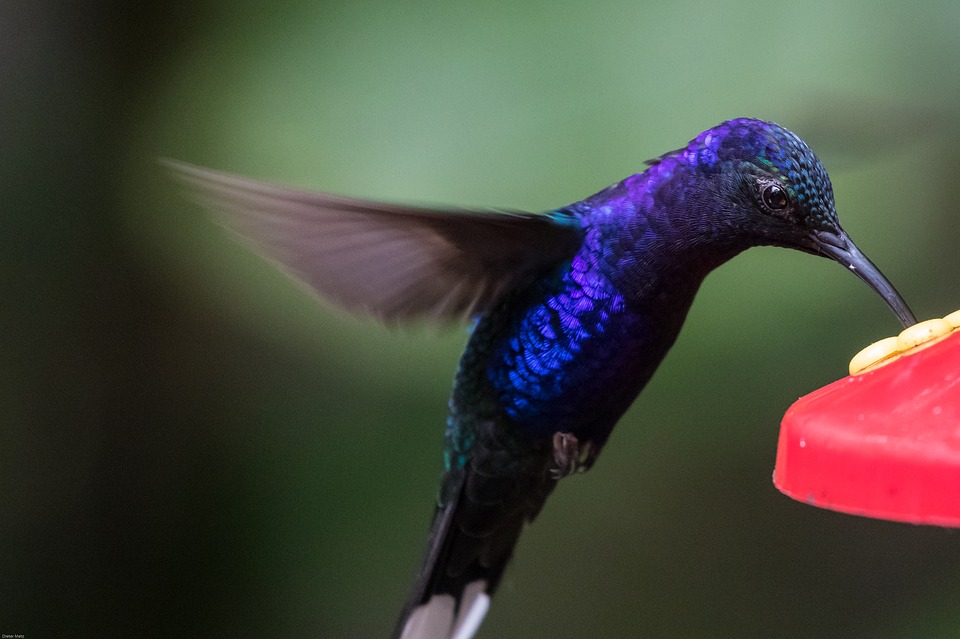
The unique soap-bubble like shimmering hues seen on the hummingbird, is due to the special shape of their feathers' pigment-containing structures, which enable them to reflect a rainbow of light, a study reveals. According to the researchers, including those from the Chicago Field Museum in the US, while hummingbird feathers have the same basic makeup as that of other birds, the special shape of their pigment-containing structures, called melanosomes, enables them to reflect a rainbow of light.
As part of the study, published in the journal Evolution, the scientists examined the feathers of 35 species of hummingbirds with transmission electron microscopes, and compared them with the feathers of other brightly-colored birds, like green-headed mallard ducks. Bird feathers are made of a protein called keratin which is the same material that makes up our hair and nails, the researchers said.
Keratin is structured like tiny trees, with parts resembling a trunk, branches, and leaves, they explained. Using the electron microscope, the scientists found that the leaf-like structure in the feathers is made up of cells with pigment-producing organelles called melanosomes.
These are the same cell components that produce the dark melanin pigment which colors our hair and skin. Apart from the pigments produced by these organelles, the shape and arrangement of melanosomes can also influence the way light bounces off them, producing bright colors, the scientists noted.
"We call these iridescent colors' structural colors' because they depend on the structural dimensions. A good analogy would be like a soap bubble. If you just look at a little bit of soap, it's going to be colorless," said study co-author Matthew Shawkey of the Belgium's University of Ghent. But with the right structure, shaped like a shell, Shawkey said, bubbles can create a shimmering rainbow of colors around its edges.
"It works the same way with melanosomes: with the right structure, you can turn something colorless into something really colorful," he explained. "In mammals, the melanin isn't organised in any fancy way inside of the hairs, but in birds, you get these layers of melanosomes, and when light bounces off the different layers, we see bright colors," said co-author Chad Eliason from the Field Museum.
But what makes the hummingbird special is that while ducks have log-shaped melanosomes without any air inside, those in the tiny bird are pancake-shaped and contain lots of tiny air bubbles. According to the researchers, the flattened shape, and air bubbles of hummingbird melanosomes create a more complex set of surfaces.
As light bounces off these surfaces, it does so in a way that produces iridescence. The study also found that the different traits that make hummingbird feathers special -- like melanosome shape and the thickness of the leather lining -- are features that evolved separately.
This has allowed hummingbirds to mix and match a wider variety of traits, the scientists noted. "This study sets the stage for really understanding how color patterns are developed. Now that we have a better idea of how feather structure maps to color, we can really parse out which genes are underlying those really crazy colors in birds," Eliason said.


 Google News