

Hungary PM raps EU 'blackmail' in row over money, rule of law
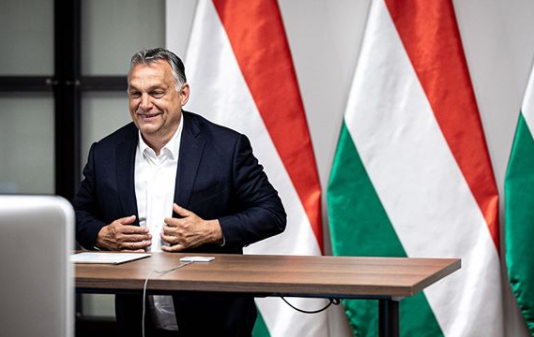
Hungarian Prime Minister Viktor Orban accused the European Union on Wednesday of seeking to "blackmail" member states that did not toe its line on immigration, two days after he vetoed the bloc's multi-year budget and post-COVID recovery package.
- Country:
- Hungary
Hungarian Prime Minister Viktor Orban accused the European Union on Wednesday of seeking to "blackmail" member states that did not toe its line on immigration, two days after he vetoed the bloc's multi-year budget and post-COVID recovery package. Hungary and Poland on Monday blocked the 2021-2027 budget and the recovery plan, worth a combined 1.85 trillion euros ($2.2 trillion), because access to the funds would be conditional upon respecting the rule of law.
Orban, whose nationalist government is under investigation for undermining the independence of Hungary's courts, media and non-governmental organisations, linked his veto to his continued opposition to mass immigration into the EU. "Once this proposal gets adopted, there will be no more obstacles to tying member states' share of common funds to supporting migration and use financial means to blackmail countries which oppose migration," Orban said in a statement published by state news agency MTI.
There was no immediate reaction to his comments from the EU's executive Commission. The budget and recovery package do not have any specific clauses about immigration, which Orban has long opposed as a threat to national and European identity and culture.
Political Capital analyst Patrik Szicherle said Orban's comments were aimed at shoring up support among his nationalist base and at broadening his options in upcoming talks. "He wants to dilute the conditions enough not to limit his room for manoeuvre," he said. "At the same time frugal states like the Netherlands want firm conditions (to disbursement of funds)... This is a stalemate we don't see a clear path out of."
POLAND Orban's ally Poland, also under a formal EU process for alleged backsliding on democratic principles, struck a softer tone on Wednesday, saying it sought dialogue with its EU partners.
However, in an address to the Polish parliament, Polish Prime Minister Mateusz Morawiecki said the country would reject any unequal treatment of member states. "We must scrupulously look after our interests," he told lawmakers.
"It is part of the canon of fundamental values that states should retain the right to decide about their own fate, because this is a game of sovereignty and self-determination... and we certainly will not give up on such values." Earlier in the day, Morawiecki's chief of staff said Poland was still ready to use its veto "if some countries are determined to break EU law", in a reference to the efforts by some western states to establish a direct link between the allocation of funds and the rule of law.
The eastern states are big recipients of EU subsidies. Germany, which holds the EU's rotating presidency, said on Tuesday it was confident of finding a compromise.
Czech and Slovak foreign ministers, at a joint news conference on Wednesday, urged swift action to ensure a speedy release of money sorely needed to revive Europe's pandemic-stricken economy. Czech Foreign Minister Tomas Petricek said the German presidency could probably end the deadlock before year-end.
Slovak Foreign Minister Ivan Korcok said the deadlock "does not please anybody... there is still space to find a solution, to depoliticise the whole issue". ($1 = 0.8427 euros)


 Google News