

HC acquits man in 24-yr-old case; decides 15-yr-old appeal; expresses concern over delay in disposal
The appellate court is not expected to merely substitute its opinion for that of the trial court and it has to exercise its discretion very cautiously to correct an error of law or fact if any, significant enough to warrant reversal of the verdict of the trial court, the high court said.It added that this court is of the unhesitant opinion that the prosecution has failed to prove the charge against the appellant to the hilt as obligated in law and thus, he is entitled to the benefit of the doubt and the appeal thus succeeds and is allowed.
- Country:
- India
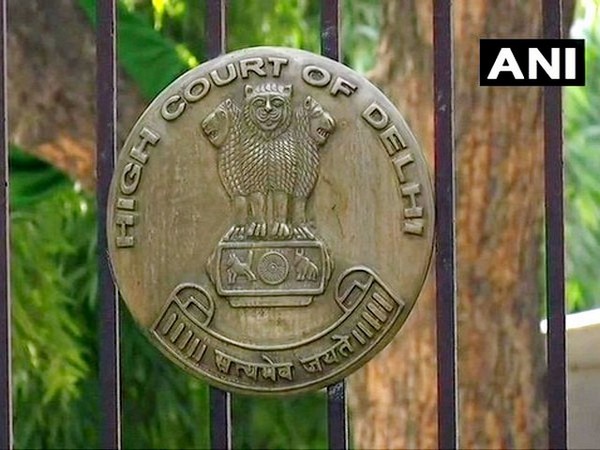
The Delhi High Court has set aside a man's conviction in a 24-year-old case relating to the abduction of a woman to compel her for marriage in which the appeal was pending in the high court since 2007 while expressing "serious" concerns over delay in disposal of criminal appeals.
The high court allowed the appeal of Jasbir Singh who has challenged his conviction and three years imprisonment for the offenses of abducting a woman to compel her for marriage and criminal intimidation and said the material witnesses have not been examined and there are certain contradictions in the testimony of the prosecution witnesses with no explanation for the delay in lodging the FIR.
Justice Chandra Dhari Singh noted that the criminal appeal has been pending in the high court for disposal since 2007 and "the delay in disposal of criminal appeals pending in the high court is a matter of serious concern to all those involved in the administration of criminal justice".
"The Supreme Court has repeatedly emphasized the fact that speedy trial or disposal of the criminal appeals pending before high courts are a fundamental right implicit in the broad sweep and content of Article 21 (right to life and personal liberty) of the Constitution.
"The aforesaid Article confers a fundamental right on every person not to be deprived of his life or liberty except by the procedure prescribed by law. If a person is deprived of his liberty under a procedure which is not reasonable, fair, or just, such deprivation would be violative of his fundamental right under Article 21 of the Constitution," the high court said in its May 12 order.
It said that it has also been emphasized by the Supreme Court that the procedure so prescribed must ensure a speedy trial for determination of the guilt of such a person.
"It is conceded that some amount of deprivation of personal liberty cannot be avoided, but if the period of deprivation pending trial/disposal of criminal appeal become unduly long, the fairness assured by Article 21 would receive a jolt," the court said.
It added that delay in the context of justice denotes the time consumed in the disposal of a case, over the time within which a case can be reasonably expected to be decided by the court.
"No one expects a case to be decided overnight. However, difficulty arises when the actual time is taken for disposal of the case exceeds its expected life span and that is when we say there is a delay in dispensation of justice," it said.
It referred to the Law Commission's 41st Report in which it has been observed that criminal appeals should be heard at the earliest by the high court to avoid a miscarriage of justice and to secure a uniform standard in dealing with such criminal appeals.
The criminal case dates back to September 1998, when the girl's parents complained to the police that their 15-year-old daughter had left the house for purchasing fruits and vegetables but she did not return home.
The girl was recovered from a village in Madhya Pradesh on November 25, 1998, and on her statement, one accused was arrested by the police.
She said in her statement that accused Jasbir met her and told her that her friend was calling her at the bus stand but on reaching there, she found that her friend was not there but two other accused persons were present.
She claimed that she was threatened and was taken to a room where she was regularly intimidated and raped by one of the men.
The three accused, including Jasbir, were put on trial and a lower court had convicted him for the offenses of abducting a woman to compel her for marriage and criminal intimidation under the IPC.
While acquitting the man, the high court said the FIR was lodged after two days, and the delay in lodging the FIR was also not explained.
It said the criminal appeal has been pending since 2007 before this court and the incident had taken place in the year 1998.
It added that the age of the prosecutrix was not less than 18 years at the time of the incident and even there was no certain proof of her age at the time of the incident.
"The appellate court is under an obligation to consider and identify the error in the decision of the trial court and then to decide whether the error is gross enough to warrant interference. The appellate court is not expected to merely substitute its opinion for that of the trial court and it has to exercise its discretion very cautiously to correct an error of law or fact if any, significant enough to warrant reversal of the verdict of the trial court," the high court said.
It added that this court is of the unhesitant opinion that the prosecution has failed to prove the charge against the appellant to the hilt as obligated in law and thus, he is entitled to the benefit of the doubt and the appeal thus succeeds and is allowed.


 Google News