

HC rejects OPS plea against AIADMK GC meet
- Country:
- India
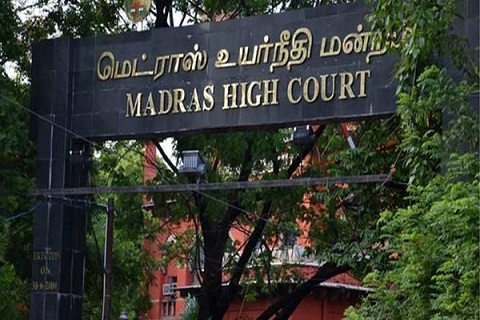
The Madras High Court on Monday rejected a plea from O Panneerselvam, expelled AIADMK leader and its former co-ordinator, to stay the conduct of the party's general council meeting by the other faction of the party, headed by former joint coordinator Edappadi K Palaniswami.
Justice Krishnan Ramaswamy delivered the verdict on Monday morning, which allowed the EPS faction to hold the GC meeting, the supreme decision-making body of the main opposition party in Tamil Nadu.
After picking Edappady K Palaniswami (EPS) as the interim General Secretary of the party, the GC meeting held here also expelled Panneerselvam and his associates for acting against the party's interests. After hearing the lengthy arguments of the senior counsels for OPS and EPS, the court had on July 8 reserved the orders for today.
The court also dismissed another suit challenging the GC meeting. The meeting can be conducted by the law, the judge said. Dismissing the application seeking to restrain the EPS faction from conducting the meeting, the judge pointed out that though many arguments had been raised by the senior counsel appearing for the applicants, having regard to the order passed by the Supreme Court on July 6, which explicitly stated that the GC meeting on Monday may proceed by the law, this court is not inclined to take a divergent view and grant interim injunction restraining the respondents/ defendants from convening the same. The applicants had not made out a prima facie case to grant interim relief as sought in the present applications, the judge said. He also indicted Panneerselvam for knocking on the doors of the court very often. In the present case, the applicants had been knocking on the doors of courts of law by making their best efforts to use the courts as tools for their convenience to come to their rescue, who are not in a position to gain confidence or support from among the party members in their favor. It is very unfortunate that a leader, in the capacity of the coordinator, has time and again rushed to this court, seeking interference, instead of approaching the general council and participating in the meeting and convincing the members by introducing ideas and plans for the welfare of the party members and development of the party to gain the confidence of the members to act in his favor. ''What the applicant could not achieve, wants to achieve through a court of law and the courts will certainly refrain from interfering with the private affairs of the party, that too at the instance of just one or two members contrary to the interests of thousands of other members of the party,'' the judge said.
The matter at hand is an intra-party affair. The law is trite that courts' jurisdiction is ousted in matters dealing with internal affairs or the resolution of a political party regarding any aspect of the matter, such as nomination, the election of leadership, and amendment of by-laws, the judge said. It is within the political party's jurisdiction and is truly a 'No Go Area' for courts, as they lack jurisdiction to delve into such affairs or matters. The court's jurisdiction is ousted because such subject matter is non-justiciable. When the affairs of parties/organizations/associations are governed by statutes, the courts test the validity of their actions on the touchstone of such statutes. If such bodies are not directly governed by any statute but are being administered under their own rules and by-laws, their impugned actions are tested in the light of those rules or by-laws with the majority will of the members of the General Council, the judge said.
''In a democratic set-up, the will of the majority has to prevail. The general rule states that during a difference among members, the majority decides the issue. If the majority exercises its powers in the matters of a party/organization's internal administration, then the courts will not interfere in the wisdom of the majority.'' ''It is a well-established principle that, provided that the acts of the management are within the powers of the party itself, any dispute between individual members of the party and those responsible for its management must be decided by the machinery provided by the rules and not in a court of law,'' the judge said.
On the issue of the validity of the notice issued contrary to the by-laws concerned, the judge said, ''... this court is of the prima facie view that the notice deemed to have been issued to all the members as early as on June 23 intimating the convening of the meeting on July 11 and it is a valid one.'' ''Further, the authority to frame, amend, vary and rescind the by-laws of the party, undoubtedly, vests in the General Council of the party and the absence of any statutory status attached to such by-laws and when the majority plays a vital role in the decision-making process, this court cannot interfere with the internal affairs of the party,'' the judge added.
''In the light of the above discussion, this court is of the view that the applicants have not made out a case for grant of interim reliefs as sought for in these applications. Accordingly, the General Council meeting as scheduled to be held can be proceeded with by law as already directed by the Supreme Court,'' the judge said and dismissed the applications for interim relief.


 Google News