

UN expert welcomes European Court decision to hear appeal against French anti-prostitution law
Sex workers operate legally in France, but the 2016 law criminalises the purchase of sexual acts by their clients.
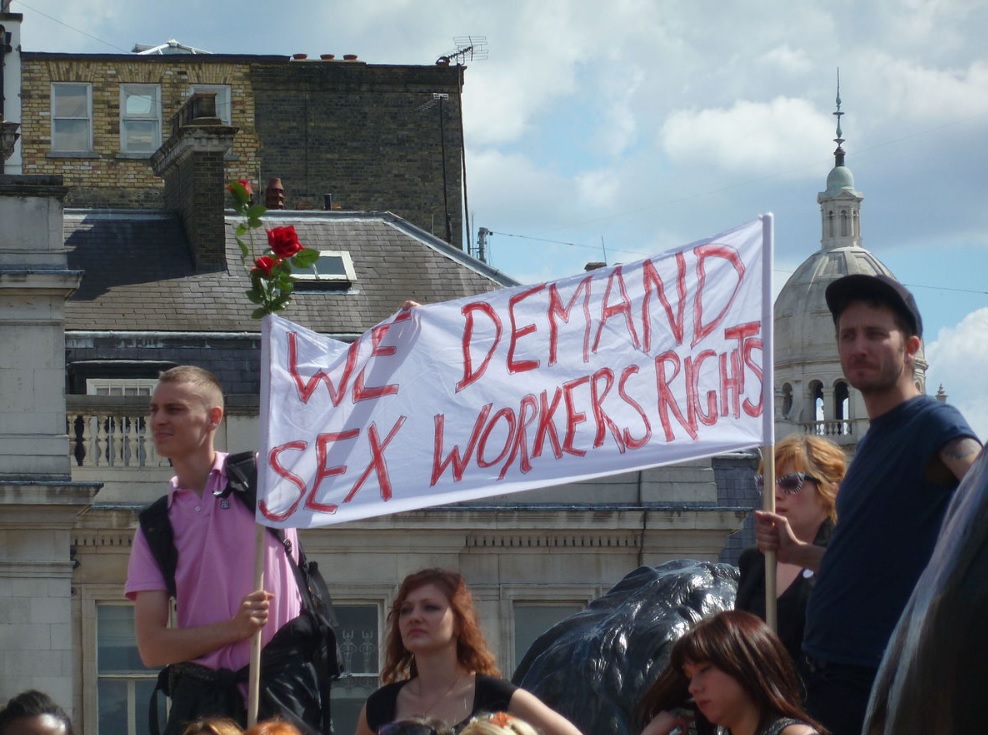
A UN expert today welcomed the decision by the European Court of Human Rights to hear an appeal against a French anti-prostitution law, warning that criminalising sex work obstructed the right to health, particularly for sex workers.
"Sex work is real work," said Tlaleng Mofokeng, the UN Special Rapporteur on the right to health, who submitted an amicus curiae brief in the case brought to the European Court by French and foreign sex workers. "My hope is that the future ruling on this law by the European Court of Human Rights will be based on international human rights and standards," Mofokeng said.
Sex workers operate legally in France, but the 2016 law criminalises the purchase of sexual acts by their clients. The sex workers claim the law has a devastating impact on their livelihoods and drives their work underground.
In her intervention, the Special Rapporteur illustrated how laws, policies and practices criminalising sex work present obstacles to the enjoyment of the right to health, in particular for sex workers.
"The criminalisation of sex workers and the criminalisation of their clients has a negative impact on sex workers' health and their access to services to the detriment of their enjoyment of physical and mental health, including sexual and reproductive health," the UN expert said.
Mofokeng denounced the "narrow lens that conjures gross stereotypes about sex work and sex workers" and added that sex workers have health needs beyond HIV prevention or treatment, including screening for reproductive cancers, screening for other sexually transmitted infections, trauma counselling, contraceptives and safe abortion care needs.
In her submission to the European court, Mofokeng reaffirmed that States have obligations under international human rights law to respect, protect and fulfil the human rights of sex workers, including their rights to privacy, bodily integrity, liberty and security of the person, the right to be free from torture, cruel and inhuman and degrading treatment and the right to autonomy and freedom from unlawful interference.
"Sex work should not be conflated with trafficking in persons for the purpose of sexual exploitation," the Special Rapporteur said. "Assuming that all sex workers are trafficked denies the autonomy and agency of people who sell sex," she said.
Mofokeng urged States to prioritise the welfare of sex workers in line with their human rights obligations by ensuring their rights to enjoyment, without discrimination, the right to health, to gain one's living from work, and to safe working conditions.
ALSO READ
-
Dora Moutot’s Conviction Sparks UN Expert’s Concern Over Women’s Safety and Free Speech
-
UN Experts Warn Children Reporting Sexual Abuse in France Still Face Risks in Court
-
France Plans Housing Hub to Unlock European Funding and Technical Expertise
-
AfDB and France Build €2.4 Billion Partnership for Jobs and Growth
-
The Azcatitlan Codex Returns: A Historical Reunion After 183 Years


 Google News