

South Africa Forms High-Level STI Working Group After US Funding Withdrawal
Minister Nzimande has brought together a diverse and distinguished team from academia, research institutions, and national science bodies to serve on the Working Group.
- Country:
- South Africa
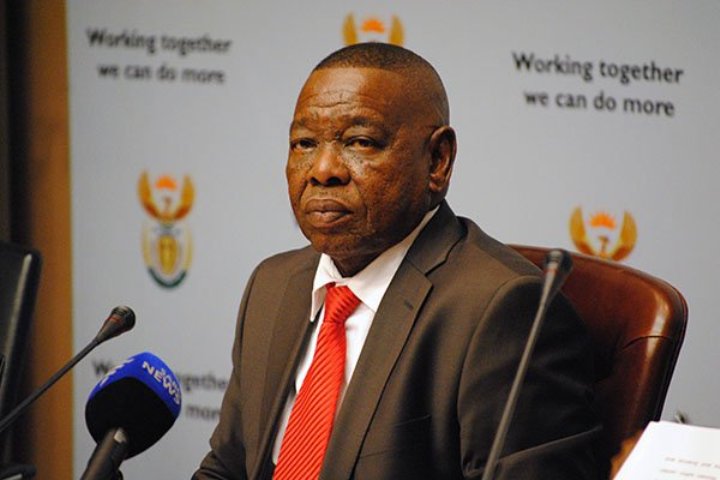
South Africa's Minister of Higher Education, Science and Innovation, Professor Blade Nzimande, has officially announced the formation of a 12-member Working Group on Science, Technology and Innovation Funding (STI-WG), a strategic move to safeguard the country's research future following the United States' unexpected withdrawal of key research and development support.
This expert panel is tasked with advising the Minister on both immediate and long-term implications of the funding cut, and formulating strategic responses to shield South Africa's science and innovation systems from geopolitical disruptions.
Formation and Purpose of the STI-WG
The decision to establish the STI Working Group was first declared by Minister Nzimande on 2 May 2025, as a direct response to growing concerns over the impact of reduced foreign investment in the country's public research institutions. This development comes amid global shifts in international relations and funding priorities, which have created new challenges for many developing economies relying on international cooperation in science and innovation.
"The Working Group is expected to provide the Minister with its first draft report within four weeks after assumption of the task, and the final report is expected by 30 June 2025," the Department of Science, Technology and Innovation (DSTI) said in a press release on Monday.
Key Objectives and Terms of Reference
The STI-WG has been assigned a threefold mandate:
-
Impact Assessment: The team will conduct an in-depth analysis of the implications and repercussions of the USA's withdrawal of funding from South African public research and development initiatives. This includes evaluating the scale of the funding gap, disrupted projects, and affected institutions.
-
Geopolitical Risk Analysis: The Working Group will explore current global political dynamics that influence science and innovation partnerships. Particular attention will be paid to how shifting allegiances and global tensions could threaten or shape the future of collaborative scientific efforts in South Africa.
-
Strategic and Policy Recommendations: Most crucially, the group will develop actionable proposals to fortify South Africa's STI ecosystem against future funding shocks. This will involve identifying alternative funding sources, including domestic mechanisms and South-South collaborations, and advising on policy adjustments to enhance resilience and independence in the STI sector.
Members of the STI Working Group
Minister Nzimande has brought together a diverse and distinguished team from academia, research institutions, and national science bodies to serve on the Working Group. Their expertise spans social sciences, innovation strategy, higher education leadership, and scientific research administration.
The appointed members are:
-
Dr Derrick Swartz – Nelson Mandela University (NMU), Chairperson of the Working Group
-
Prof Ari Sitas – Acting Director, Institute of African Alternatives, Cape Town
-
Prof Sarah Mosoetsa – CEO, Human Sciences Research Council (HSRC)
-
Dr Mlungisi Cele – CEO, National Advisory Council on Innovation (NACI)
-
Prof Francis Petersen – Chair, Universities South Africa
-
Prof Thokozani Majozi – President and Chair, Academy of Science of South Africa (ASSAf)
-
Prof Sibusiso Moyo – Deputy Vice-Chancellor for Research, Stellenbosch University
-
Prof Ntobeko Ntusi – CEO, South African Medical Research Council
-
Dr Fulufhelo Nelwamondo – CEO, National Research Foundation
-
Prof Sibongile Muthwa – Vice-Chancellor, Nelson Mandela University
-
Prof Xolisa Mtose – Vice-Chancellor, University of Zululand
-
Dr Thulani Dlamini – CEO, Council for Scientific and Industrial Research (CSIR)
These experts bring together a blend of leadership and technical insight needed to craft a comprehensive strategy that not only reacts to the current crisis but also builds a more sustainable and autonomous STI framework for South Africa.
A Call for Resilience and Innovation Sovereignty
The formation of the STI-WG reflects South Africa's determination to build resilience and self-sufficiency in its innovation landscape. The DSTI emphasized the importance of insulating the sector from politically motivated disruptions and enhancing partnerships that align with South Africa's developmental priorities.
The broader message from the Minister and his department is clear: while global collaboration remains vital, South Africa must cultivate stronger local capacities and diversify its funding sources to secure the long-term success of its science and innovation initiatives.
The STI-WG's final report, due by the end of June 2025, is expected to play a foundational role in reshaping the national STI funding policy and ensuring that South Africa remains a competitive and robust player in the global research community.


 Google News