

Amit Shah Chairs Key Review on Yamuna Rejuvenation, Emphasizes STP & E-Flow
The review meeting comes at a crucial time, as pollution levels in the Yamuna continue to pose environmental, health, and developmental challenges for the National Capital Region.
- Country:
- India
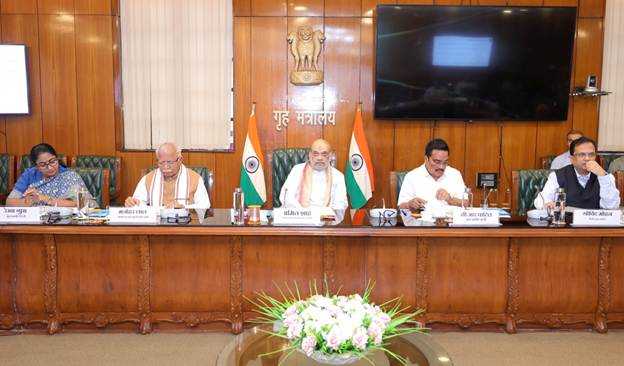
In a decisive move to fast-track efforts for the rejuvenation of the Yamuna River, Union Home Minister and Minister of Cooperation, Shri Amit Shah, chaired a high-level review meeting in New Delhi on July 11, 2025. The session was attended by several top-ranking officials, including Union Housing and Urban Affairs Minister Shri Manohar Lal, Union Jal Shakti Minister Shri C.R. Patil, Delhi Chief Minister Smt. Rekha Gupta, Union Home Secretary, and senior bureaucrats from relevant ministries and the Delhi Government.
The review meeting comes at a crucial time, as pollution levels in the Yamuna continue to pose environmental, health, and developmental challenges for the National Capital Region.
DPCC Urged to Act Swiftly Against Industrial Pollution
At the core of his remarks, Shri Amit Shah underscored the urgent need for the Delhi Pollution Control Committee (DPCC) to adopt an action-oriented approach. He directed the Delhi government to take firm and sustained measures to prevent increasing industrial pollution, particularly from unauthorized discharge by factories and processing units.
He also noted that industrial waste from states other than Delhi is entering the river and contaminating its flow, and therefore, inter-state cooperation is imperative for a meaningful cleanup.
"The rejuvenation of the Yamuna is not Delhi's responsibility alone—it must be a joint mission of Delhi, Haryana, and Uttar Pradesh," he said.
Focus on Najafgarh and Shahdara Drains: Drone Surveys and BOD Control
Shri Shah identified Najafgarh and Shahdara drains as two of the largest sources of pollution entering the Yamuna within Delhi. He called for immediate drone-based surveys to monitor the full extent of untreated waste flowing through these drains.
He also emphasized reducing Biochemical Oxygen Demand (BOD) levels in these water bodies, which is a key indicator of water quality. Lowering BOD in these drains will significantly improve the health of the Yamuna's ecosystem.
STP Capacity to Be Increased to 1500 MGD by 2028
One of the landmark announcements from the meeting was Shri Shah's directive to expand Delhi's sewage treatment capacity to 1500 million gallons per day (MGD) by 2028.
-
He insisted on third-party quality audits of the treated water being discharged from Sewage Treatment Plants (STPs).
-
Highlighted the need for transparency and regularity in water testing by Delhi, Haryana, and Uttar Pradesh.
-
Suggested that treated water from the Okhla STP should be released downstream to enhance Yamuna's flow and quality.
This move is expected to bring Delhi's wastewater management infrastructure in line with the city's growing population and rapid urbanization.
Rainwater Harvesting and Reservoir Tourism Potential
Shri Amit Shah urged the Delhi Government to develop existing reservoirs in the capital as rainwater harvesting systems. These reservoirs could double up as tourist attractions if properly developed and maintained, contributing to both water conservation and urban recreation.
"These reservoirs must not go to waste. They hold potential for both water security and tourism development," said the Minister.
Tackling Dairy Waste and Unauthorized Cattle Sheds
Addressing the rising concern around dairy waste management, Shri Shah proposed a collaborative approach involving the National Dairy Development Board (NDDB) to implement sustainable solutions. He also emphasized the urgent need to regulate and manage unauthorized dairies and cow shelters operating across Delhi.
These steps are aimed at reducing organic and chemical waste runoff that eventually makes its way into the Yamuna through urban drains.
Strengthening the Yamuna's E-Flow and Water Supply Governance
Shri Amit Shah laid special emphasis on improving the e-flow (environmental flow) of the Yamuna River. He urged the need for dialogue with the Uttar Pradesh Government to address water flow bottlenecks before the river enters Delhi.
He also proposed a detailed survey on Delhi's water supply needs, which would help ascertain the demand-supply gap and guide future water infrastructure projects. Importantly, he flagged uncontrolled borewell extraction as a critical issue and instructed the Delhi Jal Board to develop an action plan to regulate borewells, including phased regularization mechanisms.
National Mission for Clean Ganga (NMCG) Budget Expansion Suggested
Recognizing the funding needs of the mission, Shri Shah called for enhancing the budget allocated to the National Mission for Clean Ganga (NMCG), which also covers tributaries like Yamuna. This financial boost is expected to support infrastructure upgrades, water treatment technologies, and enforcement mechanisms.
A Coordinated Blueprint for a Cleaner Yamuna
This high-level review marks a turning point in India's environmental governance strategy, especially for the Delhi-NCR region, where water quality impacts health, ecology, and urban sustainability.
Shri Amit Shah's push for inter-state collaboration, technology-led monitoring, third-party audits, and rainwater harvesting presents a multi-pronged roadmap to rejuvenate the Yamuna.
If implemented with urgency and efficiency, this action plan could be a model for urban river restoration across India.


 Google News