

Mashatile Urges Radical Action as HRDC Confronts Youth Unemployment Crisis
Mashatile admitted that the school system still struggles to produce the skills required for a globalised, knowledge-driven economy.
- Country:
- South Africa
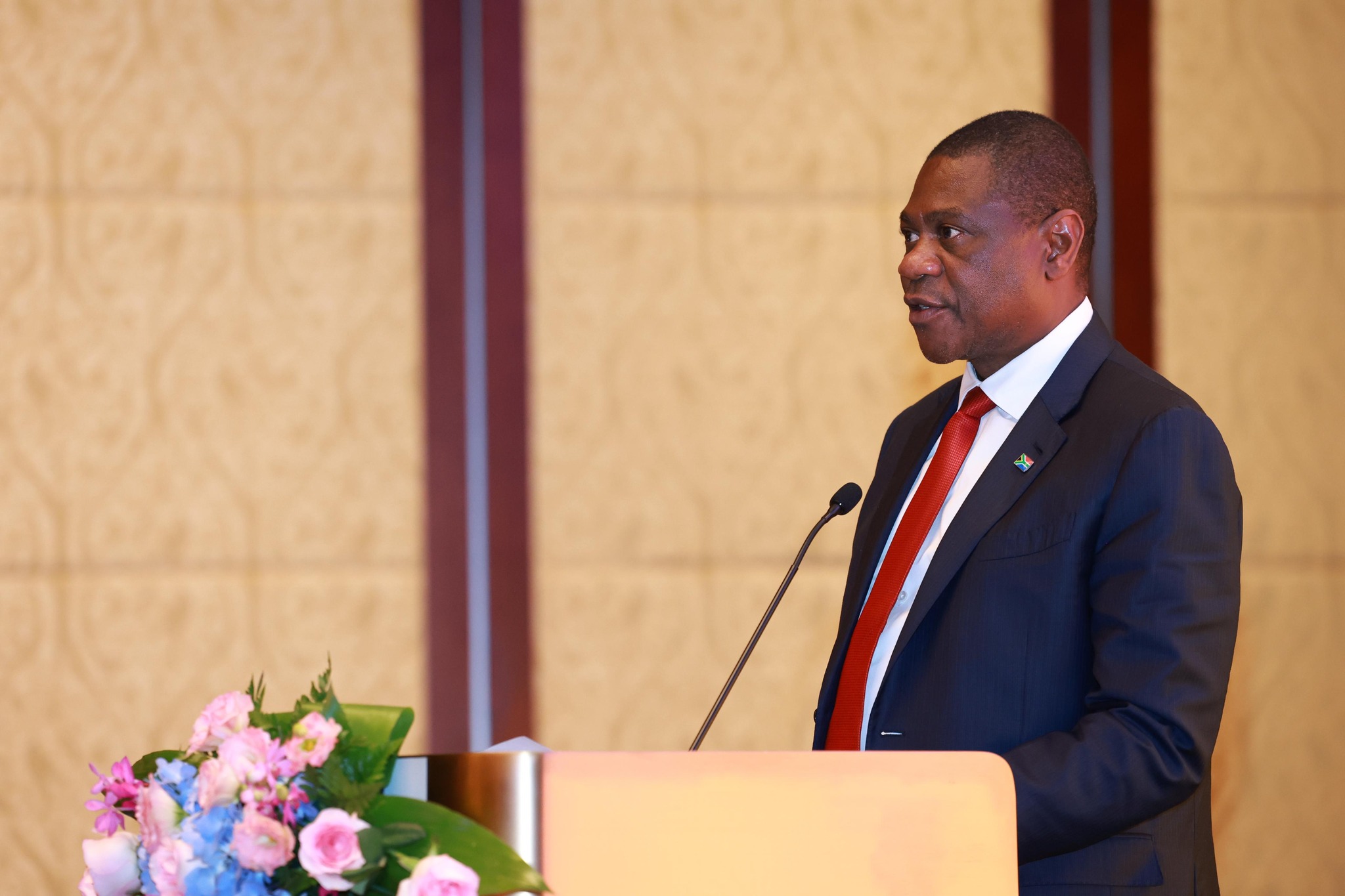
South Africa's Human Resource Development Council (HRDC) has convened a high-level meeting to confront the country's deepening unemployment crisis, with Deputy President Paul Mashatile warning that the challenge demands urgent, innovative, and coordinated solutions.
Addressing the council at the Gallagher Convention Centre in Johannesburg on Thursday, Mashatile—who also serves as the Chairperson of the HRDC—underscored that youth unemployment remains the most pressing threat to South Africa's social and economic stability.
Youth Disconnection from Jobs and Education
Citing the latest figures from Statistics South Africa, Mashatile noted that more than 3.5 million young people between the ages of 15 and 24 are not in employment, education, or training—commonly referred to as the NEET cohort.
"Alarmingly, more than half of unemployed youth not in employment, education and training have been searching for work for over a year, underscoring the systemic barriers they face in securing a foothold in the labour market," Mashatile said, referencing research by the South African Labour Development Research Unit at the University of Cape Town.
He described this as a persistent and systemic problem, urging council members to recognise that the "future of South Africa's youth is in our hands, and we must be radical in securing it."
Role of the HRDC in Addressing the Crisis
The HRDC, a multi-stakeholder advisory body comprising representatives from government, labour, business, and civil society, was established to guide national policy on skills development and human capital growth.
Mashatile emphasised that the council must now move beyond policy-making to ensure that implementation and execution are prioritised:
"We have at this stage mastered the art of policy making; however, some of these policies are not coming alive in the areas where they are needed to transform the lives of South Africans and the youth."
He urged the council to bridge the gap between labour supply and demand by aligning education and skills development with the evolving needs of the South African economy.
Education, Skills, and Systemic Gaps
Mashatile admitted that the school system still struggles to produce the skills required for a globalised, knowledge-driven economy. Key concerns include:
-
A shortage of skilled educators, particularly in science, technology, engineering, and mathematics (STEM).
-
A disconnect between graduate skills and industry requirements, leading to high levels of unemployability even among educated youth.
-
Weaknesses in foundational learning, which hinder later skills acquisition and workplace readiness.
Nevertheless, he noted that the government is working to improve outcomes through curriculum reforms, better foundational education, and efforts to attract and retain skilled professionals.
Pathways to Employment and Inclusion
The Deputy President highlighted several initiatives as crucial to addressing the unemployment crisis:
-
Workplace integrated learning to provide students with real-world experience.
-
Career guidance and mentorship programmes to help youth make informed choices.
-
Entrepreneurship support to encourage job creation and innovation.
-
Public employment programmes to provide immediate relief and entry points into the labour market.
He also called on the National Youth Development Agency (NYDA) to lead efforts in integrating education with practical work experience, strengthening partnerships between schools, universities, and employers.
Digital Transformation and Future Readiness
With technology reshaping global job markets, Mashatile warned that South Africa must urgently adapt to a digital future. He stressed the importance of digitally inclusive training programmes and curricula that can evolve alongside technological change:
"The South African community must become digitally adaptive to ensure digital inclusivity for future generations. As technology advances exponentially, today's abilities may become obsolete tomorrow."
A Call for Collective Action
Mashatile reiterated that tackling unemployment requires an integrated approach across all sectors, starting with early childhood development and continuing through to labour market entry.
"Our nation requires us to have an integrated approach across a variety of sectors and levels, beginning with the development of young children and ending with their entry into the labour market," he said. "We need to do this with new energy and determination to build an HRDC that makes a difference in our communities."
Linking to Global Commitments
Finally, the Deputy President linked the discussion to global platforms, highlighting the G20 Leaders' Summit as an opportunity for South Africa to contribute to building inclusive and resilient education systems that can prepare future generations for the rapidly changing world of work.


 Google News