

Mashatile Calls for Stronger Partnerships to Drive Inclusive Growth in Garden Route
Mashatile praised local leaders and stakeholders for their ongoing commitment to promoting the region’s economic potential.
- Country:
- South Africa
Deputy President Paul Mashatile has called for deeper collaboration between government, business, and civil society to accelerate inclusive and sustainable economic growth across the Garden Route region and the wider South African economy.
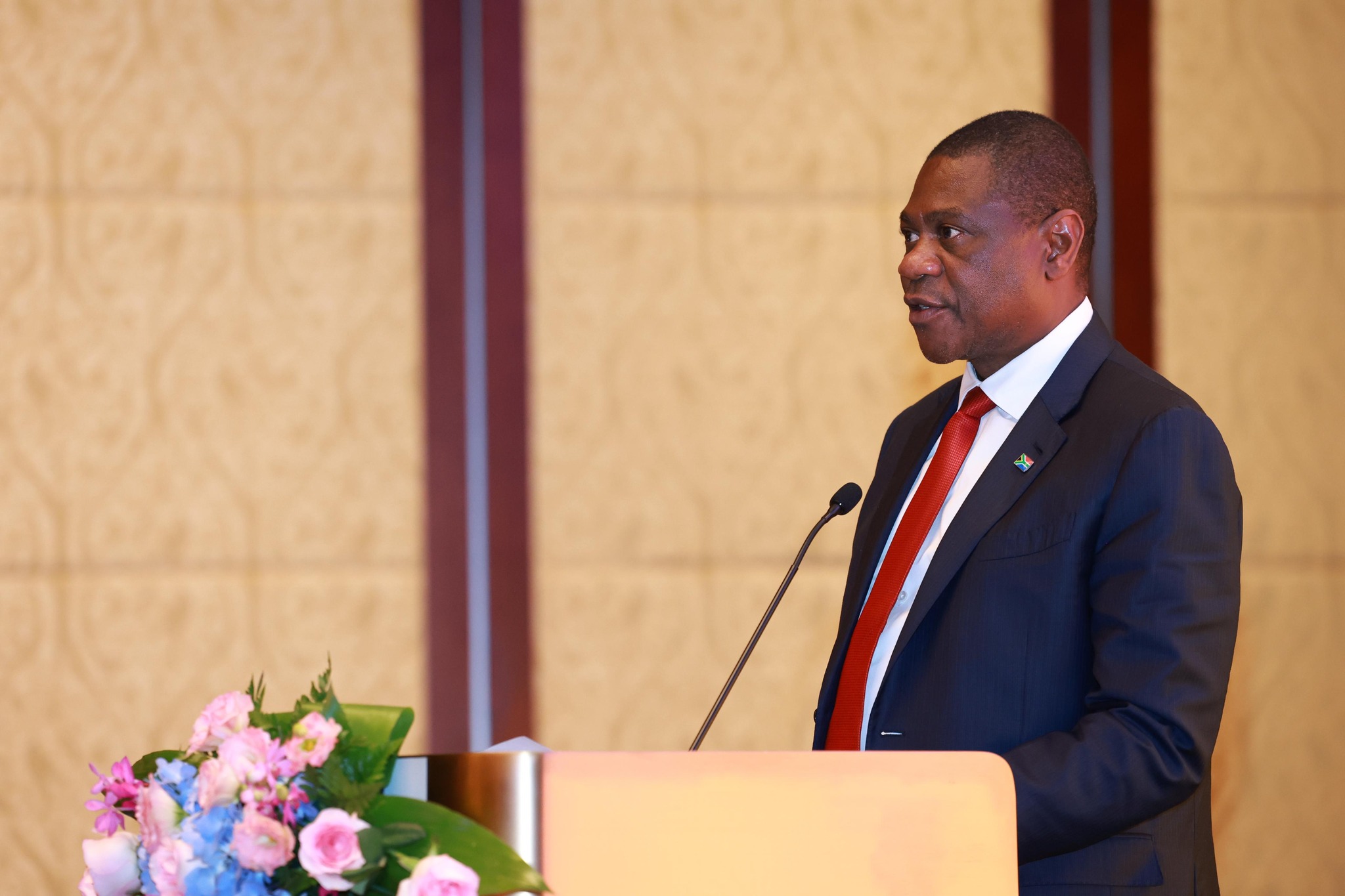
Delivering a virtual keynote address at the Garden Route Economic Coordination Roundtable Dialogue on Thursday, Mashatile commended the region for its sustained momentum since the inaugural Knysna Regional Investment Conference, noting that the Garden Route is steadily positioning itself as a premier investment and tourism destination.
Garden Route Emerging as a Key Investment and Tourism Hub
Mashatile praised local leaders and stakeholders for their ongoing commitment to promoting the region's economic potential.
"I am very proud of your commitment to promoting this part of our country as a key investor destination, but also a catalyst for tourism in the Garden Route," he said.
He noted that the region's progress is rooted in strong partnerships, coordinated planning, and targeted investment promotion initiatives that align closely with national development priorities.
Focus of the Dialogue: Building Partnerships for Inclusive Growth
The roundtable was held under the theme: "Strengthening intergovernmental coordination and private sector collaboration for inclusive economic growth."
The theme, Mashatile said, reflects what the Presidency has consistently championed—a unified approach to development, rooted in strategic cooperation between the state, business, and communities to create livelihoods, attract investment, and improve competitiveness.
National Programmes to Harness Private Capital and Innovation
Mashatile highlighted several national initiatives aimed at enhancing private-sector participation in development:
1. Strategic Partnership Programme (SPP)
Designed to support large-scale, private-sector-led investment projects.
2. Public–Private Partnerships (PPPs)
Mechanisms to accelerate infrastructure delivery, improve service capacity, and unlock new economic corridors.
3. Government Business Partnership
A platform for continuous engagement between policymakers and business leaders to address bottlenecks and co-develop solutions.
"These programmes are designed to harness private capital and expertise to enhance investment opportunities and stimulate economic growth," Mashatile said.
He emphasised that these initiatives target South Africa's most pressing challenges:
-
Infrastructure deficits
-
Youth unemployment
-
Slow economic transformation
-
Operational inefficiencies in municipalities
Spotlight on iThuba Development Project: A R200 Billion Transformation Drive
Mashatile drew attention to major local initiatives such as the iThuba Development Project, a massive R200 billion transformation programme aimed at:
-
Infrastructure renewal
-
Township-based economic revitalisation
-
Innovation-driven development
-
Inclusion of young people and historically marginalised communities
-
Strengthening the entire Garden Route District economy
He called the project a catalyst for socio-economic change, aligned with the goals of the National Development Plan (NDP).
"These initiatives reflect a collaborative commitment to transform the very communities that shaped us, ensuring that the next generation inherits a future of dignity, opportunity, and shared prosperity," he said.
Intergovernmental Coordination: A Critical Foundation for Development
Emphasising governance efficiency, Mashatile highlighted the need for strong intergovernmental relations (IGR) to ensure effective service delivery, avoid duplication, and improve planning coherence.
Quoting Chapter 3 of the Constitution, he reminded stakeholders that all three spheres of government—national, provincial, and local—must work as "distinctive, interdependent, and interrelated" partners.
He linked IGR directly to investment and economic performance:
-
Strong IGR creates a predictable environment for investment
-
It improves municipal capacity
-
It accelerates infrastructure rollout
-
It supports the District Development Model (DDM), which integrates planning across all spheres
"This is what we have been encouraging with the implementation of the DDM," Mashatile added.
Empowering Small Businesses and Young Entrepreneurs
Mashatile stressed that government cannot achieve economic growth alone. A thriving small-business sector is central to job creation, community development, and localised economic activity.
"Local municipalities need to encourage young individuals to start their own businesses," he said.
He highlighted the R500 million Spaza Shop Support Fund, a programme of the Department of Trade, Industry and Competition (the dtic), in collaboration with the Department of Small Business Development. The fund provides:
-
Financial assistance
-
Business training
-
Modernisation support
-
Supply-chain access
It targets South African-owned spaza shops, general dealers, and township grocery stores, enabling them to compete effectively and grow sustainably.
Using the G20 Platform to Promote a Unified National Identity
Mashatile concluded by urging South Africans to use the upcoming G20 Summit as a platform to demonstrate the country's commitment to equality, unity, and democratic values.
"Tell the world that there is no genocide happening in our country. Tell the world that we live side by side and we are building a nation that Madiba and Tutu spoke about… a nation that Fischer, Suzman, Meer, and Naicker fought for."
His closing remarks positioned nation-building, social cohesion, and a shared moral vision as necessary foundations for long-term economic success.
A Call for Collective Action
Deputy President Mashatile's message was clear: the economic future of the Garden Route—and South Africa as a whole—depends on coordinated governance, effective partnerships, empowered communities, and a shared commitment to inclusive growth.
The Garden Route's steady momentum, strong institutional collaboration, and ambitious investment pipeline position it as a model for regional development, showcasing what is possible when public and private sectors work hand in hand.


 Google News