



Budget 2026–27 Unveils Big Push for Green Mobility, Growth and Tax Reforms
The Budget seeks to unlock the economic power of cities by mapping City Economic Regions (CERs) based on local growth drivers.
- Country:
- India
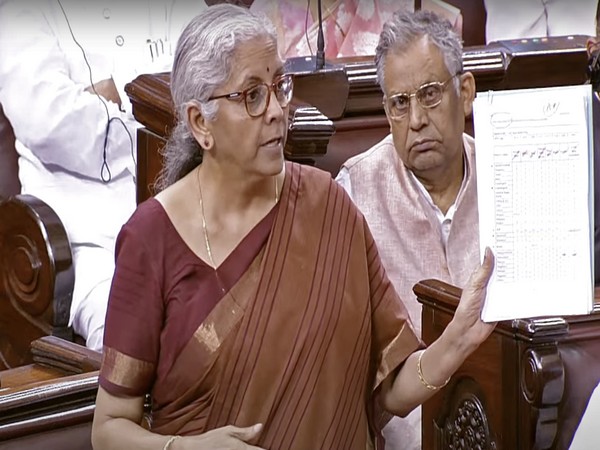
Union Finance Minister Smt. Nirmala Sitharaman, while presenting the Union Budget 2026–27, announced a wide-ranging reform package aimed at accelerating environmentally sustainable infrastructure, boosting jobs and skills, strengthening cities and regions, and simplifying the tax and customs regime to support growth and ease of living.
Green freight and passenger mobility
To promote sustainable cargo movement, the Budget proposes new Dedicated Freight Corridors connecting Dankuni in the East to Surat in the West, alongside the operationalisation of 20 new National Waterways over the next five years. The rollout will begin with National Waterway-5 in Odisha, linking mineral-rich Talcher and Angul and industrial hubs such as Kalinga Nagar with the ports of Paradeep and Dhamra. Regional Centres of Excellence will be set up to train skilled manpower for these logistics systems.
For clean passenger transport, the government will develop seven High-Speed Rail corridors as “growth connectors”, including Mumbai–Pune, Pune–Hyderabad, Hyderabad–Bengaluru, Hyderabad–Chennai, Chennai–Bengaluru, Delhi–Varanasi and Varanasi–Siliguri.
Cities as engines of growth
The Budget seeks to unlock the economic power of cities by mapping City Economic Regions (CERs) based on local growth drivers. An allocation of ₹5,000 crore per CER over five years has been proposed, to be disbursed through a challenge-based, reform-linked financing model.
Jobs, skills and human capital
Reiterating that nearly 25 crore people have exited multidimensional poverty over the past decade, the Finance Minister said the second “kartavya” of the Budget focuses on fulfilling aspirations and building capacity.
Key proposals include:
-
Five Regional Medical Tourism Hubs, developed with private sector participation, integrating hospitals, research, AYUSH centres and rehabilitation facilities.
-
A loan-linked capital subsidy to expand veterinary education and infrastructure, adding over 20,000 veterinary professionals.
-
Expansion of the AVGC sector, with AVGC Content Creator Labs in 15,000 schools and 500 colleges.
-
Establishment of one girls’ hostel in every district to support women in STEM education.
-
Creation of a National Institute of Hospitality and upskilling of 10,000 tourist guides in collaboration with an IIM.
-
Launch of a Khelo India Mission to transform sports over the next decade through talent pathways, coaching, sports science and infrastructure.
Inclusive development and regional focus
The third “kartavya” aligns with Sabka Sath, Sabka Vikas and the vision of Viksit Bharat, with targeted measures for farmers, Divyangjan, mental health care, and accelerated development in Purvodaya States and the North-East.
Key initiatives include:
-
Bharat-VISTAAR, a multilingual AI platform integrating AgriStack and ICAR data for personalised farm advisory.
-
Self-Help Entrepreneur (SHE) Marts to scale women-led enterprises.
-
Setting up NIMHANS-2 and upgrading mental health institutes in Ranchi and Tezpur.
-
Development of the East Coast Industrial Corridor, new tourism destinations in Purvodaya States, 4,000 e-buses, and a Buddhist Circuit Development Scheme in the North-East.
Fiscal consolidation on track
The fiscal deficit is estimated at 4.3% of GDP in BE 2026–27, with the debt-to-GDP ratio declining to 55.6%, reinforcing the government’s commitment to fiscal prudence while maintaining high capital expenditure.
Major tax reforms for ease and certainty
The Budget announces sweeping Direct and Indirect Tax reforms, including:
-
Implementation of the New Income Tax Act, 2025 from April 2026.
-
Lower TCS rates on overseas tours, education and medical expenses.
-
Rationalisation of penalties, decriminalisation of minor offences, and expanded immunity provisions.
-
Major incentives for IT services, cloud providers, data centres and global investors, including tax holidays till 2047 for eligible cloud service companies.
-
Simplified customs processes, lower duties on critical inputs, green energy, aviation, medical devices and personal imports, and expanded non-intrusive, AI-based cargo scanning.
Call to action
With a strong emphasis on green infrastructure, digital governance, skills, innovation and investor-friendly taxation, the Union Budget 2026–27 calls upon states, industry, startups and global investors to partner with government in translating these reforms into on-ground growth, jobs and inclusive prosperity.


 Google News