

South Africa Steps Up Rail Recovery Efforts to Revive Economic Growth
The Deputy President said government has implemented rapid response measures in key infrastructure hotspots where service delivery disruptions have been most severe.
- Country:
- South Africa
Deputy President Paul Mashatile has reaffirmed the South African government's commitment to revitalising the country's struggling rail transport system, highlighting a series of reforms and major infrastructure investments aimed at restoring rail capacity and stimulating economic growth.
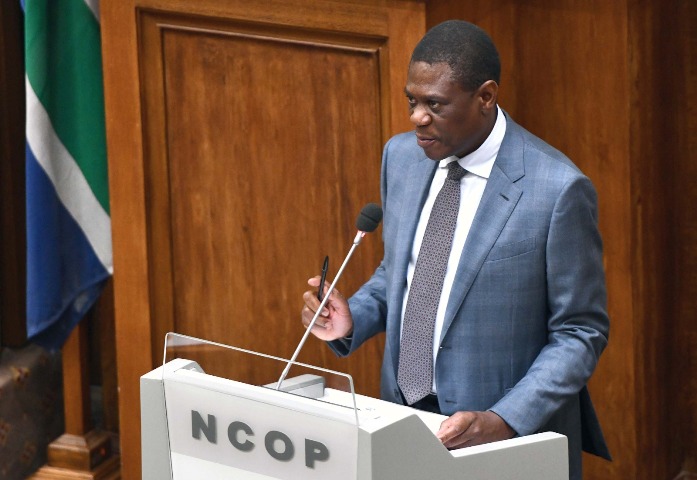
Speaking in the National Council of Provinces (NCOP) in Cape Town on Thursday while responding to questions for oral reply, Mashatile outlined government interventions designed to address the long-standing decline of South Africa's rail network. He said the revival of rail infrastructure forms a key part of broader efforts to strengthen economic infrastructure and improve logistics performance across the country.
Mashatile acknowledged that the deterioration of rail services had disrupted freight movement and passenger mobility, negatively affecting economic activity in sectors such as mining, agriculture and manufacturing. In response, government has prioritised urgent interventions to repair infrastructure, improve coordination between departments and accelerate project implementation.
Strengthening Coordination to Restore Infrastructure
The Deputy President said government has implemented rapid response measures in key infrastructure hotspots where service delivery disruptions have been most severe.
"We have prioritised stronger intergovernmental coordination, improved planning and more effective execution across the spheres of government to restore the performance of critical economic infrastructure, including rail," Mashatile said.
He noted that several government departments are working together to address rail infrastructure challenges. These include the Department of Public Works and Infrastructure, the Department of Transport, the Department of Water and Sanitation, and the Department of Cooperative Governance and Traditional Affairs.
According to Mashatile, this coordinated approach is intended to accelerate upgrades and enhance the protection of strategic infrastructure that supports economic activity and job creation.
Billions Allocated to Rail and Infrastructure Projects
The government has also allocated substantial funding to revive rail operations and upgrade transport infrastructure.
Mashatile revealed that Finance Minister Enoch Godongwana has directed R21.9 billion through the Budget Facility for Infrastructure toward major projects aimed at restoring rail capacity. This funding will support improvements to Transnet's key coal and iron ore corridors, which are essential for South Africa's mining exports.
Beyond these specific allocations, government plans to invest R500 billion in infrastructure over the next three years. Of this amount, approximately R120 billion has been earmarked for transport infrastructure projects, including rail rehabilitation, port efficiency upgrades and road network maintenance.
These investments are expected to improve the efficiency of logistics systems while strengthening South Africa's competitiveness in global markets.
PRASA's Corridor Recovery Programme
A significant part of the rail recovery strategy focuses on passenger rail services operated by the Passenger Rail Agency of South Africa (PRASA).
Mashatile said government is strengthening PRASA to accelerate the implementation of its corridor recovery programme and modernise passenger rail services.
By the end of 2025, PRASA had commissioned 35 of its 40 passenger rail corridors, marking a major milestone in restoring commuter services. The agency also recorded an audited total of 77 million passenger journeys on long-distance rail services.
PRASA plans to further expand its services by reintroducing several long-distance mainline routes during the 2026/27 financial year, subject to available funding and locomotive readiness.
The proposed routes include:
-
Johannesburg to Durban
-
Johannesburg to Queenstown
-
East London to Johannesburg
-
Cape Town to Johannesburg
-
Johannesburg to Musina
-
Cape Town to Queenstown
These routes are expected to improve connectivity between major economic centres and regional towns.
Modern Signalling and Digital Infrastructure
Mashatile also highlighted efforts to modernise rail infrastructure through technology upgrades.
PRASA is currently rolling out thousands of kilometres of fibre optic infrastructure to support a new signalling system. This initiative is being implemented in partnership with private sector companies and aims to improve operational safety and enable real-time communication across the rail network.
Improved signalling systems are expected to reduce delays, enhance monitoring capabilities and improve the reliability of passenger services.
Reviving Underutilised Rail Infrastructure
Meanwhile, Transnet's rail infrastructure manager, in collaboration with the Department of Transport and other strategic partners, is working to revive rail assets that have been inactive or damaged.
Many rail lines across the country have been affected by vandalism, theft and long periods of underutilisation. Government is now prioritising the productive use of these assets to support industries that depend heavily on rail connectivity.
"This work includes the revival of critical rail services that support agriculture, mining, manufacturing hubs and rural trading towns that rely heavily on rail connectivity," Mashatile said.
Opening Rail Networks to Private Operators
A key component of the reform programme involves opening the rail network to private sector operators.
Through Operation Vulindlela, government is implementing structural reforms to modernise the rail and logistics sector. One of the major policy changes involves allowing third-party operators to use the rail network in order to improve competition, efficiency and service delivery.
Mashatile confirmed that the implementation of the National Rail Policy 2022 is already underway and has entered its operational rollout phase.
As part of this process, government is finalising agreements with freight logistics companies that will operate along key rail corridors.
"At the moment about 11 major freight companies have been enlisted, and work is continuing to finalise the contracts so that they can begin work on these corridors," Mashatile said.
The involvement of private companies is expected to bring additional investment, operational expertise and improved efficiency to the sector.
Restoring Rail as a Driver of Economic Growth
Mashatile expressed confidence that the combination of government investment, policy reforms and private sector participation would gradually reverse the decline of the rail system.
He said restoring rail infrastructure is essential not only for improving transport services but also for supporting economic growth and expanding employment opportunities.
"I am confident that with the plans government has put in place, additional resources and private sector involvement, we will begin to correct this situation and ensure that rail infrastructure once again contributes to economic growth and job creation," he said.
The government's rail recovery strategy forms part of broader efforts to modernise South Africa's logistics system and strengthen the country's economic foundations.


 Google News