

SA Reaffirms Democracy, Global Solidarity and Africa-Centred Foreign Policy
South Africa’s Constitution, now in effect for 30 years, is described as a transformative tool that has enabled significant political, social, and economic progress.
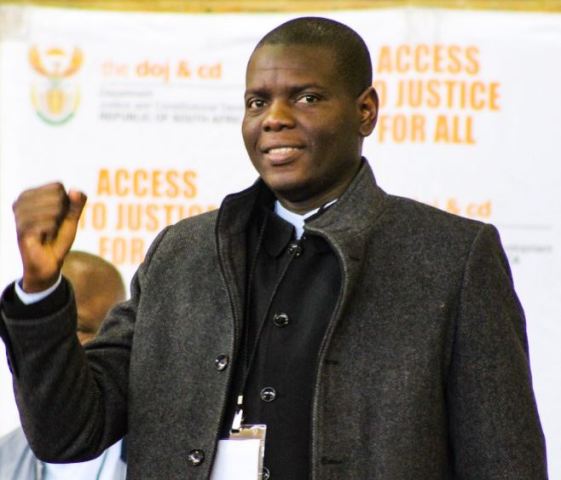
- Country:
- South Africa
South Africa has issued a sweeping and deeply reflective policy statement reaffirming its commitment to democracy, global solidarity, and an Africa-centred foreign policy—positioning the country as both a beneficiary and custodian of international cooperation in an increasingly complex geopolitical era.
Marking more than three decades since the dawn of democracy in 1994, the statement underscores the nation's evolution from apartheid isolation to a globally engaged democracy rooted in constitutional values, human rights, and the enduring philosophy of Ubuntu.
Democracy as a Product of Global Solidarity
At the heart of the message is a powerful reminder: South Africa's democracy is not an isolated achievement, but a product of sustained global solidarity. From anti-apartheid movements across Europe and Asia to decisive support from African nations and countries such as Cuba, international backing played a decisive role in dismantling apartheid.
Quoting ANC stalwart Oliver Tambo, the statement emphasizes the moral responsibility of freedom: those who enjoy liberty must actively contribute to the liberation and dignity of others.
"Freedom," the document reflects, "is not a commodity that can be measured or possessed; it is an intangible product of solidarity."
30 Years of Constitutional Democracy: Progress and Persistent Challenges
South Africa's Constitution, now in effect for 30 years, is described as a transformative tool that has enabled significant political, social, and economic progress. Since 1994, the country has expanded access to housing, education, and healthcare, while building one of the most diverse and constitutionally progressive societies in the world.
Yet, the statement does not shy away from reality. Structural inequality—rooted in more than 350 years of systemic exclusion—continues to shape the socio-economic landscape. High youth unemployment, persistent racial inequality, corruption, and community safety concerns remain pressing national challenges.
Rather than questioning the success of democracy itself, the focus shifts to how these challenges can be addressed to fully realize the promise of "a better life for all."
Government Strategy: Data-Driven Reform and Institutional Strengthening
The government's Medium-Term Development Framework under the 7th Administration outlines a multi-pronged strategy focused on:
-
Job creation and inclusive economic growth
-
Investment in human capital
-
Equitable land reform
-
Strengthening democratic institutions
-
Enhancing community safety
-
Climate resilience and sustainability
-
Deepening global cooperation
Concrete measures already underway include a major expansion of law enforcement capacity, with over 25,500 new police officers being deployed, alongside the use of advanced intelligence systems and integrated crime-fighting technologies to dismantle organized criminal networks.
Infrastructure investment is also a central pillar, with an ambitious large-scale funding push aimed at revitalizing water systems, sanitation, and digital infrastructure—key drivers of economic transformation and job creation.
Meanwhile, youth-focused initiatives such as the Youth Employment Service have already supported approximately 200,000 young South Africans with work experience, signaling a targeted approach to tackling unemployment.
Foreign Policy as a Strategic Bridge Between Domestic and Global Goals
The statement elevates foreign policy as a critical instrument for national development, arguing that domestic progress and global engagement are inseparable.
South Africa's diplomatic approach is framed as one of "principled pragmatism," grounded in constitutional values and the philosophy of Ubuntu—an approach aligned with the concept of enlightened self-interest. This means advancing national interests by promoting global stability, cooperation, and mutual development.
Rather than imposing solutions, South Africa advocates for dialogue, mediation, and peaceful conflict resolution, emphasizing that sustainable change must be driven internally within nations, supported—not dictated—by international partners.
Africa at the Centre: Historical Debt and Strategic Priority
A defining feature of the policy is its strong reaffirmation that Africa remains the cornerstone of South Africa's foreign policy.
The document provides striking historical data to illustrate this commitment. Nigeria alone contributed an estimated US$61 billion (over US$130 billion in today's terms) to the anti-apartheid struggle—equivalent to roughly R2.4 trillion—demonstrating the depth of continental solidarity.
Neighbouring states such as Angola, Mozambique, Zambia, and Zimbabwe also bore immense economic and human costs. Between 1980 and 1989, regional destabilisation linked to apartheid policies resulted in losses of approximately US$60 billion, with infrastructure destruction and economic setbacks reducing regional GDP by nearly 30%.
"These sacrifices," the statement notes, "form the moral and strategic foundation for placing Africa at the centre of our foreign policy."
Today, this vision is being advanced through initiatives such as the African Continental Free Trade Area (AfCFTA), which aims to integrate a market of 1.4 billion people—potentially reshaping the continent's economic future.
A Global Outlook Rooted in Human Rights and Cooperation
South Africa positions itself as a nation that leads by example—advocating for universal human rights while respecting national sovereignty. The country's diplomatic strategy prioritizes trust-building, multilateral cooperation, and long-term global stability.
Drawing inspiration from figures such as U.S. Senator Robert F. Kennedy, the statement acknowledges that the path to equality and justice is complex, requiring sustained effort, courage, and collective action.
A Vision Forward: Unity, Dialogue, and Shared Prosperity
Ultimately, the statement calls for renewed national unity and global engagement, emphasizing that South Africa's future lies not in isolation but in collaboration—both within Africa and across the world.
It reinforces a central message: that dialogue, diversity, and solidarity—not force—are the foundations of lasting peace and development.
As South Africa navigates contemporary challenges, its policy direction signals a continued commitment to leveraging its historical experience to shape a more equitable, cooperative, and resilient global order.


 Google News