

NZ Advances Naval Modernisation Plan as Govt Begins Frigate Replacement Programme
Mr Penk said maritime security remains fundamental to New Zealand’s economic survival and national resilience as an island trading nation heavily dependent on secure sea routes.
- Country:
- New Zealand
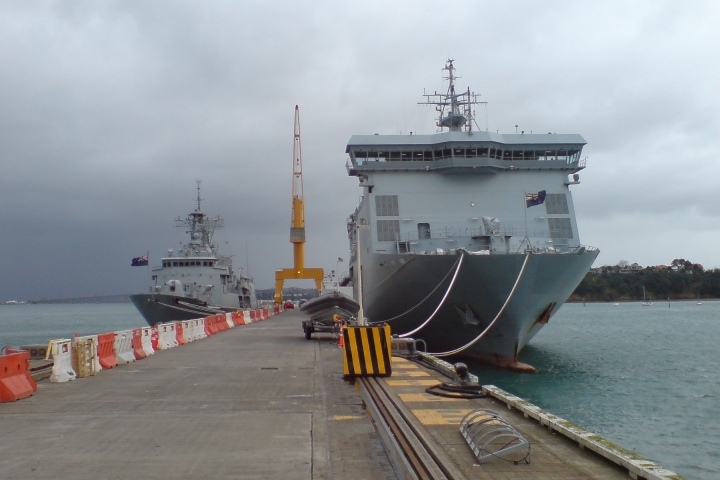
New Zealand is moving toward one of its most significant defence capability upgrades in decades, with the Government formally progressing plans to replace the Royal New Zealand Navy's ageing Anzac-class frigates amid growing regional security challenges and increasing pressure on maritime defence operations across the Pacific.
Defence Minister Chris Penk announced the next stage of the Maritime Fleet Renewal programme, confirming officials have begun discussions with both the Royal Australian Navy and the United Kingdom's Royal Navy as Wellington evaluates future warship options capable of strengthening New Zealand's long-term naval readiness and combat capability.
The move signals a major strategic shift in defence planning as the country prepares for a future security environment increasingly shaped by geopolitical competition, Indo-Pacific instability, maritime surveillance demands, and climate-related humanitarian operations.
Maritime Security Critical to New Zealand's Economy and Sovereignty
Mr Penk said maritime security remains fundamental to New Zealand's economic survival and national resilience as an island trading nation heavily dependent on secure sea routes.
"As a remote island nation, maritime security underpins New Zealand's economic prosperity," Mr Penk said.
"Our safety, international connectivity and the vast majority of our trade is dependent on the sea."
Approximately 99 percent of New Zealand's trade by volume travels by sea, making naval capability essential not only for defence operations but also for protecting economic stability, supply chains, fisheries, and regional partnerships.
The Royal New Zealand Navy plays a central role in safeguarding the country's Exclusive Economic Zone — one of the largest maritime zones in the world — while also supporting regional security missions across the Pacific.
Ageing Fleet Driving Urgent Replacement Plans
The Government's decision comes as much of New Zealand's naval fleet approaches the end of its operational lifespan.
Officials warn that most current naval vessels are expected to reach the end of their design life by the mid-2030s, including the Navy's two Anzac-class frigates, HMNZS Te Kaha and HMNZS Te Mana.
"These activities rely on a resilient Navy, yet most ships in the current fleet are expected to reach the end of their design life by the mid-2030s, including the Anzac-class frigates," Mr Penk said.
"Without replacement, this would have a significant impact on New Zealand's ability to protect its maritime interests in the Pacific and beyond."
The Anzac-class frigates, jointly developed with Australia during the 1980s and 1990s, have undergone multiple upgrades over recent years to extend operational life and improve combat systems. However, defence analysts say ageing hulls, rising maintenance costs, and evolving operational requirements are making long-term replacement increasingly unavoidable.
Defence Capability Plan Expands Maritime Fleet Renewal
The frigate replacement initiative forms part of the Government's broader Defence Capability Plan, which aims to modernise New Zealand's military assets across land, air, cyber, and maritime operations.
According to the Government, the future naval fleet is expected to support a wide range of missions including:
-
Maritime combat operations
-
Patrol and maritime security
-
Sealift and logistical transport
-
Hydrographic surveying
-
Diving and underwater operations
-
Humanitarian assistance and disaster relief
-
Support for other government agencies
-
Pacific regional stability missions
The expansion of capability requirements reflects how modern navies increasingly perform both military and civilian support roles, particularly across the disaster-prone Pacific region.
Climate-related emergencies, illegal fishing, transnational crime, and strategic competition in the Indo-Pacific are all increasing operational demands on regional naval forces.
Australia and UK Frigate Designs Under Consideration
As part of early planning work, New Zealand is examining two internationally recognised frigate programmes that are already being advanced by close defence partners.
These include Japan's Mogami-class frigate design — recently selected by Australia for future fleet development considerations — and the United Kingdom's Type 31 frigate programme.
"Our decision to prioritise discussions with our partners and focus on considering the Japanese Mogami-class frigate selected by Australia and the UK's Type 31 frigates to inform the business case reflects our need to be interoperable and leverage efficiencies," Mr Penk said.
Interoperability with allies is expected to be a major consideration in any final procurement decision, particularly as New Zealand increasingly operates alongside Australian, British, and allied naval forces during regional exercises and security operations.
Defence experts say selecting a platform already being adopted by partner nations could reduce maintenance costs, improve logistical support, streamline training, and strengthen operational integration during joint missions.
Focus on Mature Combat-Capable Platforms
Mr Penk said the Government is deliberately focusing on mature vessel programmes that are already sufficiently advanced to allow detailed analysis against New Zealand's operational requirements.
"We are looking at mature combat capable vessel programmes which are at a stage that allows adequate analysis against New Zealand requirements," he said.
No final decision has been made, and Cabinet is not expected to receive formal procurement advice until before the end of 2027.
The eventual programme is likely to represent one of the largest defence investments in New Zealand's modern history, with comparable international frigate programmes often valued in the billions of dollars depending on weapons systems, sensors, support infrastructure, and long-term sustainment requirements.
Interim Upgrades to Maintain Operational Readiness
While long-term replacement planning continues, the Government says efforts are ongoing to maintain the operational effectiveness of the current frigate fleet.
"In the interim, we are continuing to ensure the current frigates remain operational," Mr Penk said.
The Navy has already invested heavily in upgrading combat systems, radar, surveillance technologies, and ship survivability measures aboard the Anzac-class vessels in recent years.
However, defence planners acknowledge that ongoing maintenance alone cannot indefinitely offset the structural limitations associated with ageing platforms.
Strategic Shift Amid Indo-Pacific Security Tensions
The announcement comes against the backdrop of growing geopolitical competition throughout the Indo-Pacific region, where military modernisation and maritime security concerns are reshaping defence priorities for many countries.
New Zealand has increasingly faced pressure from allies to contribute more actively to regional security, maritime surveillance, and defence partnerships as tensions involving China, Taiwan, Pacific influence, and freedom of navigation continue to intensify.
The Government says ensuring the Defence Force remains equipped with modern and combat-capable assets is critical to protecting national interests and maintaining New Zealand's credibility among security partners.
"By planning for the replacement of our frigates and other naval vessels' capability, this Government is ensuring our Defence Force personnel are equipped with the modern, combat capable assets they need to protect New Zealand's interests, support our partners, and respond effectively to challenges at sea," Mr Penk said.


 Google News