

Uganda Passes Controversial Protection of Sovereignty Bill After Adopting Major Amendments
The Bill was initially introduced as part of broader government efforts to regulate foreign influence, political interference and activities perceived as threatening national sovereignty.
- Country:
- Uganda
Uganda's Parliament has passed the controversial Protection of Sovereignty Bill, 2026 after adopting sweeping amendments that substantially narrowed the scope of the legislation, removed several highly disputed provisions and introduced new safeguards aimed at aligning the law with constitutional protections and existing regulatory frameworks.
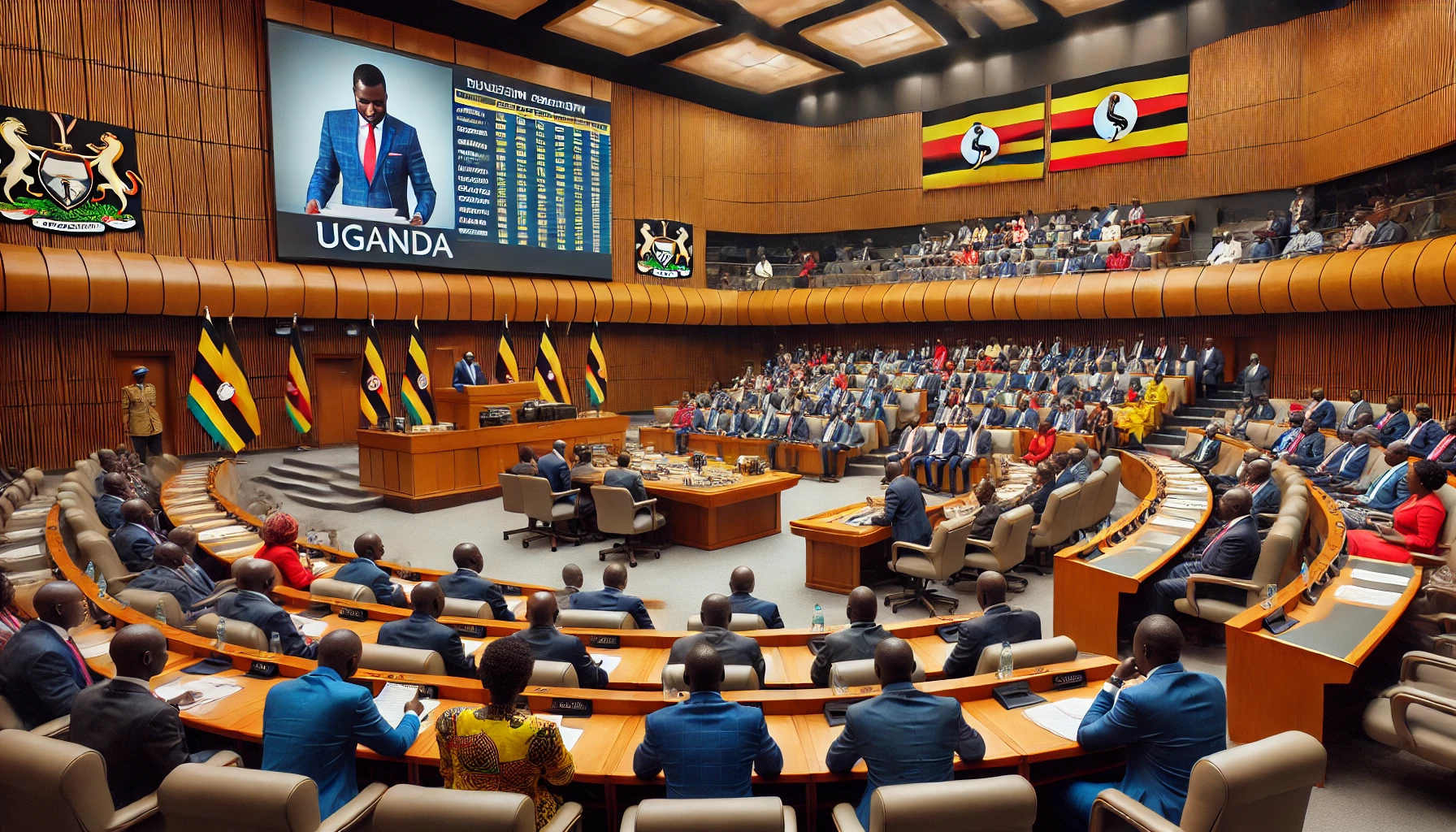
The Bill, which generated intense national debate over concerns surrounding civil liberties, free speech, foreign funding and executive powers, was passed during a packed plenary sitting chaired by Speaker Anita Among.
Government officials defended the legislation as necessary to protect Uganda's sovereignty and national security from foreign influence, while opposition lawmakers and civil society voices continued warning that the law could still threaten constitutional freedoms despite the amendments.
Government Says Bill Necessary to Protect National Sovereignty
Presenting and justifying the motion before Parliament, Minister of State for Internal Affairs Hon. David Muhoozi argued that Uganda faces growing challenges capable of undermining the country's ability to self-govern.
The Bill was initially introduced as part of broader government efforts to regulate foreign influence, political interference and activities perceived as threatening national sovereignty.
However, the original version triggered significant public concern due to its broad definitions, extensive ministerial powers and severe criminal penalties.
More Than 200 Stakeholders Consulted During Review
According to the majority report presented by the Chairperson of the Committee on Defence and Internal Affairs, Hon. Wilson Kajwengye, Parliament undertook extensive consultations before finalising the legislation.
The review process reportedly involved more than 200 stakeholders, including representatives from:
-
government institutions
-
civil society organisations
-
private sector groups
-
academia
-
members of the Ugandan diaspora
Kajwengye acknowledged that while protecting national sovereignty was a legitimate objective, the original draft had been overly broad and risked serious unintended consequences.
"The amendments are intended to harmonise the definitions with the scope of the Bill to limit the application of the law to only agents of foreigners and not any other person," the committee report stated.
Law Now Limited Strictly to "Agents of Foreigners"
One of the most significant changes made by Parliament was narrowing the application of the law exclusively to individuals or entities acting on behalf of foreign interests.
Earlier provisions that broadly applied to "any person" were removed.
Under the amended Clause 2:
-
the law now targets only "agents of foreigners"
-
activities must relate specifically to influence over political processes, public decision-making or national security matters
-
the definitions of "foreigner" and "agent of a foreigner" were significantly narrowed
Importantly, Ugandan citizens living abroad were explicitly excluded from the definition of "foreigner."
The revised law now applies only to persons who knowingly and formally act on behalf of foreign interests to influence policy, elections or security matters.
Parliament Removes Broad Ministerial Powers
Lawmakers also rolled back several controversial powers that had originally been granted to the Minister.
Among the removed provisions were powers allowing the Minister to:
-
declare any person a foreigner
-
exercise broad discretionary authority over approvals and regulation
Parliament replaced these powers with more structured and rules-based mechanisms to improve legal certainty and reduce risks of arbitrary enforcement.
The committee warned that the original provisions risked creating a "permission-based system" that could undermine constitutional protections and rule-of-law principles.
Major Shift on Foreign Funding Rules
A particularly contentious aspect of the original Bill involved mandatory ministerial approval requirements for foreign funding.
Parliament ultimately replaced this system with a declaration regime.
Under amended Clause 22:
-
agents of foreigners are required only to declare funds received
-
prior approval requirements were removed
-
financial transactions are no longer subject to blanket ministerial authorisation
Lawmakers argued that the earlier model risked disrupting legitimate financial activity and creating economic uncertainty.
Exemptions Introduced for Key Economic and Social Sectors
To reduce fears of overregulation and economic disruption, Parliament added broad exemptions for multiple sectors and activities.
The amended law excludes:
-
financial institutions
-
academic institutions
-
research organisations
-
healthcare facilities
-
legitimate commercial transactions
-
diaspora remittances
-
foreign direct investment
-
trade-related funding
-
humanitarian assistance
These exemptions were introduced partly to address concerns that the original Bill could discourage investment and damage Uganda's international economic relationships.
Criminal Penalties Reduced Significantly
Parliament also softened several criminal provisions within the legislation.
Key revisions include:
-
requiring proof of intent for criminal offences
-
introducing clearer legal definitions
-
reducing maximum prison terms from 20 years to 10 years
Several controversial enforcement measures were removed entirely, including:
-
mandatory mental health examinations
-
compulsory physical health checks
-
inspection powers without court orders
Procedural safeguards and timelines were also added to improve transparency and adherence to natural justice principles.
Economic Sabotage Clause Remains
Despite the revisions, the Bill retains a highly debated "economic sabotage" provision under Clause 13.
The clause defines economic sabotage as actions by an agent of a foreigner who knowingly:
-
publishes false information
-
participates in disruptive acts
-
weakens or undermines the economic system
Penalties include:
-
fines of Shs2 billion for legal entities
-
fines of Shs1 billion for individuals
-
up to 10 years imprisonment
Critics argue the provision could still be vulnerable to abuse depending on interpretation and enforcement.
Opposition Lawmakers Strongly Opposed the Bill
Despite the amendments, several opposition Members of Parliament tabled dissenting reports opposing the legislation.
Hon. Jonathan Odur (UPC, Erute County South) alleged procedural irregularities and claimed that committee leadership was biased during deliberations.
He argued that many amendments had originated from the Attorney General rather than the original Bill sponsor.
Other lawmakers voiced broader constitutional concerns.
Hon. Wilfred Niwagaba (Ndorwa County East)
Niwagaba argued that the Bill infringes upon constitutional protections relating to sovereignty and free expression.
Hon. Gilbert Olanya (Kilak South County)
Olanya described the legislation as fundamentally contradictory to the Constitution and warned it could threaten:
-
civil liberties
-
economic confidence
-
Uganda's global reputation
Hon. Abdallah Kiwanuka (Mukono County North)
Kiwanuka argued that the amendments altered up to 87 percent of the Bill, exceeding acceptable amendment thresholds.
Hon. Medard Sseggona (Busiro County East)
Sseggona criticised what he described as insufficient public consultation and questioned whether the Bill addressed any genuine legal gap.
Opposition Raises Procedural Concerns
Leader of the Opposition Hon. Joel Ssenyonyi also raised procedural objections during the parliamentary debate.
He questioned why minority report presenters were allocated less speaking time and argued that the extensive amendments had effectively transformed the Bill into an entirely new piece of legislation.
Ssenyonyi also referenced reports of a letter allegedly written by the President distancing himself from the Bill.
"There is precedence set by this House where ministers have been told, with so many changes, just withdraw the Bill," he said.
However, Speaker Anita Among ruled that the amendments had not fundamentally altered the Bill's original objectives.
Debate Over Sovereignty and Civil Liberties Likely to Continue
The passage of the Protection of Sovereignty Bill is expected to remain politically contentious in Uganda.
Supporters argue the law is necessary to shield national institutions and political processes from foreign interference.
Critics, however, continue warning that even in amended form, the legislation could still be used to restrict civil society activity, media freedom and political dissent depending on future implementation.
Legal experts say the law may eventually face constitutional scrutiny once enacted and enforced.


 Google News