

AfDB Deploys $87M Emergency Lifeline to Combat Sudan’s Deepening Food Crisis
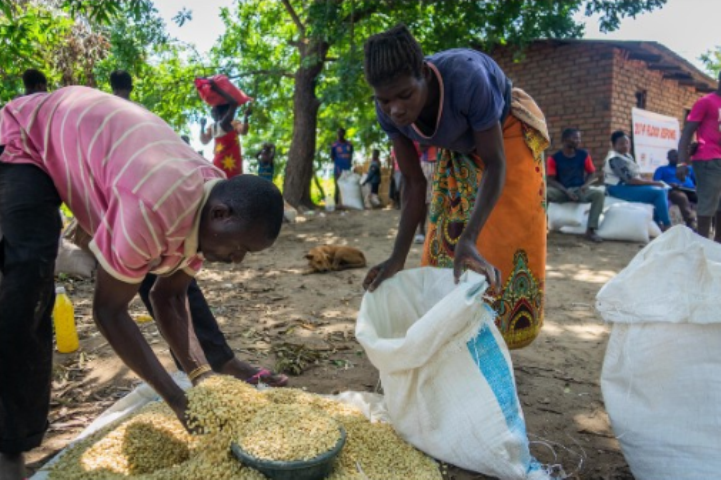
BOOST will be implemented in Blue Nile, Sennar, and Kassala states—regions that are both agriculturally vital and heavily burdened by internally displaced populations.
- Country:
- Sudan
In a decisive move to counter one of Africa's most severe and rapidly worsening humanitarian crises, the African Development Bank (AfDB) Group has approved an $87 million grant to bolster food security and revive rural livelihoods in conflict-affected Sudan.
The funding anchors the Boosting Agrifood Systems Resilience Project (BOOST)—a nearly $100 million intervention aimed at stabilising food production, strengthening agricultural systems, and restoring economic activity in regions devastated by conflict, climate shocks, and economic collapse.
Approved on 22 April, the initiative signals an urgent pivot toward resilience-focused recovery, as Sudan grapples with widespread displacement, disrupted farming cycles, and escalating food insecurity.
Coordinated Global Response to a National Crisis
The African Development Fund (ADF), the Bank's concessional financing arm, will provide the majority of funding, complemented by $12.3 million in in-kind contributions from key international partners, including:
-
The Food and Agriculture Organization (FAO)
-
The World Food Programme (WFP)
-
UN Women
-
The International Maize and Wheat Improvement Center (CIMMYT)
This multi-agency collaboration underscores the scale and urgency of the crisis, with Sudan's food systems under immense strain from overlapping shocks.
Targeting High-Impact Agricultural Zones
BOOST will be implemented in Blue Nile, Sennar, and Kassala states—regions that are both agriculturally vital and heavily burdened by internally displaced populations.
These areas play a critical role in Sudan's food production but have seen declining output due to insecurity, climate variability, and disrupted supply chains. By focusing on these zones, the project aims to stabilise both local livelihoods and national food availability.
Scaling Up Production Through Climate-Smart Agriculture
At the core of the initiative is a push to increase agricultural productivity using improved seeds and climate-smart technologies.
Farmers will gain access to tools and practices designed to:
-
Boost crop yields despite climate variability
-
Improve resilience to drought and extreme weather
-
Reduce dependence on imported food
Development experts estimate that such interventions can raise productivity by up to 50% in vulnerable farming systems, helping to close critical supply gaps.
Reducing Losses, Expanding Markets
Beyond production, BOOST addresses structural weaknesses across the agricultural value chain. Investments in:
-
Storage infrastructure
-
Food processing capabilities
-
Market access systems
are expected to significantly reduce post-harvest losses, which can exceed 30% in fragile contexts, while improving farmer incomes and food availability.
Empowering Women and Youth as Growth Drivers
A defining feature of the programme is its strong emphasis on inclusive economic participation, particularly for women and young people, who are disproportionately affected by food insecurity and unemployment.
The project will provide:
-
Access to finance for agribusiness ventures
-
Skills training and capacity building
-
Digital tools to connect producers with markets
This approach aims to shift communities from subsistence farming toward sustainable, income-generating agribusiness models, fostering long-term resilience.
1.2 Million People to Benefit, Jobs to Follow
The initiative is expected to directly benefit more than 1.2 million people, including over 232,000 farming households. By stabilising food systems and strengthening local economies, the project is also projected to create tens of thousands of jobs, both directly in agriculture and across related sectors.
These outcomes are critical in a country where economic disruption has sharply increased poverty and food insecurity.
Innovative Financing Enables Rapid Deployment
Notably, the AfDB is financing the project by reallocating undisbursed funds from previously cancelled operations, allowing for rapid mobilisation without waiting for new funding cycles.
This flexible financing model is increasingly seen as a vital tool for responding to crises in fragile and conflict-affected settings.
A Pathway to Recovery Amid Crisis
David Muthusi Mutuku, the Bank's Country Manager for Sudan, described the project as a crucial step toward rebuilding lives and restoring stability.
"This investment will help farmers rebuild livelihoods, empower women and youth to create businesses, and strengthen community resilience," he said. "At a time of profound hardship, it offers a practical pathway to recovery—reviving local economies and laying the foundation for a more self-reliant future."
Strategic Shift Toward Resilience
As Sudan faces one of the world's most complex humanitarian emergencies, the BOOST initiative reflects a broader shift from short-term relief toward integrated, resilience-driven development.
By combining agricultural investment, economic inclusion, and institutional support, the programme aims not only to address immediate food shortages but also to build a more sustainable and shock-resistant food system.
If successful, it could serve as a blueprint for tackling food insecurity in other conflict-affected regions across Africa.


 Google News