

Afghanistan’s Poverty Crisis Deepens as 28 Million Struggle to Survive Amid Economic Decline, Climate Shocks and Aid Cuts: UNDP
The report warns that Afghanistan is now facing a “layered crisis” in which economic, climatic, and social pressures are reinforcing one another, pushing millions deeper into desperation.
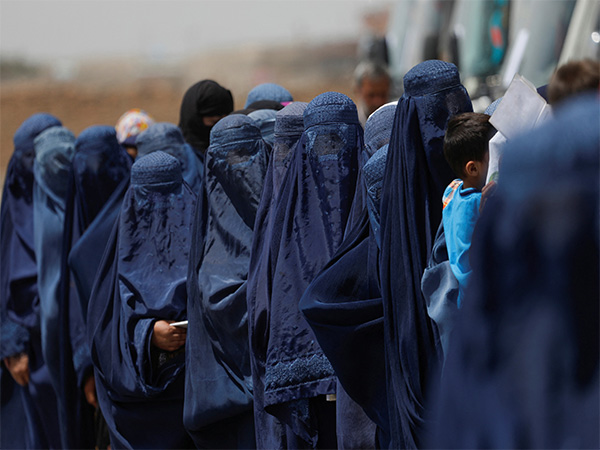
Afghanistan's humanitarian and economic crisis is worsening dramatically, with nearly three out of every four Afghans now unable to meet their most basic daily needs, according to a stark new report released by the United Nations Development Programme (UNDP).
The report paints a deeply troubling picture of a country trapped in overlapping crises — economic collapse, climate shocks, shrinking international aid, mass population returns, and continued restrictions on women and girls — all combining to intensify poverty and vulnerability across the nation.
According to UNDP's latest Afghanistan Socioeconomic Review, approximately 28 million people — nearly 75 percent of the population — are living in what the agency describes as "subsistence insecurity" in 2025, meaning they cannot reliably access essentials such as food, clean water, healthcare, housing, heating, or clothing.
While Afghanistan's economy has technically returned to modest growth for a second consecutive year, the gains are proving far too weak to offset the country's exploding population growth, rising unemployment, and collapsing household incomes.
The report warns that Afghanistan is now facing a "layered crisis" in which economic, climatic, and social pressures are reinforcing one another, pushing millions deeper into desperation.
Mass Return of Afghans Intensifies Pressure on Fragile Economy
One of the most alarming developments highlighted in the report is the unprecedented wave of Afghan returnees entering the country.
UNDP estimates that 2.9 million Afghans returned in 2025 alone, adding enormous strain to already overstretched services, fragile labour markets, and impoverished communities. Since 2023, nearly 5 million Afghans have returned to the country, reshaping demographic pressures and humanitarian needs nationwide.
The report reveals that recently returned Afghans are among the most vulnerable populations in the country, with 92 percent experiencing subsistence insecurity, significantly higher than the already severe national average of 74 percent.
In provinces receiving the largest numbers of returnees, economic opportunities remain almost non-existent. Only 3 percent of returnees have access to formal employment, while the overwhelming majority survive through irregular and unstable day labour.
Aid agencies warn that without urgent investment in livelihoods, housing, and basic services, the growing influx of returnees could deepen social instability and increase migration pressures across the wider region.
"Taking stock of Afghanistan's socioeconomic reality, this year's report reveals a country under growing strain, with the high number of returnees and further economic and climatic setbacks intensifying in 2025, as pressures layer one upon another," said Kanni Wignaraja, UN Assistant Secretary-General and UNDP Regional Director for Asia and the Pacific.
"This underscores why progress on basic human development remains central to stability in Afghanistan and across its borders, especially for the most vulnerable communities living in extremely fragile eco zones."
Economic Growth Fails to Lift Living Standards
Despite recording positive GDP growth, Afghanistan's economy remains deeply fragile and far below pre-2021 levels.
According to the report, Afghanistan's real GDP growth slowed from 2.3 percent in 2024 to 1.9 percent in 2025, reflecting weakening economic momentum amid deteriorating domestic and international conditions.
At the same time, the country's population grew by an estimated 6.5 percent, far outpacing economic expansion.
As a result, real GDP per capita — a key measure of individual prosperity — declined by approximately 2.1 percent, leaving Afghan incomes substantially below levels recorded before the Taliban's return to power in 2021.
UNDP warns that continued declines in per capita income now place Afghanistan among the poorest countries in the world.
The report also highlights mounting structural weaknesses within the economy, including a rapidly widening trade deficit. Afghanistan's trade imbalance surged to a record US$11.3 billion in 2025, equivalent to roughly 60 percent of nominal GDP, driven by rising imports and stagnant exports.
Economists say the growing dependence on imports, combined with weak domestic production and limited industrial capacity, is increasing Afghanistan's vulnerability to external shocks and currency instability.
Climate Crisis Accelerates Human Suffering
The report identifies climate change as an increasingly devastating driver of poverty and displacement in Afghanistan.
Agriculture — the backbone of the country's rural economy and the primary source of income for millions — has been hit hard by intensifying drought conditions and water shortages.
According to UNDP, drought prevalence nearly doubled in 2025, affecting 64 percent of the country, while access to adequate drinking water collapsed sharply nationwide.
Only 44 percent of Afghans had access to sufficient drinking water in 2025, down dramatically from 59 percent in 2024.
The worsening climate crisis is undermining crop production, increasing food insecurity, forcing migration, and placing additional pressure on already impoverished households.
Experts warn that Afghanistan's environmental vulnerability, combined with limited infrastructure and institutional capacity, makes the country one of the world's most exposed nations to climate-related disasters.
Women's Rights Restrictions Continue to Damage Economy
The report also highlights the severe economic consequences of ongoing restrictions imposed on women and girls since 2021.
UNDP states that nearly 100 edicts restricting women's employment, education, and freedom of movement remain in force in 2025, significantly shrinking the country's workforce and undermining long-term economic recovery.
Female participation in education and employment remains critically constrained.
Girls' school attendance stands at only 42 percent, compared to 73 percent for boys, further entrenching gender inequality and limiting future human capital development.
International organizations have repeatedly warned that excluding women from public and economic life could cost Afghanistan billions of dollars in lost productivity while deepening poverty across households that depend on women's income.
The restrictions have also weakened humanitarian operations and reduced the ability of aid agencies to deliver services effectively to women and children in many parts of the country.
Aid Cuts Trigger Collapse in Healthcare Access
Compounding Afghanistan's crisis is a steep decline in international assistance.
UNDP reports that total international aid to Afghanistan fell by 16.5 percent in 2025, even as humanitarian and economic needs continued to rise sharply.
The funding reductions are already having severe consequences for essential services.
More than 440 health clinics have either closed or reduced operations because of financial shortages, leading to a major deterioration in healthcare access nationwide.
The share of Afghans unable to access healthcare rose from 16 percent in 2024 to 23 percent in 2025, leaving millions at heightened risk of preventable illness, malnutrition, and untreated medical conditions.
Aid agencies fear that continued reductions in donor support could trigger broader collapse across health, education, and social protection systems.
UNDP Calls for Long-Term Investment Beyond Emergency Relief
UNDP officials stressed that Afghanistan urgently requires more than temporary humanitarian assistance.
They argue that without sustained investment in jobs, local markets, agriculture, infrastructure, and public services, the country risks becoming trapped in chronic poverty and instability for years to come.
"Across Afghanistan, communities need more than short-term relief. They need a pathway to progress," said Stephen Rodriques, UNDP Resident Representative in Afghanistan.
"Investing in jobs, services and local markets will help boost household economies and will be essential to give people a real chance to rebuild their lives and regain control over their future."
The report concludes with a warning that Afghanistan's crises are becoming increasingly interconnected — economic decline fuels migration, climate shocks intensify poverty, aid cuts weaken services, and restrictions on women reduce growth potential — creating a cycle that threatens long-term national and regional stability.
Without stronger international engagement and sustained investment in resilience and human development, UNDP warns that millions more Afghans could fall deeper into deprivation in the years ahead.
ALSO READ
-
ISO and UNDP Launch Global Standard to Turn Sustainability Promises Into Action
-
Free AI Training Opens Doors for African Public Officials to Build Smarter Services
-
Italy and UN Partners Set Out Rome’s Growing Role as Global Development Finance Hub
-
KSrelief and UNDP Launch $5M Lifeline for Ukraine’s War-Affected Hospitals
-
Aid Under Pressure: Global Leaders Call for Local Control and Recovery From Day One


 Google News