

Pacific small islands and ‘Big Ocean’ nations at UN Assembly make the case for shift to clean energy
Facing constant threats from climate change and wary of the possible spread of COVID-19 to their shores, Pacific Island leaders on Friday touted their own environmental action plans and called for more aggressive climate action from other nations, including rapid shifts toward clean, green energy.
"All countries and peoples are in a global war against climate change. We have witnessed deadly fires in the US, typhoons in the Caribbean and in the Pacific, and floods in Asia. It is a war that we can win, but we must be much more aggressive in combatting it,' David Panuelo, President of the Federated States of Micronesia, the first of several Pacific Island leaders to speak today, said in a pre-recorded address.
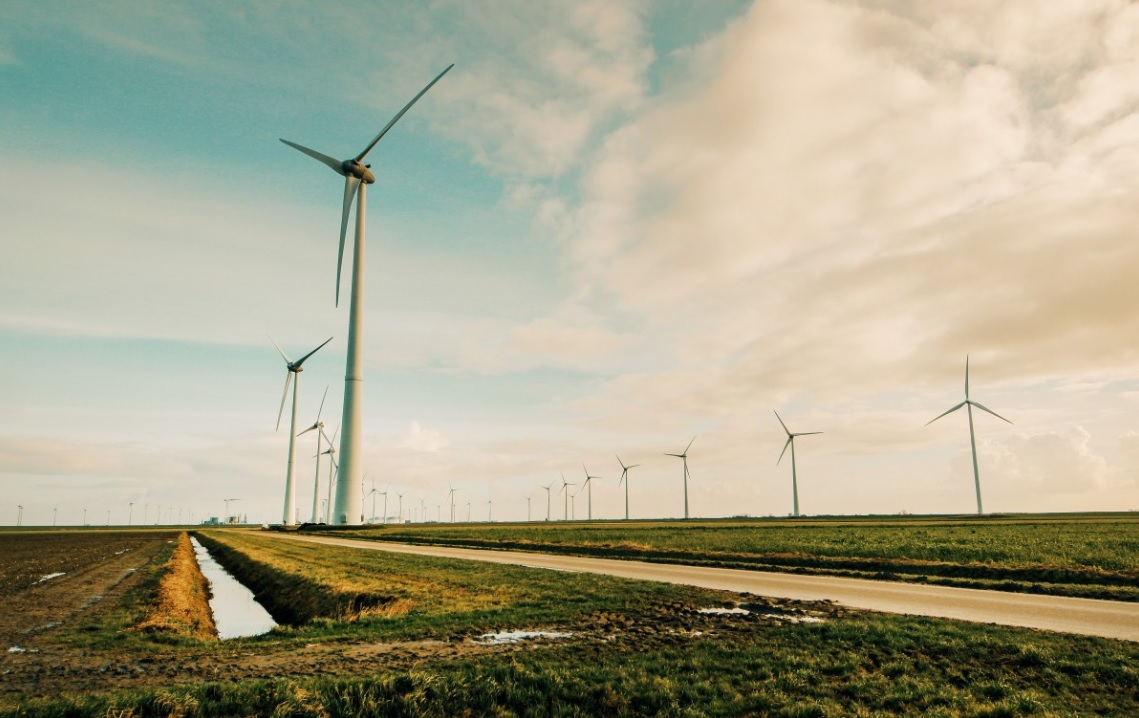
He said "climate change is our single greatest long-term security threat. Rising waters threaten to make life in remote atolls impossible. Higher temperatures threaten crops, livestock, and fish. The world must transition to sustainable and renewable energy."
Indeed, coal and natural gas are unsustainable solutions for the environment and are harmful to both economic growth and equality of opportunity. "If our world is to fulfill its commitments under the Paris Agreement, all nations must make a unified and global effort," President Panuelo said, noting that, for example, through the Montreal Protocol, some 98 per cent of ozone depleting substances have been phased out by the global community.
He went on to explain that Micronesia's exposure to the Pacific Ocean carries risks beyond climate change. According to a report by the World Economic Forum, he said, by 2050 there may be more plastics than fish in our oceans.
"As such, in February 2020, he had signed legislation into public law which bans the importation of Styrofoam and one-time-use plastics into Micronesia. Further, over the next five years, Micronesia would partner with the Blue Prosperity Coalition to seek to protect 30 per cent of its ocean's Exclusive Economic Zone by 2030.
"Micronesia is thus taking actions today for our ocean's prosperity tomorrow. I urge all peoples and nations to join our efforts. We cannot allow COVID-19 to halt efforts such as the Post-2020 Biodiversity Framework or the intergovernmental negotiations on the Biodiversity Beyond National Jurisdiction (BBNJ) instrumentation," he stated.
For his part, Kausea Natano, the Prime Minister of Tuvalu, said that while is island nation was still COVID-19 free, "the ripple effects of this deadliest virus has come at a huge cost to our economy. Unemployment in our fisheries and tourism sectors has soared and remittances dropped significantly. Food security was affected as supply chains were disrupted."
"Covid19 has significantly disrupted economies and societies right across the world. Indeed, [it] has reshaped the contours of the normal way of things, placing us on a 'new normal'. Therefore, we must not only think outside the box, but we must also work outside the box," he explained.
And with that in mind, Prime Minister Natano said the United Nations and its Member States must work collaboratively to build back better countries and economies that are inclusive and leave no one behind; protect the health and wellbeing of all; preserve natural and marine environments; are low emissions and climate smart; and build resilience to future crises.
He stressed that the shared prosperity and security of "our Blue Pacific" can only safely exist if the international community pursues efforts to limit global warming to 1.5 Celsius. The transformation and investment response to the COVID-19 pandemic must also serve to build our resilience to the impacts of climate change.
"If we failed this, then we are putting additional debt into our already exhausted capacities, which can further exacerbate climate crises going forward," he said, calling for stronger political will form all countries towards full implementation of the Paris Agreement, the SAMOA Pathway for small island developing States, and the Istanbul Plan of Action for landlocked developing States.
In his virtual address, Taneti Maamau, President and Minister for Foreign Affairs and Immigration of Kiribati, said that of 'great importance to Kiribati and our Blue Pacific is without question, the alarming dilemma of our present time, climate change.
To this end, his Government continues to implement critical projects to build resilience, including the Peacebuilding Fund's climate security project, which he launched in Kiribati earlier this month.
"In solidarity with our Pacific Islands Forum family, we also remain committed to securing our maritime boundaries, amid the impacts of climate change. This is a matter of sovereignty," he added.
"While COVID-19 is our immediate crisis, we must continue to work on the other challenges that confront us all, in particular climate change, the single greatest threat to the livelihood, security and wellbeing of the Pacific and its peoples," he said, recalling the Kainaki II Declaration in 2019 adopted by leaders at the end of the 50th Pacific Islands Forum, and the 2018 Boe Declaration, on security in the Pacific.


 Google News